Starter walking-gear comparison
Walking Shoes vs Walking Socks for Starting a Walking Routine
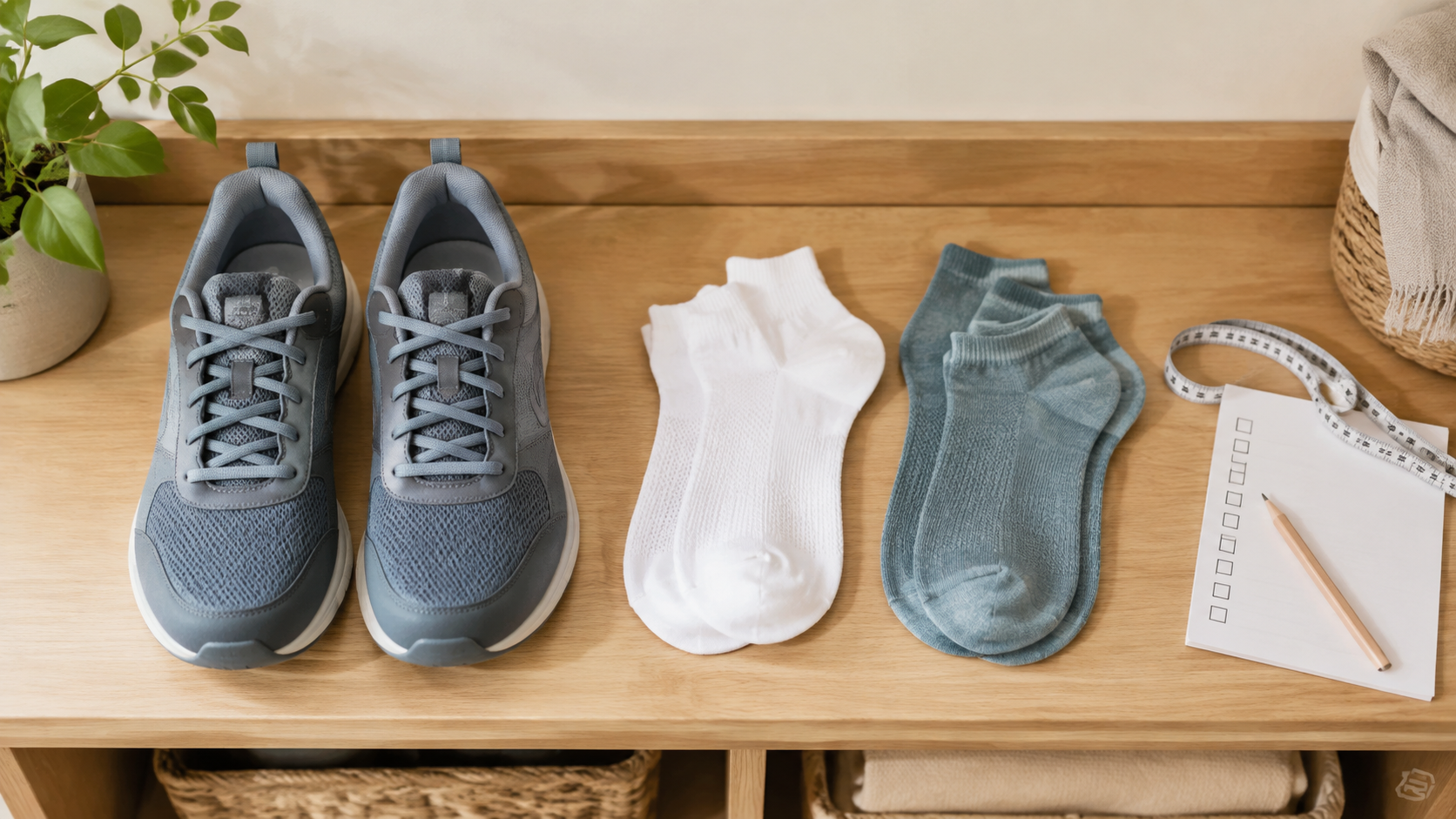
Shoes shape the overall fit, support, traction, and contact with the ground. Socks sit between the foot and shoe and can change thickness, seams, moisture handling, and friction. Before buying either, identify the problem you are actually trying to fix—and remember that many starter routines need no new gear at all.
As an Amazon Associate, GoodWeighFinds earns from qualifying purchases.
Quick answer
Prioritize shoes when your current pair is worn through, slips at the heel, crowds the toes, lacks reliable traction for the route, or feels unstable during ordinary walking. Prioritize socks when the shoes already fit comfortably but the socks bunch, create irritating seams, stay uncomfortably damp, or leave you without a practical clean rotation. Buy neither when a comfortable, intact shoe-and-sock combination you already own handles the planned route.
How their jobs differ
| Decision point | Walking shoes | Walking socks |
|---|---|---|
| Main job | Provide the platform, outsole, fit volume, and ground contact. | Provide a fabric layer between the foot and shoe. |
| Check first | Toe room, heel hold, width, outsole wear, closure, and surface fit. | Size, thickness, seams, bunching, fabric, and wash care. |
| Effect on the pair | Controls how much internal room the sock has. | Changes how snugly the same shoe fits. |
| Upkeep | Drying, cleaning, outsole inspection, and eventual replacement. | Washing, drying, rotation, and checking thin spots. |
| Return issue | Indoor try-on rules and return window can matter. | Opened or worn socks may have stricter hygiene-related returns. |
| Cannot promise | Injury prevention, pain treatment, or body results. | Blister prevention, circulation treatment, or body results. |
Inspect what you own before shopping
Put on the exact socks and shoes you plan to use, because changing sock thickness can change the shoe fit. Walk indoors on a safe surface. Notice whether the heel moves, the toes feel crowded, a seam rubs, the sock slides, or the outsole feels uneven. Look for split uppers, compressed or tilted soles, smooth tread, holes, stretched cuffs, and fabric that bunches.
This is a screening step, not a diagnosis. New discomfort, persistent pain, numbness, wounds, unusual swelling, or concerns related to diabetes or circulation call for qualified healthcare guidance rather than trial-and-error gear purchases.
Choose shoes first when the platform is the problem
A sock cannot restore worn tread, add toe-box space to a shoe that is too short, repair a separating sole, or make an unstable shoe suitable for a route. If the existing shoe is the clear constraint, compare measured fit, closure, outsole pattern, intended surface, removable-insole space, care instructions, and return terms.
Try shoes with the sock thickness you expect to wear. Ignore calorie-burning, toning, posture-correction, and guaranteed comfort language. Those claims do not establish that a pair fits your feet or your walking conditions.
Choose socks first when the shoe already works
If the shoe is intact and comfortable, a simpler sock change may address bunching, a bulky toe seam, an impractical laundry schedule, or a mismatch between sock thickness and shoe volume. Compare the actual material blend, stated size range, seam construction, cushioning location, cuff height, and care label.
Treat “blister-proof,” “odor-free,” “cooling,” and similar absolutes as marketing unless the listing provides appropriately limited support. Compression socks also raise separate health considerations; do not use a general walking-sock comparison to self-treat swelling, circulation concerns, or another medical issue.
Set a starter budget around the bigger constraint
If both categories could use attention, solve the higher-consequence fit problem first. A sound shoe paired with an ordinary clean sock may be enough for short walks. A premium sock inside a poorly fitting or badly worn shoe is unlikely to solve the platform problem. Conversely, replacing a serviceable shoe is unnecessary when the real issue is one rough seam or having no clean pair available.
Budget for the complete routine: taxes, possible return shipping, sock laundry frequency, shoe drying time, and whether you need a second clean pair—not aspirational extras. Keep packaging and review return conditions before wearing either product outdoors.
Who should skip both purchases
- Your current combination works: intact, comfortable gear that fits the route is a valid starting setup.
- The routine itself is unsettled: try a short, accessible route before buying specialized gear for imagined conditions.
- The listing leads with body promises: shoes and socks support walking; they do not guarantee weight loss or reshape the body.
- Symptoms are the real issue: do not use either purchase to push through concerning pain, numbness, wounds, or swelling.
- Fit information is missing: skip listings without useful sizing, materials, care, seller, or return details.
Next steps
This comparison supports the routine-support tools pillar. If the shoe is the priority, use the walking shoe guide for fit and claim checks, or first decide whether you need new walking shoes at all. If the sock is the priority, use the walking sock guide for thickness, seams, materials, laundry, and compression cautions.
Bottom line
Shoes are the larger platform decision; socks fine-tune the interface inside that platform. Inspect the combination you own, identify the first concrete failure, and spend only on the category that addresses it. Starting comfortably in existing gear is better than delaying a reasonable routine for a perfect shopping list.