Batch-cooking accessory buying guide
How to Choose Aprons With Pockets for Batch-Cooking Routines
An apron earns its storage space when its coverage, straps, pockets, and wash routine fit the way you actually prep. It is a clothing layer with convenient storage—not proof of heat protection, stain resistance, hygiene, or better cooking results.
As an Amazon Associate, GoodWeighFinds earns from qualifying purchases.
Quick answer: start with format, then measure
| Format | Worth comparing when | Main check |
|---|---|---|
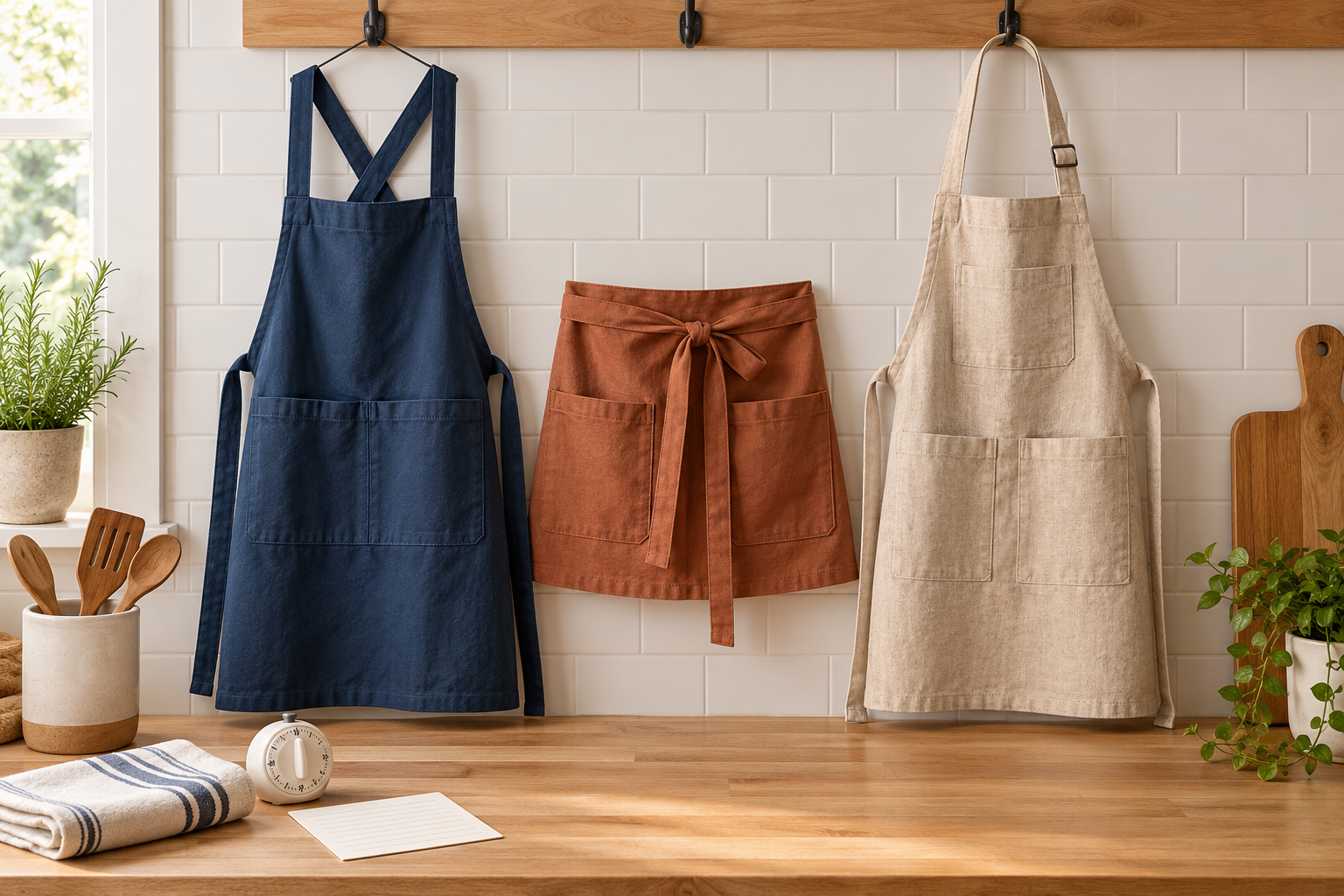
| Full bib apron | You want front coverage and a familiar neck-and-waist setup. | Body length, width, neck adjustment, tie length, and pocket height all fit you. |
| Cross-back apron | You prefer shoulder straps and do not mind a more involved setup. | The stated strap range and closure design support a repeatable fit. |
| Waist apron | Your main need is reachable storage rather than upper-body coverage. | The waistband and pockets remain practical when loaded with lightweight items. |
| Split-leg or smock format | You need a different movement or layering shape. | The garment dimensions and closure work with your clothing and prep position. |
Measure the apron job before opening a listing
Write down the coverage you want, where your hands naturally reach, the clothing layers you usually wear, and the available hanging or folded-storage space. Product photos can make one-size garments look more universal than their stated dimensions support.
- Body dimensions: Compare stated length and width with an apron or garment that already fits. Do not infer fit from a model photo.
- Adjustment range: Check the documented neck, shoulder, waist, buckle, tie, or snap arrangement. “Adjustable” does not specify the usable range.
- Pocket position: Measure from the waist or apron top to the pocket opening. A large pocket is not useful if it sits outside your comfortable reach.
- Loaded pocket: Test the idea with a current apron or tote pocket. A towel, timer, or blank recipe card may be convenient; fragile, sharp, hot, or spill-prone items belong somewhere more appropriate.
Selection criteria that matter in a long prep session
- Coverage: Compare the garment's documented dimensions and shape, not broad “full coverage” language.
- Strap setup: Consider buckles, knots, crossings, loose ends, and whether another household member needs a different adjustment.
- Pocket layout: Look at opening width, depth, dividers, reinforcement wording, and access while standing. Treat seller load claims cautiously.
- Fabric label: Record the listed fiber content and fabric weight when supplied. Do not translate cotton, linen, canvas, or blends into automatic heat, stain, or durability claims.
- Laundering: Use the current care label for wash temperature, drying, ironing, and any remove-before-washing hardware. Seller copy does not replace the garment label.
- Storage: Check whether the folded apron, long ties, buckles, or cross-back straps fit the intended hook, drawer, or basket.
A five-minute no-buy test
- Wear an apron, old overshirt, or lightweight layer you already own during one normal prep session.
- Place only a towel, timer, or recipe card in an existing pocket and notice which pocket position is easy to reach.
- Record where clothing coverage is actually useful and where extra fabric gets in the way.
- Time the end-of-session routine: empty pockets, untie it, launder when needed, dry it, and put it away.
If an existing layer solves the problem, a dedicated apron may add laundry and storage without adding enough utility.
What to verify on a current listing
| Listing detail | What it can establish | What it cannot establish |
|---|---|---|
| Garment and strap dimensions | Whether the documented size is plausible for your measured fit. | Universal comfort or fit across bodies and clothing layers. |
| Pocket count and measurements | Whether the intended lightweight item can fit. | That a loaded pocket will feel balanced or convenient. |
| Fiber and care labels | The maker's current material wording and maintenance directions. | Stain-proofing, heat protection, hygiene, or long-term durability. |
| Seller and return terms | The current purchase path and remedy if the fit is wrong. | Future availability, price stability, or product quality. |
Skip or delay the purchase when
- The listing omits garment dimensions, strap range, fabric label, or care directions.
- You need protective clothing for a specific workplace or hazard; an ordinary kitchen apron should not be treated as certified protective equipment.
- You expect pockets to safely hold knives, hot tools, liquids, or other items that could spill, break, snag, or injure.
- You already own a washable layer that provides enough coverage and storage.
- The tie, buckle, or laundering routine would add more friction than the apron removes.
Build the rest of the prep setup around the real bottleneck
If staging ingredients is the problem, compare prep bowls with lids by useful sizes, lid behavior, nesting, and storage. If timing is the issue, use the kitchen timer versus phone timer guide. For a broader way to keep kitchen purchases tied to a visible job rather than weight-loss promises, start with the routine-support tools pillar.