GoodWeighFinds is for general information only and is not medical advice. Readers should talk with a qualified healthcare professional before starting weight-loss products, supplements, diets, or exercise changes.
Buying guide
Best Bathroom Scales for Weight Tracking Without App Pressure
A bathroom scale does not need an app, body-composition dashboard, or motivational streak system to be useful. For some readers, the better fit is a simple scale that gives a readable number, keeps data off a phone, and does not turn tracking into pressure.
Who this guide is for
This guide is for adults who want basic weight tracking without app accounts, body-composition estimates, shared dashboards, or calorie-burn claims. It is not a recommendation to track weight, and it is not medical advice. A scale can show one measurement. It cannot explain your full health, diagnose a problem, or prove that a routine is working.
If you are still comparing broader routine tools, start with the routine-support tools guide. If you are choosing between connected devices and privacy tradeoffs, the smart scale buying checklist covers app-based features in more detail.
Why a no-app scale may be the better choice
Smart scales can be useful for people who want automatic logs. They can also add friction: accounts, Bluetooth pairing, app notifications, body-score labels, family profile confusion, and privacy policies that are easy to ignore when you are shopping quickly.
A simple bathroom scale keeps the decision narrower. You are checking whether the scale is readable, stable, consistent enough for home use, and comfortable to keep in your routine. That is a practical tool decision, not a body-result promise.
Good fit criteria
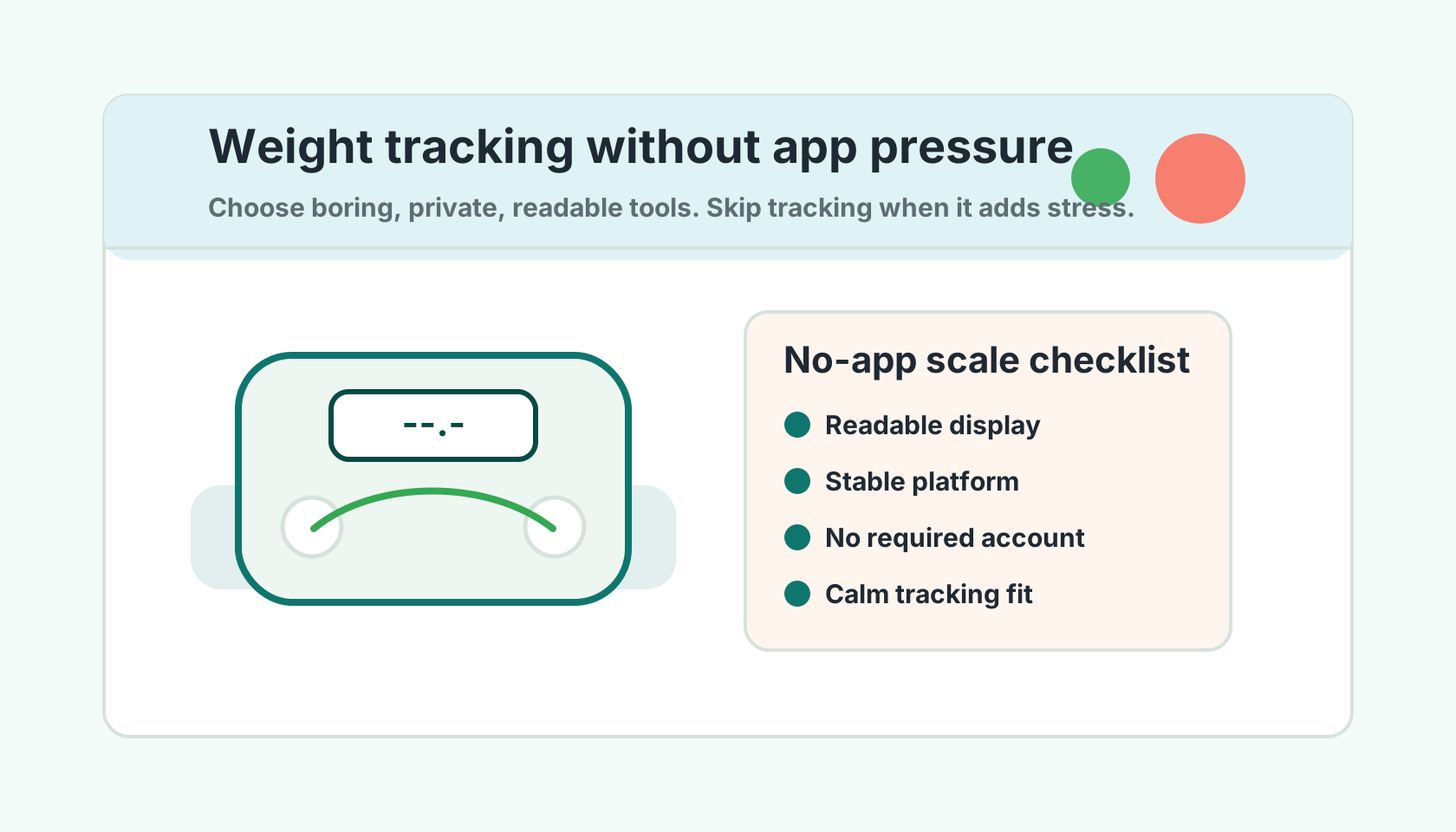
- Readable display: Look for large numbers, strong contrast, and a display you can read while standing naturally.
- Stable platform: Compare platform size, surface texture, step-on height, and whether the scale feels safe for your bathroom floor.
- Clear capacity range: The maximum supported weight should be easy to find and appropriate for the people who may use it.
- No required account: A no-app scale should work without a login, subscription, Bluetooth setup, or data upload.
- Simple units and controls: Unit switching, battery access, and reset controls should be obvious enough that the scale does not become a project.
- Return-policy realism: Scales can feel different in person. A clear return window matters more than dramatic listing copy.
Analog, digital, or no scale at all?
Analog scales avoid batteries and apps, but their dials can be harder to read and may require more careful positioning. Basic digital scales are often easier to read, but they need batteries and can vary if they are moved, used on uneven flooring, or handled roughly. Product pages may describe calibration or precision in confident language; treat those claims as home-use claims, not clinical measurement guarantees.
There is also a third option: skip the scale. If weight tracking increases anxiety, obsessive checking, food restriction, shame, or conflict at home, the best tool may be no tool. A qualified healthcare professional or mental health professional with eating-concern experience is a better next step than buying another device.
Marketing claims to slow down around
A bathroom scale should not need fat-loss promises to be worth considering. Be skeptical of listings that claim a scale will motivate weight loss, unlock transformation, calculate a health score, or prove that a diet or supplement works. Those claims are much bigger than the product itself.
Also pause when a basic scale is bundled with diet plans, supplement offers, detox products, appetite-control products, or body-composition promises. Those categories need more caution than a simple household scale review can provide.
Privacy and household fit
The privacy advantage of a no-app scale is simple: it does not need to collect your weight data. That can matter in shared homes, workplaces, dorms, or any routine where app syncing would feel intrusive. If the product still has Bluetooth, Wi-Fi, QR-code setup, or a required companion app, it is not really a no-app scale.
For households, think about display readability for different users, whether the platform feels steady, and where the scale will live. A scale stored under a cabinet and dragged across the floor every morning may be less consistent and more annoying than one with a stable, dedicated spot.
When a simple scale is not enough
Do not rely on a consumer scale for sudden weight changes, unexplained symptoms, medication concerns, pregnancy-related questions, eating-disorder recovery, or decisions about diets, supplements, or exercise intensity. Those situations deserve qualified professional guidance.
If you are evaluating body-composition numbers such as body fat percentage, muscle mass, water percentage, or metabolic age, read the body composition scale claim check before treating those numbers as meaningful. Many consumer devices estimate those metrics, and ordinary factors can affect the reading.
Bottom line
The best bathroom scale for low-pressure weight tracking is usually boring: readable, stable, private, easy to use, and free of body-result promises. Choose one only if tracking supports your routine calmly. Skip it if the scale would make your day smaller, harsher, or more stressful.