Routine-support buying guide
Best Collapsible Food Containers for Small Kitchens
Collapsible containers trade rigid walls for a smaller cabinet footprint. That can help in a tight kitchen, camper, dorm, or lunch bag—but only when the folded height is meaningfully smaller, the base stays open during use, and the creases are practical to clean. They organize food; they do not cause weight loss or establish the right portion for anyone.
As an Amazon Associate, GoodWeighFinds earns from qualifying purchases.
Who this guide is for
This guide is for adults whose ordinary rigid containers consume more cabinet or bag space than they can spare. It is narrower than our general meal-prep container guide: here, the main decision is whether reduced stored height is worth flexible walls, extra creases, and possible stability tradeoffs.
Use the routine-support tools pillar if you are still deciding whether a container, planning tool, or carry bag would solve the real friction.
Best-fit formats, not unsupported rankings
- Best for shallow cabinets: A set with stated collapsed height and lids that stack without sliding.
- Best for trying the format: One medium container instead of a large set, especially when you have not cleaned folding walls before.
- Best for packed lunches: A container that stays fully expanded when filled, with dimensions checked against the lunch bag and cold pack.
- Best for leftovers: A clear or translucent design that makes contents visible and has a lid that stores neatly.
- Best for simpler cleanup: Broad folds, removable seals, few undercuts, and explicit dishwasher instructions.
Selection criteria that matter
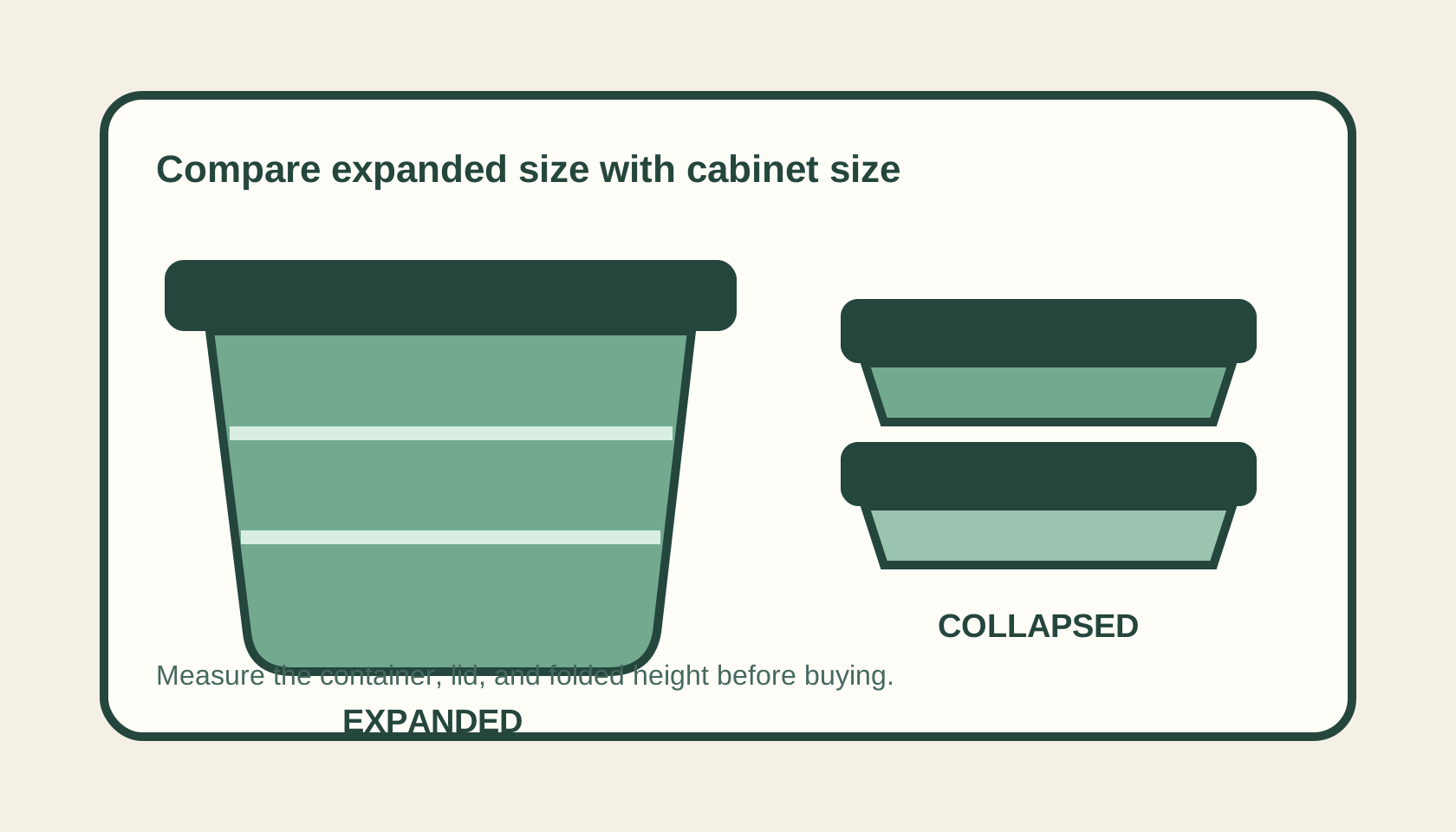
- Measure both states: Record expanded length, width, and height as well as collapsed body height. Check whether published dimensions include the lid.
- Calculate real storage: A thin folded body does not save much if rigid lids form a tall, unstable pile. Compare the total set when stored.
- Check usable capacity: Flexible sides and sloped folds can reduce interior space. Compare stated volume with the foods and containers you use now.
- Look for base stability: The rim and base should support filling and carrying without the walls collapsing unexpectedly. Treat stability language as a claim until verified.
- Inspect the fold pattern: More hinges can create a smaller fold but add corners where food or wash water may remain.
- Separate lid claims: A tight outer lid does not prove the container can be carried sideways with liquid. “Leakproof” needs model-specific support.
- Verify appliance instructions: Confirm microwave, freezer, oven, and dishwasher directions separately for the body, lid, gasket, and vent. Do not infer them from the word “silicone.”
- Check replacement options: Ask whether a damaged lid or seal can be replaced without discarding the body.
- Read return terms: The ability to inspect fold, odor, stability, and cabinet fit may matter more than buying the largest bundle.
A practical comparison framework
Measure one cabinet shelf and one rigid container you already use. Then score each collapsible option yes, no, or unknown:
- Does the whole stored set—including lids—save enough height or volume to matter?
- Does the expanded container fit the usual food without bowing or overfilling?
- Can it stay open and stable while being filled and carried?
- Are the seal and vent instructions specific about liquids and transport orientation?
- Can fingers or a brush reach every fold, and can the parts dry fully?
- Are appliance instructions clear for every component?
- Are spare lids or seals available at a reasonable cost?
- Would it still be useful if it changed no weight or body measurement?
Claims and durability limits
“Space-saving” is incomplete without numbers. Compare the total collapsed set with the same usable capacity in rigid containers. “Unbreakable,” “stain-proof,” and “odor-proof” are broad claims, not facts established by a marketplace title or customer anecdote.
Fold-life claims also need context. A stated number of collapses may come from the manufacturer and does not predict damage from cutting, overheating, incorrect cleaning, or storing a wall partly folded. Follow instructions for the exact model, stop using food-contact parts that split or cannot be cleaned, and do not treat a listing as food-safety certification.
Who should skip collapsible containers
Skip this category if rigid containers already nest efficiently, if you regularly carry soups sideways, if flexible sides make lifting difficult, or if cleaning grooves is more annoying than cabinet clutter. A conventional set may be easier to stack, fill, and inspect; our glass-versus-plastic comparison covers that choice.
Also skip oversized bundles with missing collapsed dimensions, vague appliance claims, or no usable return policy. Buying fewer containers that match the shelf and routine is more practical than acquiring another set that merely moves the storage problem.
Bottom line
The best collapsible food container for a small kitchen produces a meaningful storage reduction after the lids are counted, stays stable when expanded, fits ordinary food, and can be washed and dried through every fold. Measure first, compare the whole stored set, and buy for cabinet fit—not diet language or unsupported durability promises.