GoodWeighFinds is for general information only and is not medical advice. Readers should talk with a qualified healthcare professional before starting weight-loss products, supplements, diets, or exercise changes.
Routine-support buying guide
Best Compact Food Scales for Small Kitchens
A compact food scale can help with recipe consistency, meal-prep portions, or ingredient awareness when counter and cabinet space are tight. It should be judged as a small measuring tool, not as a weight-loss product. No scale can guarantee fat loss, make a diet safe, or decide what your body needs.
Who this guide is for
This guide is for adults with limited counter, drawer, or cabinet space who still want a basic food scale for cooking consistency or portion awareness. It is not a personalized nutrition plan, calorie target, medical recommendation, or ranked review list.
If you are deciding whether a scale belongs in your routine at all, start with the food scale buying guide. For a broader set of low-pressure tools, use the routine-support tools guide. If you would rather avoid weighing food, the food scale versus measuring cups comparison may be a better next read.
Best compact food scale types by small-space fit
GoodWeighFinds has not tested specific compact food scales hands-on for this page, and this is not a fake ranked product review. Use these best-fit categories to compare listings by space, usability, and claim restraint.
- Best for tiny counters: Low-profile digital scales with a small footprint, stable platform, and buttons that are easy to reach with a bowl on top.
- Best for cabinet storage: Thin scales that can slide vertically beside cutting boards or lie flat in a shallow drawer without snagging on raised buttons.
- Best for bowl-heavy cooking: Compact scales with forward-facing displays, hold functions, or layouts that stay readable when a mixing bowl covers the platform.
- Best for simple meal prep: Basic scales with grams, ounces, tare, and enough capacity for common containers, without app pressure or body-result language.
- Best for low-friction cleanup: Smooth-top scales with fewer seams, wipeable surfaces, and battery compartments that are not exposed to spills.
Selection criteria that actually matter
Small-space scale shopping is mostly about fit and friction. A scale can look compact in a product photo and still be annoying if the bowl blocks the display, the platform tips, or the buttons are hard to press during cooking.
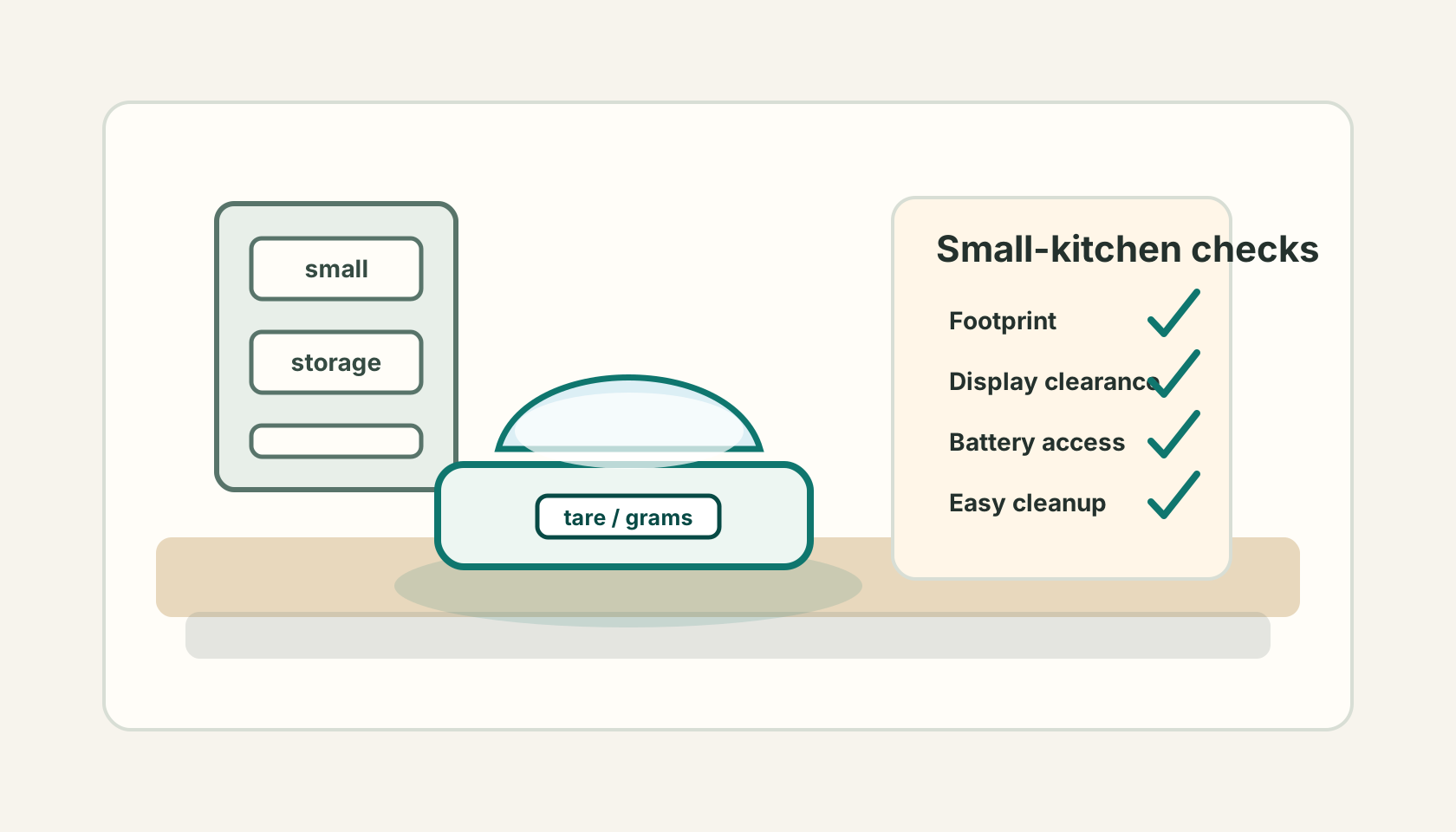
- Footprint: Check the product dimensions, not just the listing photo. Measure the drawer, shelf, or counter zone where the scale will live.
- Display placement: A front display is often easier to read with bowls, plates, and meal-prep containers than a display centered under the platform.
- Tare behavior: A tare button is essential if you plan to weigh ingredients inside bowls or containers.
- Capacity and platform size: Very small scales can be awkward for heavy mixing bowls, glass containers, or batch-cooking portions.
- Units and readability: Grams and ounces cover most everyday cooking needs. Large numbers and simple buttons matter more than wellness branding.
- Storage profile: Raised rims, bulky backs, or detachable bowls can make a scale harder to store than the dimensions suggest.
- Cleaning: Smooth surfaces and fewer crevices are useful in small kitchens, where a scale may sit near water, flour, oil, or crowded prep space.
Comparison framework before buying
Before choosing a compact food scale, compare the tool against the kitchen you actually have, not the clean counter shown in product photos.
- Where will the scale live when it is not being used?
- Can you read the display with your usual bowl, plate, or container on top?
- Does the maximum capacity fit your real cooking, not just snack portions?
- Can you clean it quickly without needing special care every time?
- Does it use common batteries, and can you access them without tools you never keep nearby?
- Would the scale still be worth buying if it caused no change in weight at all?
Weight-loss claim red flags
Be skeptical of any compact food scale listing that suggests the scale itself produces fat loss, appetite control, metabolic changes, detox effects, rapid transformation, or guaranteed results. A scale measures weight. It does not create a safe eating pattern, diagnose needs, or replace qualified care.
Also slow down around bundled apps, meal plans, supplement offers, or coaching language that pushes constant tracking as the only responsible way to eat. Manufacturer descriptions and customer anecdotes are not proof that a product will create the same outcome for another person.
Who should skip a compact food scale
Skip this purchase if measuring food tends to make you anxious, rigid, ashamed, or unable to eat flexibly. Also skip it if measuring cups, visual estimates, recipe notes, or pre-portioned storage already solve the practical problem.
A qualified healthcare professional is the better next step if you have a history of disordered eating, medical conditions affected by food intake, unexplained weight changes, medication side effects, pregnancy-related questions, or distress around eating and body weight.
Bottom line
The best compact food scales for small kitchens are easy to store, readable under a bowl, simple to tare, stable enough for everyday containers, and quick to wipe clean. Buy one for practical measuring in a tight space, not because a product page hints that a small scale can deliver weight-loss results.