GoodWeighFinds is for general information only and is not medical advice. Readers should talk with a qualified healthcare professional before starting weight-loss products, supplements, diets, or exercise changes.
Comparison guide
Food Scale vs Measuring Cups for Portion Awareness
A food scale and a set of measuring cups can both make portions less vague. Neither one can choose the right eating plan for your body, guarantee weight loss, or turn tracking into medical guidance. The better choice depends on how you cook, how much precision you actually need, and whether measuring feels useful or stressful.
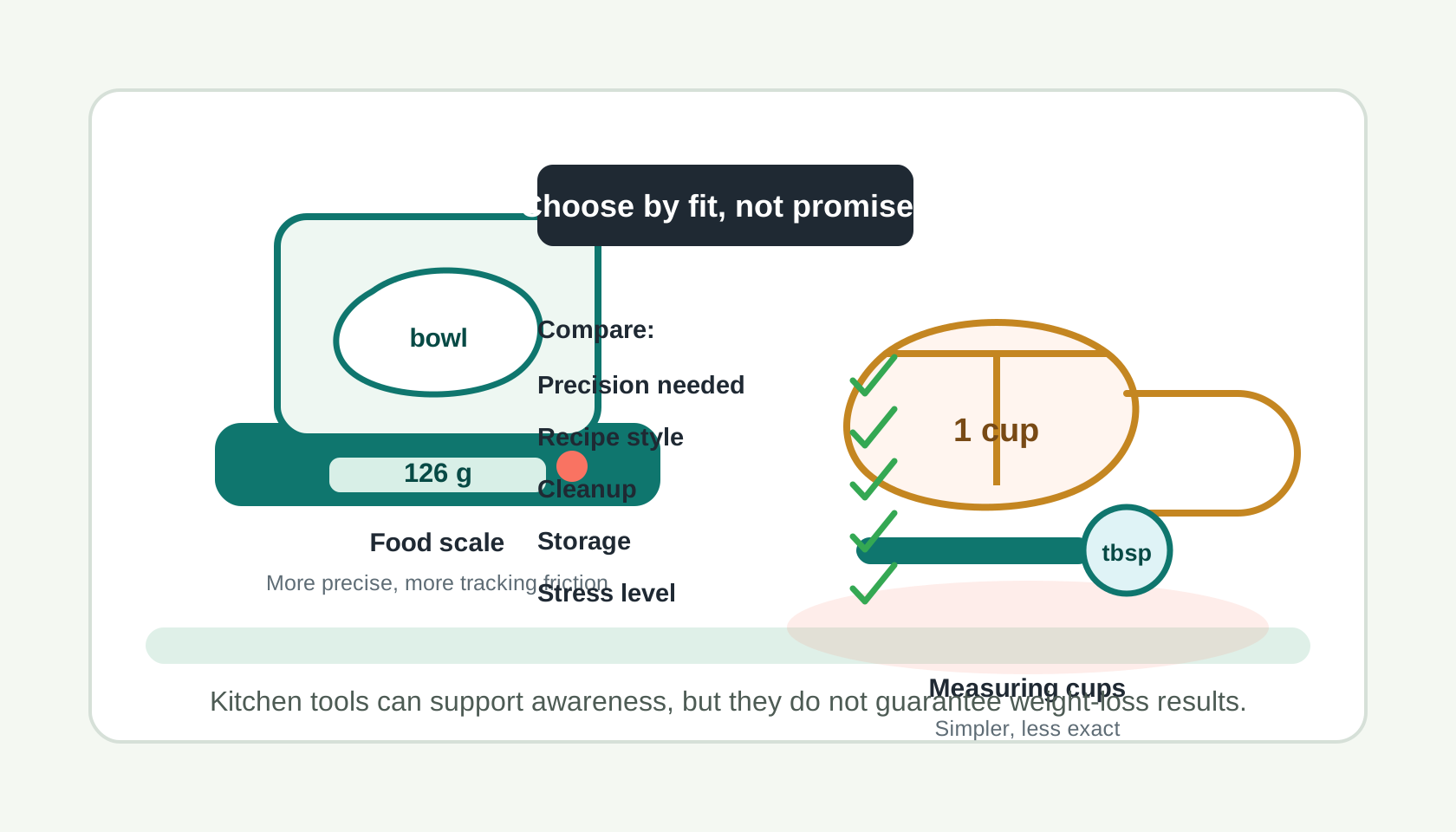
Quick decision frame
Use this page as a format decision, not a product ranking. If you want the broader shopping framework, start with the routine-support tools guide. If you already know you want one side of this comparison, the food scale buying guide and measuring cups and spoons guide go deeper on each tool.
- Choose a food scale when recipe precision, grams, tare weighing, or evenly divided meal prep matter more than speed.
- Choose measuring cups and spoons when familiar, low-tech cooking support matters more than exact measurement.
- Choose neither if measuring food increases shame, rigidity, skipped meals, panic, or compulsive checking.
What a food scale does well
A food scale is best at measuring weight. That can help with baking, comparing package serving sizes, splitting leftovers, weighing ingredients that pack unevenly into cups, or following a specific plan provided by a qualified professional. The tare button is the practical feature that makes scales useful: place a bowl on the platform, zero it out, then measure only the ingredient you add.
The tradeoff is friction. You need counter space, batteries or charging, a readable display, and a willingness to stop and weigh food. That extra step can be clarifying for some adults and too intense for others. A scale is a kitchen tool, not proof that tracking is healthy for every person.
What measuring cups and spoons do well
Measuring cups and spoons are familiar, inexpensive, and quick to use. They fit everyday cooking when the goal is recipe consistency or a rough sense of serving size without turning the meal into a data-entry task. They also work without apps, screens, batteries, privacy policies, or a charging cable.
The tradeoff is precision. A cup of chopped vegetables, cereal, flour, rice, or nuts can vary by shape, packing, and whether the measurement is heaped or level. That does not make measuring cups bad. It just means they are better for low-pressure kitchen consistency than exact nutrition math.
Who each option fits
A food scale may fit adults who bake often, batch-cook, split portions evenly, compare nutrition labels, or prefer one repeatable measurement method. It may also help people who find volume measuring confusing because the same food can sit differently in a cup.
Measuring cups and spoons may fit adults who want a simpler starting point, cook from household recipes, have limited counter space, dislike batteries, or want a tool that feels less formal than weighing every ingredient. They are also easier to use around shared kitchens because they look like ordinary cooking tools rather than tracking equipment.
Neither option is a good fit when the tool turns meals into a test. If you notice fear, secrecy, punishment, unsafe restriction, or a feeling that you cannot eat unless the number is exact, the next step is support from a qualified healthcare professional, registered dietitian, or mental health professional with eating-concern experience.
Tradeoffs to compare before buying
- Precision: Scales are usually better for grams and repeatability. Cups are better for quick household estimates.
- Friction: Scales add steps. Cups are faster but less exact.
- Recipe compatibility: Baking and packaged serving checks often favor scales. Older recipes and casual cooking often favor cups and spoons.
- Storage: A slim scale stores flat, but needs a stable surface. Cups and spoons can nest, hang, or scatter in a drawer.
- Cleanup: Scales need wipe-down care and should not be submerged. Cups and spoons can be easier to wash if the markings do not fade.
- Emotional fit: A precise number can reduce guessing for some people and increase pressure for others.
Setup and maintenance issues
For a food scale, check display placement, tare function, unit switching, maximum capacity, battery access, and whether a bowl or plate blocks the screen. Keep it on a flat surface, wipe spills quickly, and treat accuracy claims as kitchen-level claims unless the manufacturer can support more.
For measuring cups and spoons, check readable markings, common sizes, handle strength, nesting, dishwasher labeling, and whether the cup shape fits the containers you use. Engraved or raised markings often hold up better than tiny printed labels, especially after repeated washing.
Weight-loss claim checks
Be skeptical of product pages that present either tool as a fat-loss solution. A scale can measure weight. A cup can measure volume. Neither can create a safe calorie target, diagnose nutrition needs, control appetite, change metabolism, or guarantee body changes.
Slow down around listings that use phrases like "rapid results," "portion control for guaranteed weight loss," "no diet needed," or "transformation tool." Also avoid bundles that push supplements, detox products, appetite suppressants, stimulant language, patches, or GLP-1 alternative claims. Those require warning-first review rather than a casual kitchen-tool recommendation.
Skip criteria
Skip the purchase if you already have a tool that works, if you are buying only because a listing made you feel ashamed, or if measuring food has been stressful in the past. Also skip a scale if you want a low-friction cooking aid and know you will resent the extra steps. Skip measuring cups if you need repeatable gram-based measurements for baking or a professional plan.
If you need personal nutrition targets, medical weight guidance, or help deciding whether tracking is appropriate for your situation, get that from a qualified professional instead of a product page.
Bottom line
Choose a food scale for precision and repeatability. Choose measuring cups and spoons for familiar, lower-friction kitchen support. Choose neither if measurement makes eating feel rigid or unsafe. The tool should support a routine you can live with, not sell you a promise that a kitchen gadget can change your body by itself.