GoodWeighFinds is for general information only and is not medical advice. Readers should talk with a qualified healthcare professional before starting weight-loss products, supplements, diets, or exercise changes.
Routine-support buying guide
Best Dry-Erase Boards for Habit and Meal Prep Routines
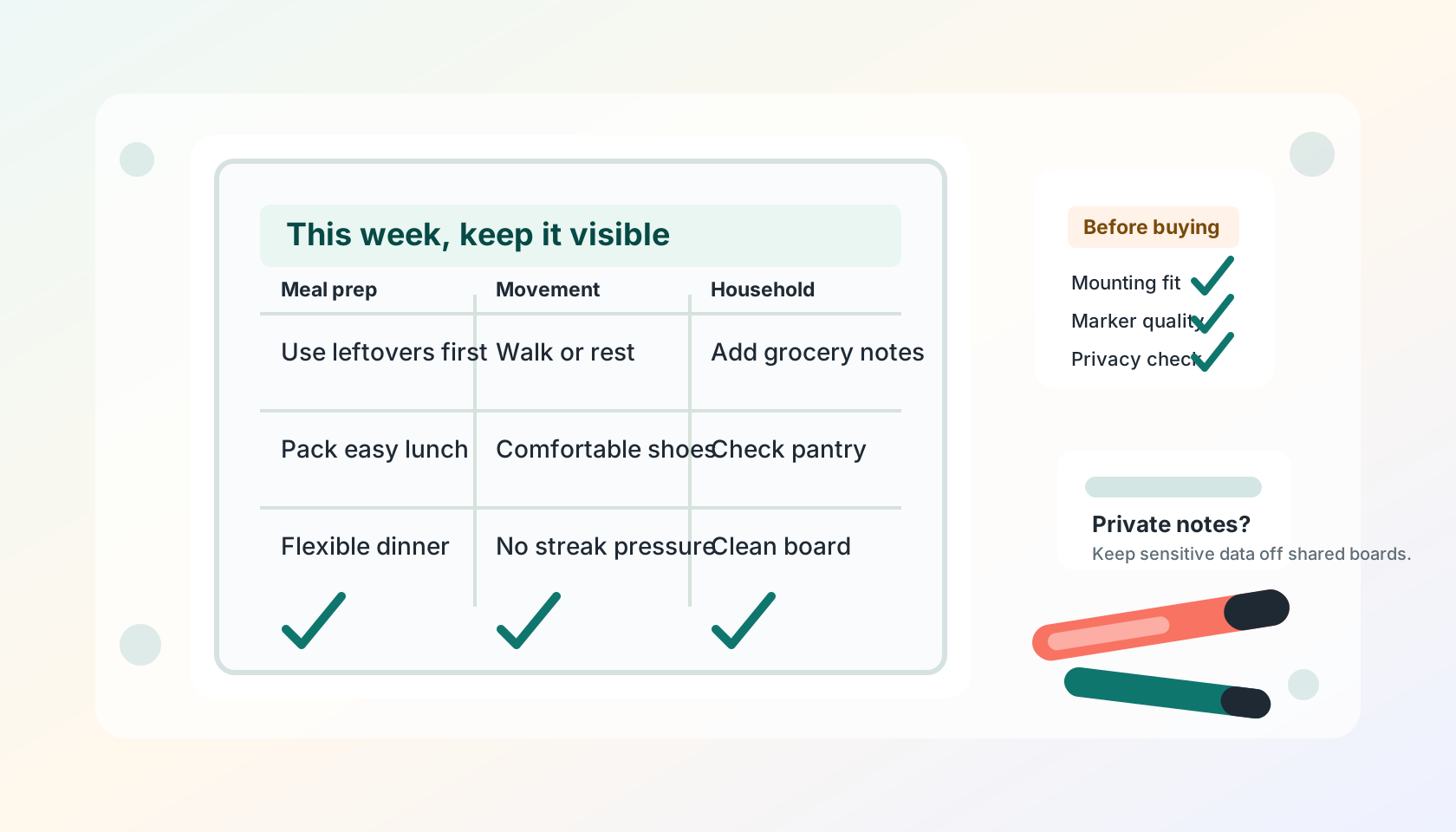
A dry-erase board can make a routine visible: meals to use up, walks to remember, household tasks to share, or a simple weekly plan. It cannot make a diet safe, guarantee weight loss, or turn tracking into medical guidance. The useful version is a low-pressure planning surface, not a scoreboard.
Who this guide is for
This guide is for adults who want a visible, app-free way to plan meals, walking, hydration reminders, appointments, or shared household routines. It is not a personalized habit plan, nutrition plan, exercise plan, or product ranking.
If you are comparing trackers more broadly, start with the non-shaming habit tracking guide. For simple shopping-list tools, the grocery list pad guide may be a better fit. For paper meal planning, see the meal planning notebook guide.
Best dry-erase board types by routine fit
GoodWeighFinds has not tested specific dry-erase boards hands-on for this page, and this is not a ranked review list. Use these best-fit categories to compare listings without relying on fake testing claims, unverified review language, or weight-loss promises.
- Best for fridge planning: Magnetic boards that keep meals, leftovers, and grocery reminders close to the kitchen action.
- Best for renters: Lightweight boards with removable mounting options, small footprints, or freestanding designs that do not require wall damage.
- Best for household coordination: Larger weekly boards with enough writing space for more than one person, shared meals, errands, and schedule notes.
- Best for privacy: Small desktop boards, cabinet-door boards, or plain boards that can be turned around, closed away, or kept out of shared sightlines.
- Best for flexible habit prompts: Blank or lightly structured boards that let you change categories without wasting dated pages or chasing streaks.
Selection criteria that actually matter
A board is useful only if it fits the place where decisions happen. A beautiful weekly grid does not help much if the marker dries out, the board ghosts after two weeks, or the layout makes ordinary changes feel like failure.
- Size and sightline: Choose a board large enough to read at a glance, but small enough to live where you will actually update it.
- Mounting method: Compare magnets, adhesive strips, stands, hooks, screws, and renter-friendly limits before buying.
- Marker and eraser quality: Check whether markers are included, whether they have magnets or clips, and whether replacements are easy to find.
- Ghosting and cleanup: Treat ghosting complaints as a practical product criterion. Boards that need aggressive cleaning may not work for daily routines.
- Layout flexibility: Blank boards are more adaptable. Pre-printed weekly boards are easier to scan but less forgiving when life changes.
- Privacy in shared spaces: Avoid putting weight, body measurements, food rules, or health-adjacent notes where visitors, coworkers, children, or roommates can see them.
Comparison framework
Before buying, run the board through a practical scorecard. The best dry-erase board is the one that reduces routine friction without making the home feel monitored.
- Where will it live: fridge, pantry door, kitchen wall, desk, entryway, bedroom, or inside a cabinet?
- Can you read it from the place where you make the decision?
- Can other household members add notes without needing your system explained every time?
- Does it leave room for leftovers, low-energy meals, schedule changes, rest days, and missed plans?
- Can you use it without calorie counts, weigh-ins, body measurements, or pass-fail food labels?
- Would the board still be worth buying if it caused no change in weight at all?
Weight-loss claim red flags
Most dry-erase boards are ordinary planning tools. Slow down when a listing claims a board will create rapid weight loss, control cravings, force discipline, burn fat, reset metabolism, or transform your body. A visible reminder can support a routine, but it cannot prove a health or body-result claim.
Be especially cautious with boards bundled into supplement plans, detox calendars, appetite-suppression prompts, stimulant products, patches, GLP-1 alternative claims, or hidden-ingredient style offers. Those categories require warning-first review and should not be treated as casual habit supplies.
Routine planning still has limits
A board can help organize meals, walks, chores, and reminders. It cannot decide what eating pattern, movement routine, hydration target, or weight-related goal is appropriate for your body, health history, medications, accessibility needs, schedule, or budget.
If you have pain, dizziness, pregnancy-related questions, diabetes, heart concerns, unexplained weight changes, medication side effects, a history of disordered eating, or any condition affected by food or activity changes, a qualified healthcare professional is a safer next step than a consumer planning product.
Who should skip this purchase
Skip a dry-erase board if a phone note, shared calendar, grocery app, paper planner, sticky note, or plain notebook already works. Also skip it if visible tracking makes your home feel tense, watched, cluttered, or punitive.
It is also reasonable to skip any board that turns food, walking, hydration, or weight-related habits into a public scorecard. A routine board should make the next step easier to see. It should not become a wall-mounted source of guilt.
Bottom line
The best dry-erase boards for habit and meal prep routines are readable, easy to mount, simple to clean, flexible enough for real weeks, and private enough for sensitive notes. Buy one for planning visibility and household coordination, not because a product listing hints that a whiteboard can deliver weight-loss results.