Packed-lunch upkeep guide
Best Lunch Bag Liners for Easier Cleanup
A removable liner can make sense when an otherwise useful lunch bag has an awkward fixed interior. The useful choice is not the one with the broadest “universal” claim—it is the one that fits the bag’s real interior, leaves the zipper and containers usable, and has care directions you can follow.
As an Amazon Associate, GoodWeighFinds earns from qualifying purchases.
Who this guide is for
This guide is for adults who already own a lunch bag and want a removable layer for crumbs, condensation, or routine cleanup. It covers reusable inserts only, not disposable plastic liners, food-contact storage bags, or a liner sewn permanently into a bag.
For a new complete carrier, use the lunch bag buying guide. If the bag is hard to organize rather than hard to clean, use the lunch-bag divider worth-it test. If commute capacity is the larger decision, compare a lunch bag with a meal-prep backpack. This page maps to the broader routine-support tools guide.
Useful formats—not unsupported winners
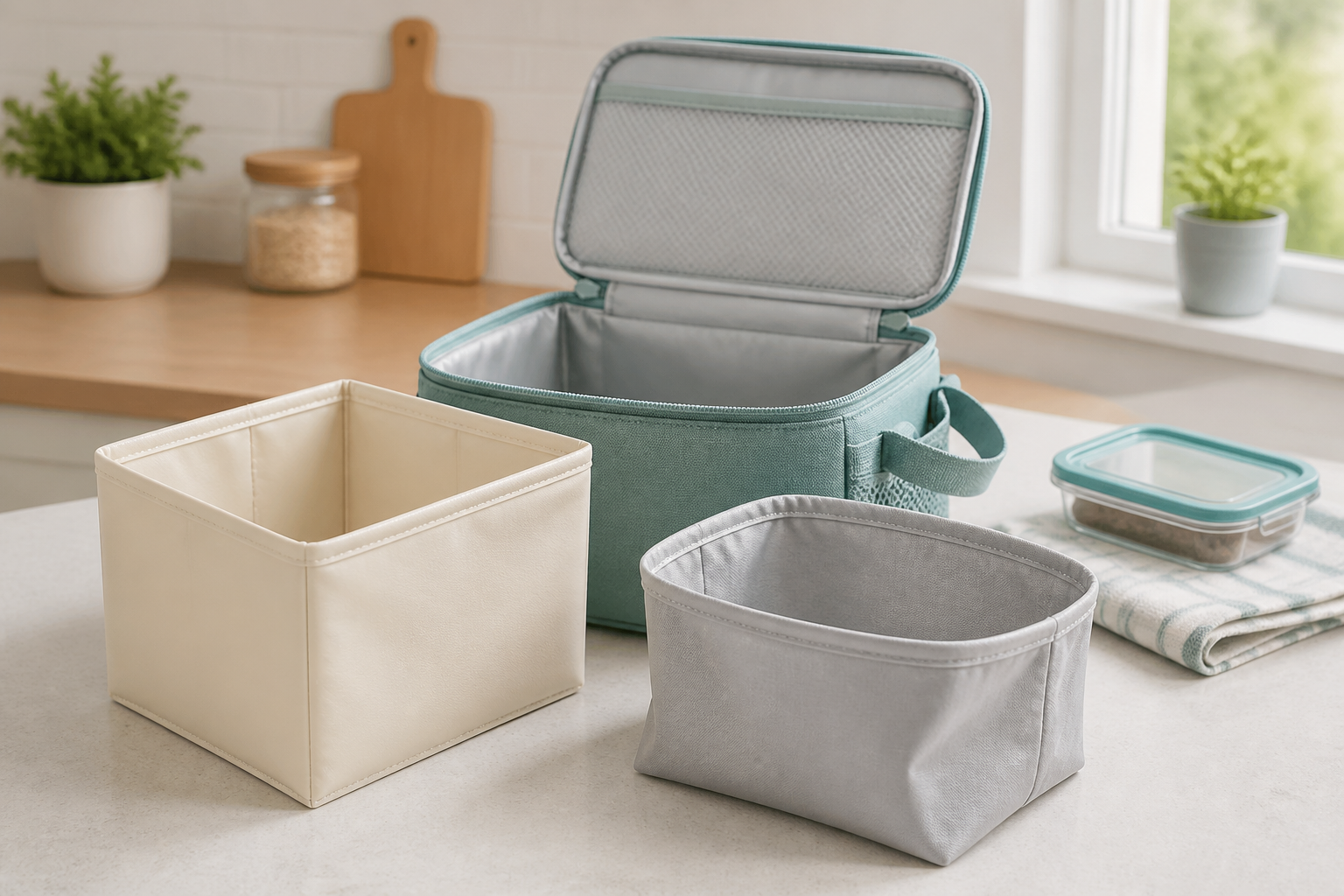
- Structured box inserts: These can hold their shape and contain loose crumbs, but their rigid corners may waste space or interfere with a tapered bag.
- Flexible fabric inserts: These can conform to more interiors and fold for storage, but seams and soft walls may be harder to wipe while the liner is still inside the bag.
- Drawstring or zippered insert bags: A closure can separate the liner from the outer bag, but it may reduce opening width or add bulk around taller containers.
- Open-top wipe-clean liners: These simplify access and can be lifted out quickly, but the listing should define the material and care method rather than relying on “waterproof” language.
Selection criteria that matter
- True interior fit: Measure usable length, width, height, corner shape, and any taper inside the lunch bag. Exterior bag dimensions are not enough.
- Opening and closure clearance: Check whether the loaded insert leaves room for the bag zipper, flap, handle attachments, and any top compartment.
- Container fit: Compare the liner’s usable base and opening with the actual containers, food jar, bottle, and ice pack you carry.
- Seams and corners: Inspect listing photos for folds, piping, and stitched corners where crumbs or liquid could collect. Do not assume stitched seams are leakproof.
- Material labeling: Look for a specific material description and intended-use guidance. “Food safe,” antimicrobial, odor-proof, and waterproof are claims to verify, not automatic facts.
- Cleaning method: Prefer explicit hand-wash, machine-wash, or wipe-clean instructions over a vague “washable” label.
- Drying: Check whether the insert turns inside out, opens fully, or needs air drying before it goes back into an insulated bag.
- Replacement and returns: Verify seller identity, current return terms, and whether the same size is likely to be available if you need a replacement.
A practical comparison framework
Mark each candidate yes, no, or unclear:
- Is it a removable reusable liner rather than a full lunch bag?
- Are the inside or usable dimensions stated, not merely the outside dimensions?
- Will it fit the bag’s tapered walls, corners, and closure?
- Does it hold the containers and ice pack without crowding the zipper?
- Are the material, seam construction, and intended use described?
- Are cleaning and drying instructions specific enough to follow?
- Are leak and insulation claims limited and explained?
- Would replacing or cleaning the existing bag be simpler and less bulky?
Claim and hygiene limits
A removable liner can separate some mess from the outer bag, but it does not make a lunch bag leakproof, keep food at a safe temperature by itself, or replace cleaning. Treat “waterproof,” “antimicrobial,” and insulation-duration language as manufacturer or seller claims unless the listing explains the test and limits.
Follow the care directions for both the liner and bag. Clean spills promptly, let each part dry fully, and discard a liner that cannot be cleaned, has damaged seams, retains an unexplained odor, or shows deterioration. Use appropriate containers and cold packs rather than relying on a liner to contain loose food or provide temperature control.
Who should skip this purchase
Skip a separate liner if the bag has a fitted removable insert already, the interior cannot be measured, the added layer crowds the closure, or the only search results are full bags and disposable products. Also skip listings with no dimensions or material and care details.
If the original lining is peeling, the insulation is damaged, or the bag cannot be cleaned according to its directions, a compatible replacement bag may be more practical than covering the problem. A small lidded container can also solve isolated condiment or snack messes with less bulk.
Bottom line
The best-fit lunch bag liner is a true reusable insert whose measured shape works inside the bag, leaves enough room for the planned containers and closure, and can be cleaned and dried as directed. Compare those concrete details, not universal-fit or waterproof promises—and skip the accessory when it makes the bag harder to use.