Small-kitchen recipe display guide
Best Magnetic Recipe Holders for Small Kitchens
A magnetic holder can move a recipe off a crowded counter, but only when the exact surface attracts a magnet and the displayed page stays visible without blocking a door, handle, vent, or work path. Start with the recipe format and a measured placement test.
As an Amazon Associate, GoodWeighFinds earns from qualifying purchases.
Choose the format after the recipe
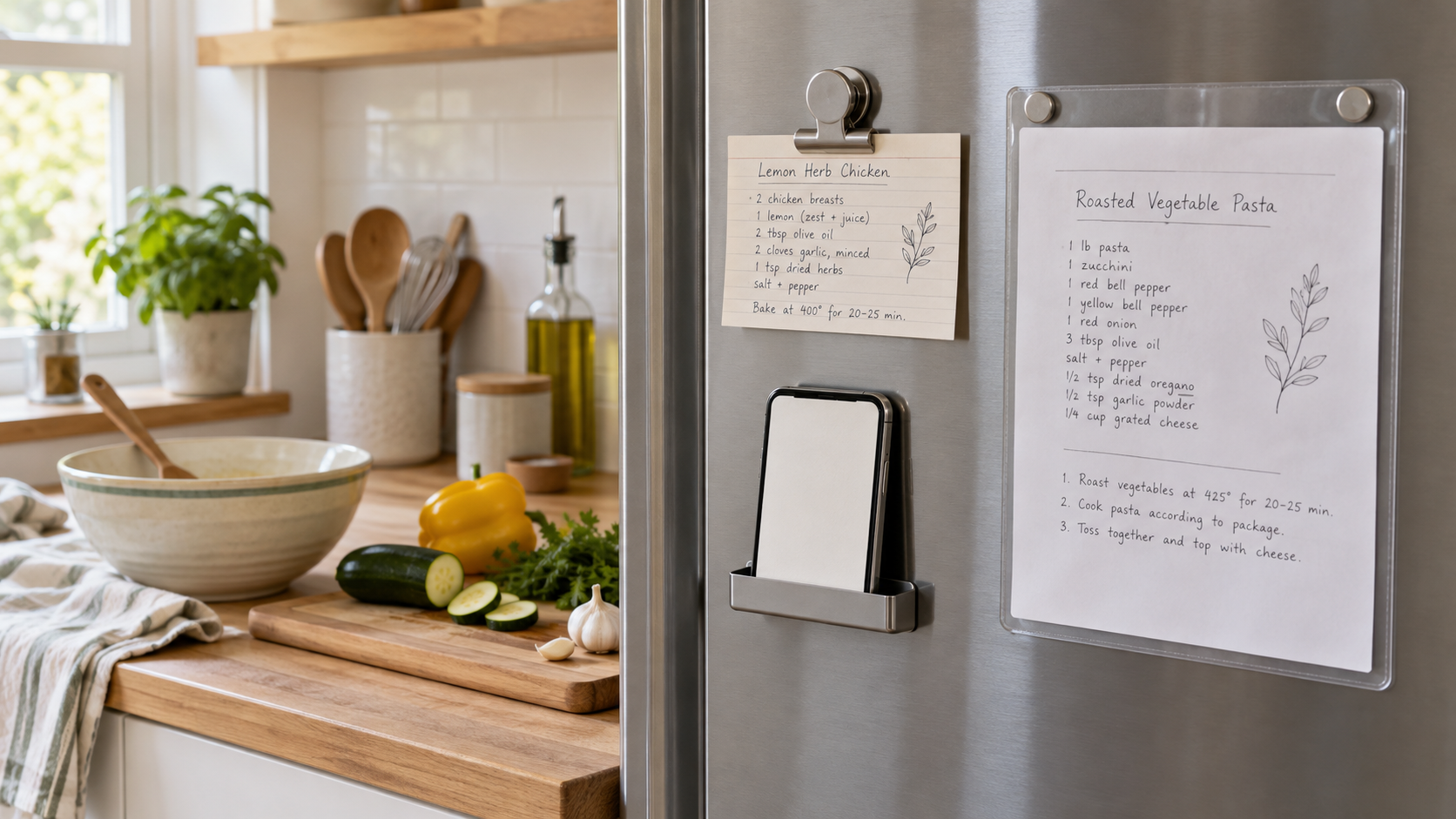
A clip suits one card or sheet, a document sleeve can keep a full page together, and a ledge can support a phone used for a recipe. None is automatically best. Measure the item that will actually be displayed, including a phone case or page protector, then decide whether it needs frequent turning, tapping, or removal.
This guide begins after you have chosen a magnetic display. If you are still deciding between counter and vertical placement, compare a magnetic holder with a cookbook stand. If you are unsure whether the magnetic format earns space at all, use the buy-or-skip test. Both connect to the broader routine-support tools pillar.
Four useful magnetic-holder formats
- Single magnetic clips: Low-bulk and easy to store, but the clip opening, page weight, and lower-page movement matter.
- Magnetic bars or multi-clip holders: Can support a wider sheet at more than one point; compare loaded width and whether clips move independently.
- Clear magnetic sleeves: Keep a page together and may allow surface wiping, but openings, glare, page insertion, and full drying deserve attention.
- Magnetic ledges or device cradles: Fit screen-based recipes only when the device, case, controls, charging port, and appliance placement all work together.
Seven checks before buying
- Exact surface compatibility: Test the intended spot with an ordinary magnet. Stainless-looking panels, glass fronts, cabinet skins, and appliance sides do not all behave alike.
- Recipe dimensions: Measure the card, printed page, binder sheet, tablet, or cased phone rather than relying on a product photo.
- Loaded clearance: Check the holder and displayed item against door swing, handles, adjacent cabinets, vents, controls, and people passing through.
- Viewing position: Tape a paper outline at the proposed location and read it from the actual prep position before buying.
- Interaction: Page turning, scrolling, tapping, and removal can apply more force than simply displaying an item. Verify how the holder is intended to be used.
- Contact surfaces: Look for documented padding and cleaning instructions, but do not treat “scratch-free” as a guarantee. Inspect the appliance surface regularly.
- Cleaning and storage: Compare how clips, sleeves, and ledges come apart, dry, and store when not attached.
A no-buy placement test
Make a paper template of the holder’s listed exterior dimensions and tape it temporarily at the proposed location using a surface-appropriate method. Add a paper copy the size of the usual recipe. Open every nearby door and drawer, stand at the normal prep spot, and trace the path between counter, sink, and appliance.
For a phone or tablet, include the case in the outline and check that the placement does not expose the device to heat, steam, splashes, or a fall into the work area. Follow the device and appliance makers’ guidance. If the recipe is hard to read or the location interrupts normal kitchen use, a counter stand, wall-mounted solution approved for the surface, or a simple printed page may fit better.
Claims to verify rather than assume
- “Strong magnet”: Meaningless without the tested surface, load, orientation, and whether the holder is static or handled.
- “Universal”: Confirm the exact recipe or device dimensions, case thickness, clip opening, and usable sleeve area.
- “Scratch-free”: Check contact material and care directions; trapped grit and repeated sliding can change the result.
- “Waterproof”: A sleeve opening, seam, or phone cradle may remain exposed. Do not place electronics where splashes or steam are expected.
- “Heat resistant”: Do not use this wording to justify placement on or near a hot appliance. Follow appliance and device clearance guidance.
Who should skip a magnetic recipe holder
Skip it when the intended surface does not attract a magnet reliably, when appliance guidance rules out attachments, or when the only readable position interferes with doors, ventilation, controls, or traffic. It is also a poor fit when several pages must be turned often, a heavy binder is the normal recipe source, or the holder would put a device near heat, steam, or splashes.
A holder may be unnecessary when a current cookbook stand, binder clip, printed recipe, or voice timer already solves the display problem. Buy for a repeated measured friction point, not because a staged product photo makes a small kitchen look tidier.
Bottom line
The best magnetic recipe holder is the format that fits the actual recipe, attaches to a confirmed compatible surface, stays readable from the prep position, and leaves every appliance opening and movement path clear. Compare clips, sleeves, and ledges by measurements and intended use—not by vague strength or universal-fit claims—and skip the purchase when the paper-template test does not improve the routine.