Buy, reuse, or skip
Is a Magnetic Recipe Holder Worth It in a Small Kitchen?
A magnetic recipe holder can be useful when a compatible vertical surface sits within a comfortable sightline and you regularly cook from cards or printed pages. Skip it when the refrigerator is not magnetic, the display spot is awkward, or a clip, binder, or stand you already own does the same job.
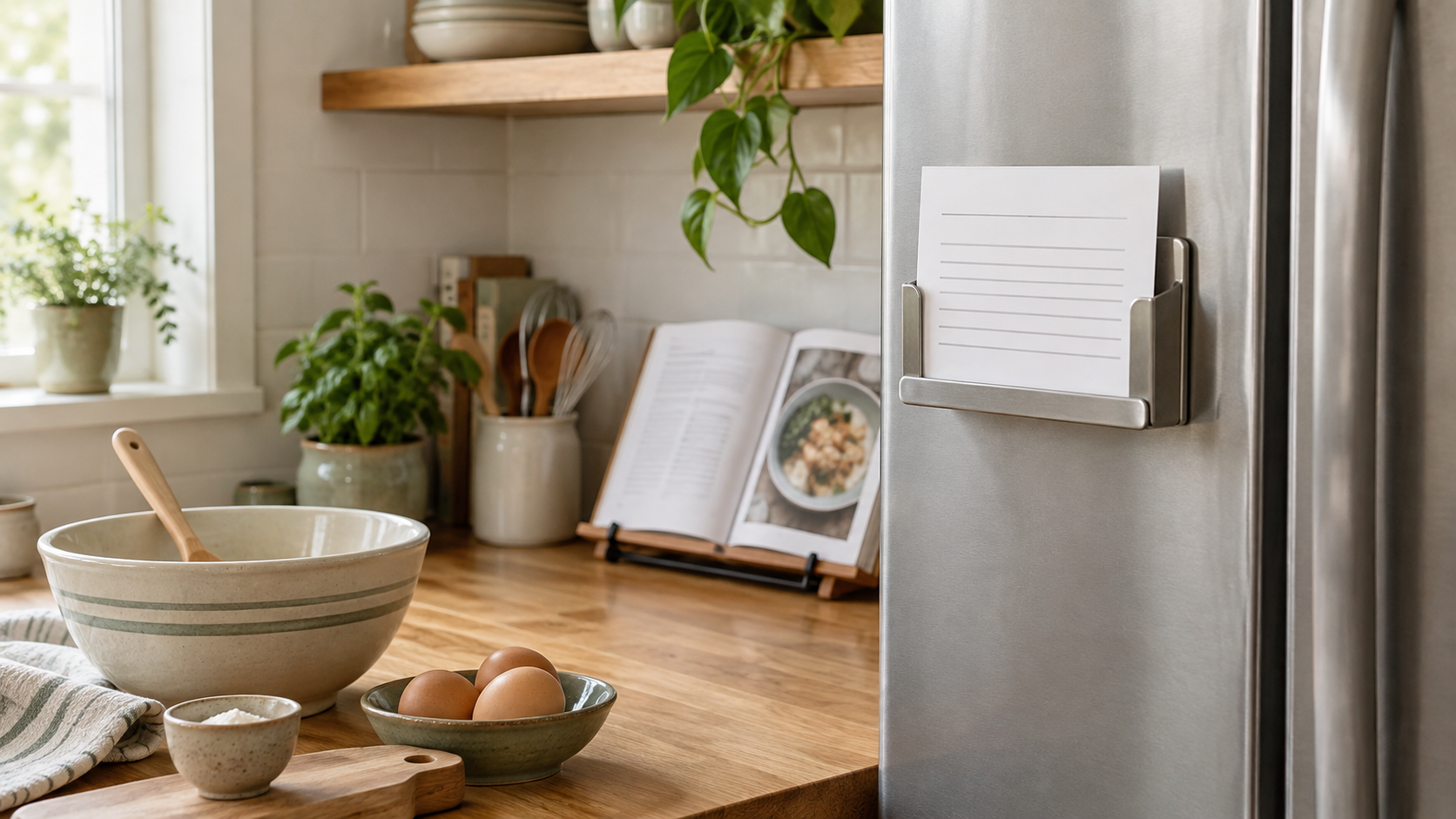
The quick decision
- Buy: a confirmed magnetic surface is close to the prep area, the recipe format fits, and the holder would be used often enough to justify a dedicated accessory.
- Reuse: try an ordinary magnet or clip with a copied recipe card if that already keeps the page visible and secure.
- Choose another format: use a cookbook stand for books or tablets, or a binder when storage and organization are the main problem.
- Skip: the only possible mounting spot is hard to read, interferes with an appliance door, or sits near heat, steam, splashes, or a busy walkway.
Confirm the surface before comparing holders
Do not assume every refrigerator door or side panel will hold a magnet. Some stainless-look surfaces, glass panels, cabinet fronts, and appliance covers are not magnetic. Test the exact spot with a magnet you already own, then check the appliance maker's surface and care guidance before attaching anything.
Also inspect the location rather than the appliance in general. A magnetic side panel may work while the door does not, and a door-mounted holder may collide with a wall, handle, cabinet, or person when opened. Avoid covering vents, controls, seals, labels, displays, or maintenance access.
Measure the recipe and the viewing position
Write down the width and height of the cards or printed pages you actually use. A holder sized for an index card may hide lines on a full sheet, while a wide sleeve may be unnecessary for one small card. Check whether the listing identifies usable opening dimensions rather than only the product's outside size.
Temporarily tape a blank sheet at the proposed height and stand where you normally prep. Can you read it without leaning, turning sharply, or stepping into a traffic path? Check glare at the time of day you usually cook. A vertical display that is too high, too low, or across the room does not solve the viewing problem.
Match the holder type to the material
| Format | Useful for | Verify before buying |
|---|---|---|
| Magnetic clip | One loose card or sheet with minimal hardware | Jaw opening, grip surface, magnet placement, and whether it covers text |
| Card pocket or ledge | Small cards that need bottom support | Usable width and depth, card thickness, lip height, and removal clearance |
| Clear sleeve | Printed pages where wipeable coverage is useful | Exact insert size, opening direction, glare, seams, and maker cleaning directions |
| Magnetic arm or frame | A particular viewing angle or larger sheet | Joint range, supported material, total projection, door clearance, and stated load |
A maker's “strong magnet” wording does not establish performance on your appliance, especially when the page size, holder projection, door movement, and surface finish differ. Treat grip and load language as model-specific claims and stay within the stated use.
Check clearance from heat, water, and movement
Choose a location that keeps paper, plastic sleeves, and the holder away from burners, hot appliance surfaces, steam outlets, sinks, and routine splashes. Follow the appliance and holder instructions; a refrigerator-mounted accessory is not automatically suitable near every cooking zone.
Open nearby doors and drawers fully. Walk the normal route between sink, counter, refrigerator, and stove. The holder should not catch clothing, narrow the passage, block a handle, or drop into food when the appliance door moves.
Inspect cleaning and storage
Look for care directions for the holder, magnet cover, clip, sleeve, and any joints. Check whether crumbs or grease can collect in seams and whether the part can be removed without scraping the appliance finish. “Easy to clean,” “scratch-free,” and “rustproof” are claims to verify, not guarantees for every kitchen or finish.
If the holder will stay up permanently, include its visual footprint and door clearance in the decision. If it will be stored after each use, confirm that folding or removing it is simpler than putting away a stand you already have.
Red flags on a listing
- No usable interior dimensions, surface guidance, magnet placement, supported material, or complete product dimensions.
- “Works on every refrigerator,” “holds any cookbook,” or a load claim with no defined setup.
- Photos that show a large page or device but do not identify the supported size or weight.
- Claims of scratch-free, waterproof, heatproof, secure, or permanent performance without conditions and care limits.
- A multipiece bundle that obscures how many complete holders are included.
Alternatives may solve the problem better
If the real need is organizing loose recipes, compare a recipe binder with a cookbook stand. A binder stores pages but does not necessarily display them at a useful angle; a stand uses counter space but can support books and, when explicitly allowed by the maker, some devices.
If you are choosing between the two display formats, compare a magnetic recipe holder with a cookbook stand by surface fit, sightline, recipe format, working footprint, cleaning, and storage. If a stand already matches the recipe format, use the small-space cookbook stand guide to compare open footprint, viewing angle, page support, cleaning, and folded storage. A basic magnet or clip already in the kitchen is the lowest-cost test for a single card.
Bottom line
A magnetic recipe holder is worth considering only after the exact surface, sightline, recipe size, door clearance, and care routine pass a no-buy test. When those checks pass, compare magnetic clips, sleeves, and ledges by measured recipe fit and loaded clearance. When they fail, a binder, stand, or ordinary clip is more practical than forcing a single-purpose accessory into the kitchen. For the broader framework, visit the routine-support tools guide.