Small-pantry buying guide
Best Pantry Can Organizers for Small Kitchens
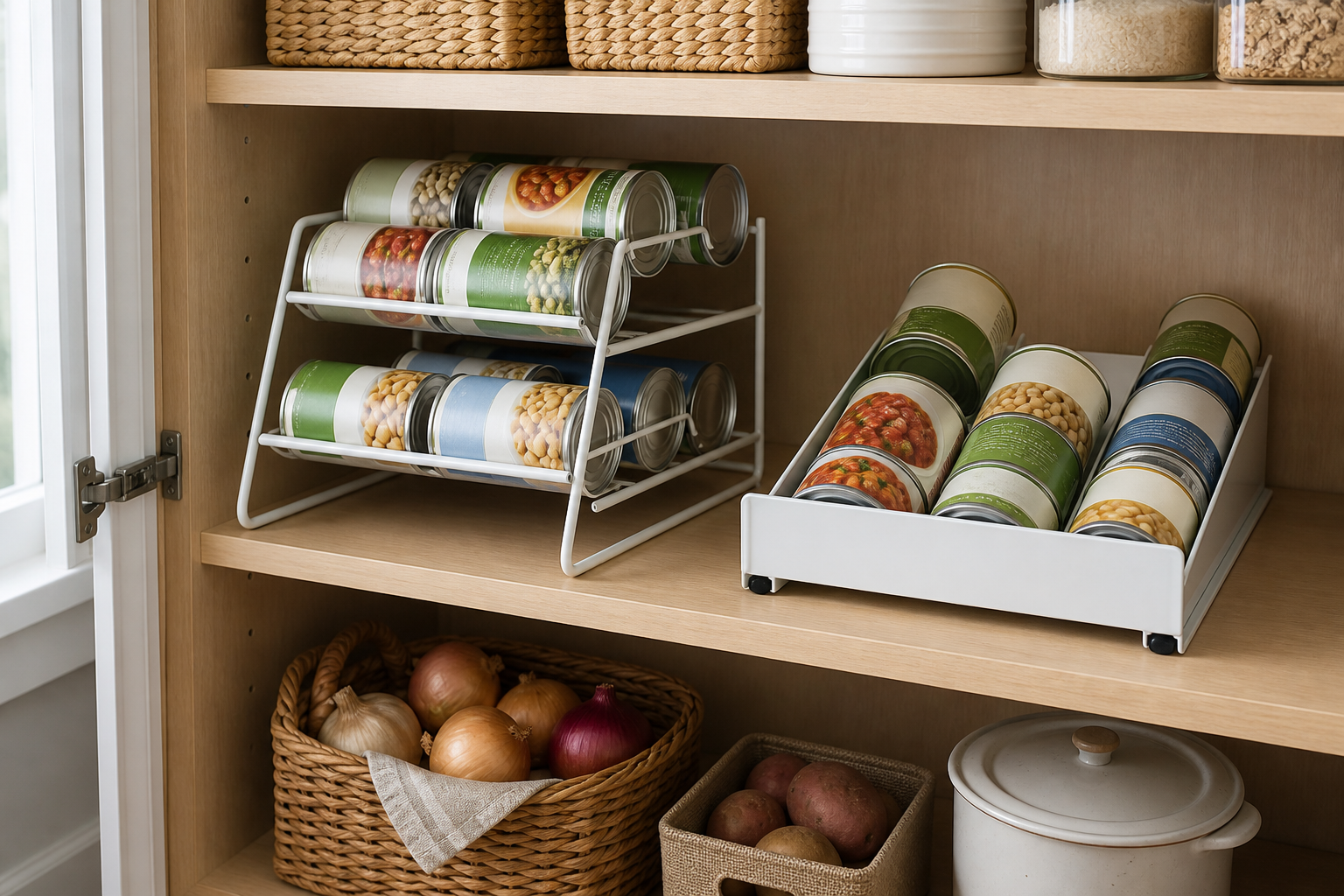
A can organizer can keep repeat meal staples visible and reachable, but only when the rack fits the shelf and the cans fit the rack. Measure both before comparing formats; listing capacity alone is not enough.
As an Amazon Associate, GoodWeighFinds earns from qualifying purchases.
Who this guide is for
This guide is for adults storing canned meal staples in a narrow pantry or cabinet who have trouble seeing or reaching what is already there. The organizer’s job is storage access. It does not improve food quality, prescribe what to eat, or cause weight loss.
For a broader set of practical tools, use the routine-support tools guide. Choose the pantry-bin guide for pouches and mixed packages, or the lazy Susan guide when rotating jars and bottles is the real access problem.
Best-fit formats, not unsupported winners
- Tiered racks: Best to compare when seeing labels matters more than automatic rotation.
- Gravity-feed dispensers: Useful when cans of consistent diameter should roll toward a front pickup point.
- Adjustable racks: Worth comparing for two or three repeat can sizes, provided dividers lock securely.
- Single-row organizers: Often a better fit for a narrow cabinet or a small, stable inventory.
- Simple shelf risers: A flexible alternative when can sizes vary too much for dedicated channels.
Selection criteria that matter
- Exterior dimensions: Measure shelf width, depth, and height at the tightest point, including hinges and door trim.
- Loading clearance: Leave enough space above and in front to place and remove cans after installation.
- Can compatibility: Compare the actual diameter and height of repeat purchases with each channel’s usable dimensions.
- Usable capacity: Treat a stated can count as format-specific, not universal; larger or tapered cans may reduce it.
- Access pattern: Decide whether you need visible labels, first-in-first-out dispensing, or simple grouping.
- Anti-roll design: Front stops and channel angles should retain cans without making pickup awkward.
- Stability: Look for a level base, secure joints, and manufacturer load guidance. Avoid top-heavy placement.
- Assembly: Check whether tools are required and whether width dividers or tiers can shift under load.
- Cleaning: Open wire can be easier to wipe around; solid trays may catch drips but require removal.
- Return terms: Confirm the seller and current return conditions because fit is hard to judge from staged photos.
A practical comparison framework
Mark each question yes, no, or unclear. Verify every unclear measurement before ordering.
- Does the assembled organizer fit the measured shelf with loading clearance?
- Do the channel width and stop height suit the cans you buy repeatedly?
- Is capacity stated for those can dimensions rather than a vague “standard can”?
- Can you read labels or otherwise identify each can without unloading the rack?
- Does a gravity-feed design dispense one can without the next jumping its stop?
- Is the loaded rack stable and within stated load guidance?
- Can the organizer be cleaned without dismantling the whole pantry?
- Would buying fewer cans or using a shelf riser solve the problem more simply?
Who should skip a dedicated can organizer
Skip one if canned goods are occasional purchases, sizes change often, or the shelf already keeps everything in one visible row. A shallow bin may be more flexible for mixed packages, and a shelf riser can display varied can sizes without locking them into channels.
Also skip any rack that requires stacking beyond comfortable reach, blocks a cabinet hinge, or cannot be anchored or loaded stably as directed. Do not buy extra cans merely to fill the organizer; organize the amount your household realistically uses.
What a can organizer cannot do
A rack can improve visibility and access. It cannot extend a food’s storage life beyond label directions, guarantee safe food, design a suitable eating plan, or produce weight loss. Check can condition and dates directly rather than treating organization as a safety guarantee.
Bottom line
The best pantry can organizer is the format that fits a measured shelf, matches the cans you actually keep, stays stable when loaded, and makes the next can easy to identify and remove. Start with dimensions and access; capacity claims come second.