Routine-support buying guide
Best Rain Shoe Covers for Walking Commutes
A removable shoe cover can make sense for a short, paved commute when changing footwear is awkward. The useful choice depends on the shoe underneath, the route, and how the cover stays on—not vague “waterproof” or “anti-slip” wording.
As an Amazon Associate, GoodWeighFinds earns from qualifying purchases.
Who this guide is for
This guide is for adults walking ordinary paved commute segments who want temporary rain coverage over compatible everyday shoes. It does not cover flood, ice, trail, cycling, motorcycle, construction, or occupational footwear.
For the broader approach, start with the routine-support tools guide. If body coverage matters more, compare packable rain jackets or compact umbrellas.
Useful formats—not unsupported rankings
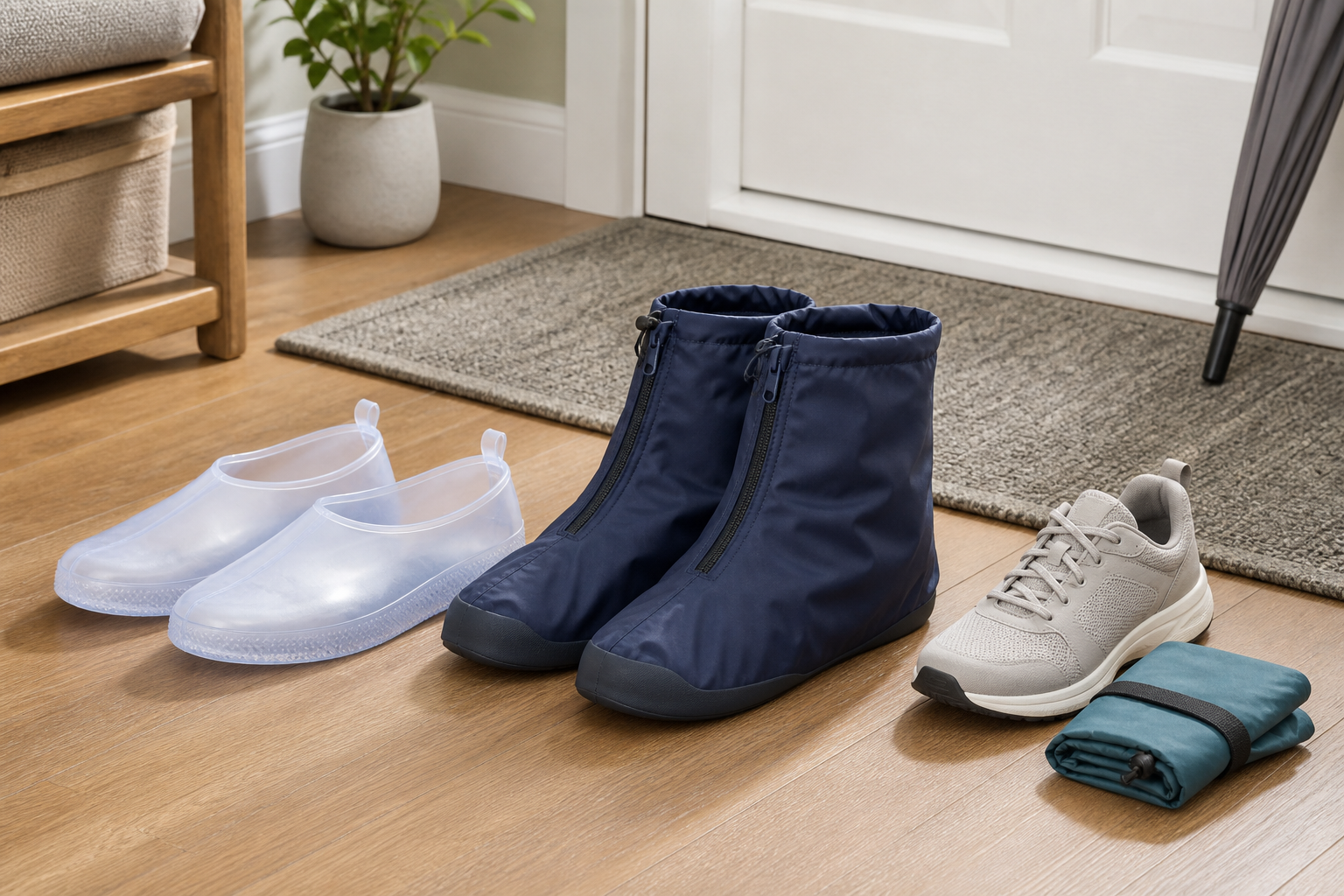
- Low-cut stretch covers: Compact to carry, but highly dependent on outsole width and toe shape.
- Mid-height zippered covers: More upper coverage, with added bulk and closure-fit questions.
- Overshoe-style covers with a defined tread: Easier to inspect underneath, though tread language never guarantees grip.
- Foldable fabric covers: May pack smaller, but seam, coating, and drying instructions matter.
Selection criteria that matter
- Measured fit: Record outsole length, width, and total shoe height; compare all three with the maker chart.
- Shoe shape: Thick midsoles, wide toe boxes, bulky heels, and protruding tread change compatibility.
- Opening and closure: Check whether it opens far enough without straining a zipper or seam.
- Sole coverage: Confirm what is enclosed and inspect the tread without treating “anti-slip” as a guarantee.
- Materials and seams: Water may enter through openings, closures, seams, damage, or poor fit despite broad waterproof language.
- Packability and care: Verify folded size, weight, washing, drying, damage inspection, and separate damp storage.
- Returns: Check seller identity and whether a clean indoor fit check affects eligibility.
A practical comparison framework
Mark each candidate yes, no, or unclear:
- Does sizing use measured outsole dimensions?
- Will the opening accommodate the heel, sole width, and upper?
- Can it go on without overstretching a seam or closure?
- Does it remain positioned during a careful dry indoor fit check?
- Are sole coverage and tread clearly shown?
- Are rain claims tied to construction or a stated test?
- Are cleaning, drying, storage, and damage directions provided?
- Can the damp pair be carried separately on arrival?
Traction and rain claims have limits
No removable cover can guarantee grip or keep every shoe dry in every condition. Water, leaves, painted markings, metal grates, slope, cover fit, tread wear, and pace all affect footing. A flexible cover can change how the shoe contacts the ground.
Try a new cover over clean shoes on a dry, level surface. Stop if it shifts, bunches, restricts movement, or feels unstable. Avoid ice, flooding, deep water, trails, steep routes, and excluded settings. Changing the route, delaying the trip, or using purpose-appropriate footwear matters more than adding a cover.
Who should skip this purchase
Skip covers if weather-ready footwear already solves the problem, there is nowhere to store a damp pair, or the shoe is outside the maker’s chart. Skip listings without measured sizing, care directions, materials, or clear sole and closure views.
These are a poor fit for ice, flooding, rough trails, deep mud, steep grades, or job-specific requirements. Anyone needing specialized stability, mobility, or footwear support should not rely on a generic marketplace claim.
Bottom line
The best rain shoe cover is the format that measurably fits the exact shoe, stays positioned during a cautious fit check, has a clearly described sole and closure, and can be dried and carried. Treat it as limited weather coverage for a paved commute—not proof against water or slipping.