Pack coverage and visibility guide
Best Reflective Backpack Covers for Walking Commutes
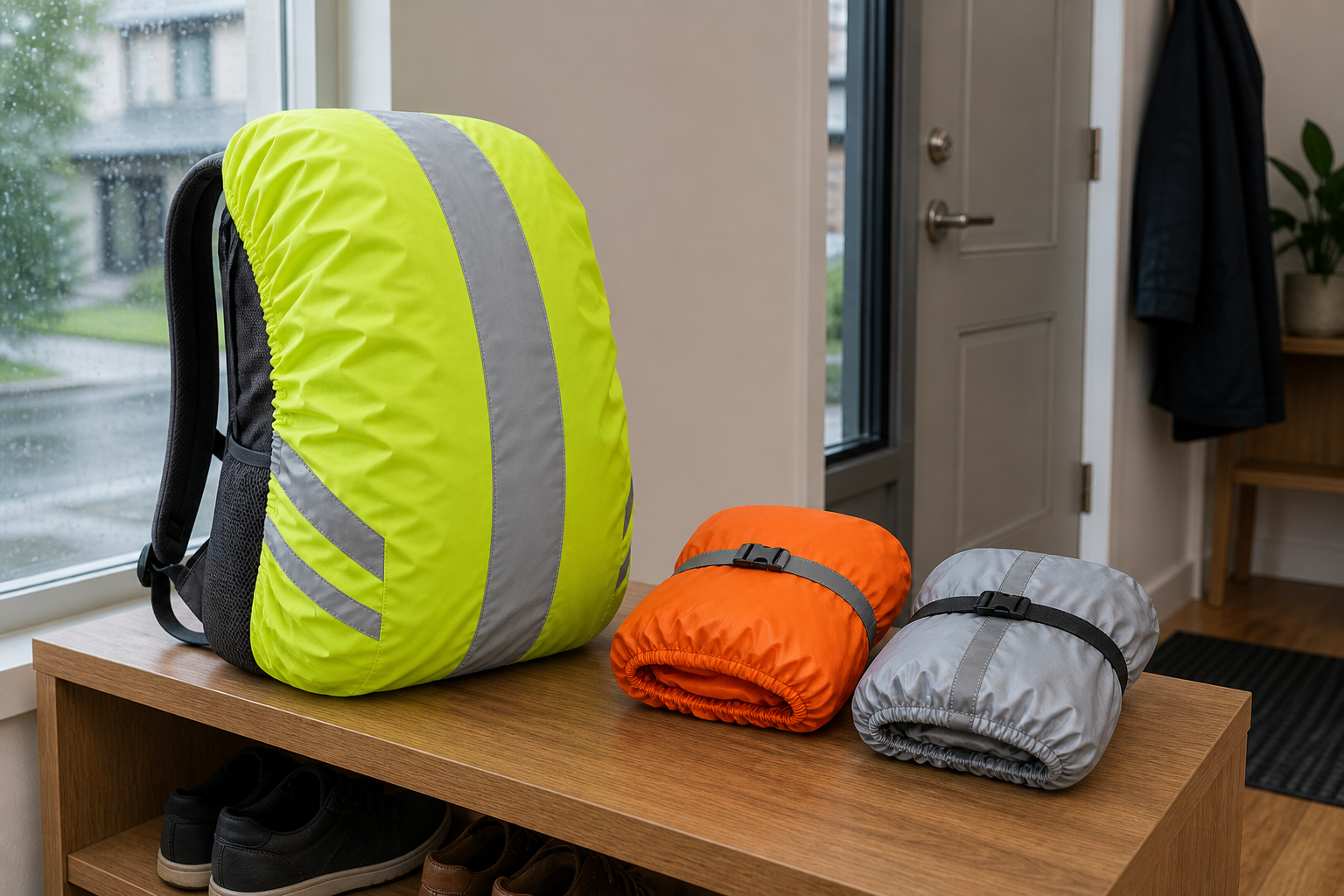
A reflective backpack cover can add rain coverage and a larger reflective surface to a bag you already carry. Start with measured pack fit, retention, reflective placement, and the maker's exact weather language—not promises that a bright cover will keep anyone safe.
As an Amazon Associate, GoodWeighFinds earns from qualifying purchases.
Who this guide is for
This guide is for adults who already walk with a backpack in dim or damp conditions and want bag-specific coverage. It is distinct from choosing a backpack, body-worn reflective gear, or an active light. For the wider category map, use the routine-support tools guide.
Best-fit types, not unsupported rankings
- Compact daypacks: Choose a published volume and dimension range that will not bunch around a small load.
- Changing pack loads: Compare elastic edges plus an adjustable retention strap.
- Larger reflective area: Look for broad panels visible from relevant directions, not a tiny decorative strip.
- Frequent packing: Check folded dimensions or an attached pouch and practical care directions.
- Wetter commutes: Look for specific fabric and seam claims, while recognizing that a pack liner may still be needed.
Selection criteria that matter
- Pack measurements: Compare loaded height, width, depth, and volume. Liter labels do not describe every bag shape.
- Retention: Check the elastic perimeter plus any cross strap, buckle, or anchor. A loose cover can shift or uncover the bag.
- Access: Confirm that shoulder straps, needed pockets, and light loops remain clear.
- Reflective placement: Check location and area in ordinary photos; flash photography can exaggerate prominence.
- Weather language: Water-resistant and waterproof are not interchangeable. Check fabric, coating, seams, gaps, and stated limits.
- Packed size: Prefer measurements or a pouch that fits the pocket where the cover will live.
- Care: Follow wash, drying, and coating-care directions; abrasion and harsh cleaning may affect surfaces.
- Return terms: Keep packaging until the cover has been tried on the normally loaded bag when the policy allows.
A practical comparison framework
Mark each candidate yes, no, or unclear. Treat unclear measurements and performance claims as questions to resolve before buying.
- Does the fit range match the bag's loaded dimensions and shape?
- Does a backup strap supplement the elastic edge?
- Will reflective material remain exposed rather than folding underneath?
- Are weather claims tied to materials, seams, or test details?
- Can the cover dry fully and pack into a pocket you will use?
- Does it preserve access to straps and essential bag features?
- Would a liner, umbrella, rain jacket, vest, or active light solve the problem better?
- Would it still be useful with no effect on weight, calories, or fitness?
Reflective material and rain coverage have limits
Passive reflective material needs an external light source and a useful viewing angle. It cannot illuminate a path or guarantee that another road user notices the bag. Weather, distance, obstructions, traffic, and how the backpack sits can change what is visible.
A cover can shield exposed panels, but water may still enter around the back, shoulder-strap openings, seams, or uncovered pockets. Sensitive contents may need a sealed pouch or pack liner. Treat maker language as a comparison input, not a promise.
How this differs from other walking gear
A backpack cover works on the bag only. For body-worn options, see the reflective walking gear guide. If rain protection for the person is the main problem, compare packable rain jackets. If the bag itself is uncomfortable, start with the walking backpack guide.
Who should skip a reflective backpack cover
Skip it if you do not carry a backpack, the bag already has useful rain and reflective features, or no cover publishes a credible fit range. A liner may be simpler when dry contents matter most. Body-worn gear or an active light may fit routes where the backpack is hidden or external light is limited.
Do not use a cover as a reason to continue through lightning, flooding, poor visibility, severe wind, unsafe traffic, or unstable footing. Changing the route, time, or travel plan can be the better decision.
Claims to ignore
Skip absolute language such as “completely waterproof,” “visible from every angle,” or “keeps you safe” when scope and evidence are missing. A cover also cannot increase calorie burn, cause weight loss, or guarantee a fitness result.
Bottom line
The best reflective backpack cover fits the loaded bag by measurement, stays attached without blocking straps, presents useful reflective area, and makes limited weather claims you can check. If it cannot cover the directions or contents that matter, choose a better-matched visibility or rain solution.