As an Amazon Associate, GoodWeighFinds earns from qualifying purchases.
Routine-support buying guide
Best Reflective Gear for Evening Walking Routines
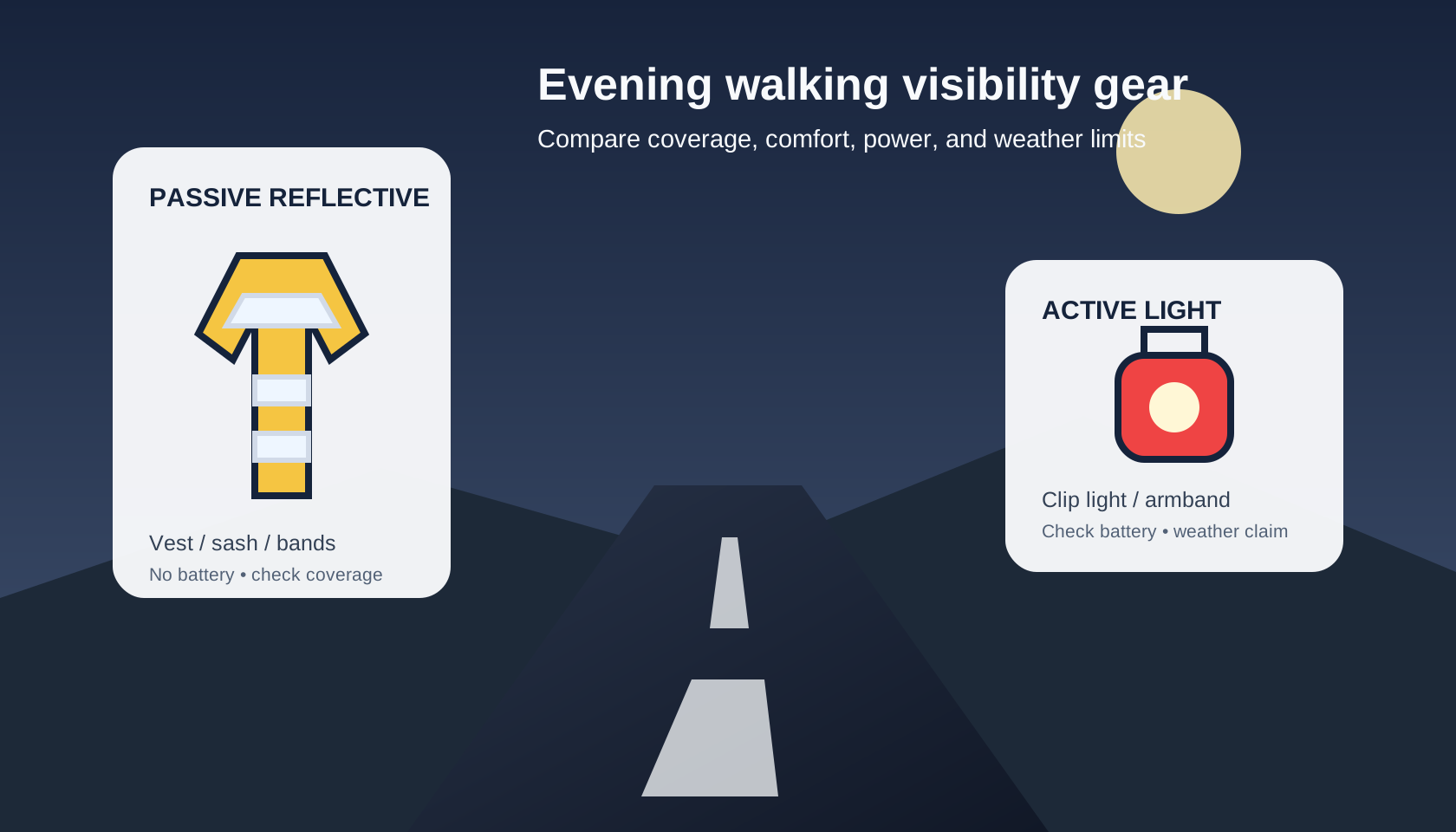
Walking before sunrise or after dark creates a practical visibility problem. Reflective gear can help other road users notice light returning from their headlights, while an active light can add its own illumination. Neither makes every route safe, prevents collisions, or replaces route judgment. This guide compares useful formats without pretending one accessory guarantees protection.
Who this guide is for
This guide is for adults whose normal walking window falls in low light and who want a simple visibility layer over ordinary clothing. It maps to the broader routine-support tools guide: the gear may reduce routine friction, but it does not cause weight loss or prove that a route is safe.
Best fit categories, not unsupported rankings
GoodWeighFinds has not tested specific products hands-on for this page. “Best” means the format that fits a stated use case after you verify the current listing—not a claim that one product outperforms every alternative.
- Best broad passive coverage: an adjustable reflective vest. Look for reflective material visible across the torso from multiple directions and enough adjustment to fit over seasonal layers.
- Best lightweight layer: a reflective sash. A sash is quick to put on and has no battery, but confirm it stays positioned and presents reflective area to both front and back.
- Best supplement to torso coverage: reflective wrist or ankle bands. Moving bands may be noticeable, but small bands provide less surface area and should not be treated as complete coverage.
- Best self-powered visibility: a clip light or lighted armband. Active lights do not depend on headlights reflecting back, but require charged or fresh batteries and secure placement.
- Best simple combination: passive reflective gear plus an active light. The two methods cover different conditions, provided neither adds so much fuss that it stays at home.
Selection criteria that matter
- Direction of coverage: Check what is visible from the front, back, and sides. A bright patch facing only one direction leaves gaps.
- Passive versus active design: Reflective material needs an external light source; clip lights emit light but depend on power and placement.
- Fit over layers: Verify the adjustment range over a T-shirt, jacket, or coat rather than relying on a generic “one size” label.
- Comfort and movement: Consider edges, strap bounce, heat, twist, and whether a band constricts when arms or ankles move.
- Power details: For active lights, check battery type, charging port, runtime mode, low-battery indicator, and whether replacement batteries are easy to obtain. Treat runtime as a manufacturer claim.
- Weather language: “Water-resistant” does not mean waterproof. Look for a defined rating or clear care limit, and avoid assuming rain claims cover immersion.
- Care and storage: Confirm washing instructions for reflective surfaces and store powered gear where it is likely to remain charged.
A practical comparison framework
Compare gear against one ordinary route and the clothing you actually wear. Ignore transformation language and ask:
- Can approaching road users potentially see reflective or illuminated surfaces from the directions that matter on this route?
- Does the gear remain visible when a coat, backpack, walking belt, or bag is added?
- Can it be put on quickly and adjusted without pinching, dragging, or constant repositioning?
- For a powered light, is the charging or battery routine realistic?
- Does the listing show the actual reflective placement, dimensions, attachment points, care directions, and return terms?
- Would this still be useful if it had no effect on weight, calorie burn, pace, or fitness?
Visibility gear has real limits
Reflective and illuminated accessories may help a person stand out, but visibility depends on angle, distance, weather, obstructions, lighting, traffic, and whether another road user is paying attention. Product phrases such as “360-degree visibility,” “seen from miles away,” or “keeps you safe” should be treated as marketing claims unless the listing gives a relevant, verifiable basis—and even then they are not guarantees.
Choose lower-traffic, familiar, adequately lit routes when practical; stay aware of crossings, driveways, surfaces, and local conditions; and follow local laws. If conditions feel unsafe, changing the time, route, or indoor plan may be more useful than buying more gear.
Who should skip this purchase
Skip new gear if your existing high-visibility layer and light already fit the route, if the accessory is uncomfortable enough that you will not wear it, or if the listing hides reflective placement, sizing, power details, or return terms. Also skip products sold mainly through fear or guarantees of injury prevention.
People with vision, balance, mobility, circulation, sensory, or other health concerns may need individualized advice that a buying guide cannot provide. If walking causes pain, dizziness, chest symptoms, concerning shortness of breath, or instability, pause and talk with a qualified healthcare professional.
Weight-loss claims to ignore
A reflective vest, sash, band, or light can support visibility logistics. It cannot burn fat, increase calorie burn by itself, shape the body, or guarantee that an evening walking routine produces weight loss. Avoid listings that bundle ordinary visibility gear with sweat belts, stimulants, detox products, appetite suppressants, patches, supplements, or “GLP-1 alternative” claims.
Bottom line
For broad, battery-free coverage, start by comparing adjustable reflective vests or sashes. If the route has limited external lighting, consider an active clip light as an additional visibility layer and verify its power routine and weather limits. The best choice is comfortable, visible from relevant directions, easy to maintain, and modest about what it can do.