As an Amazon Associate, GoodWeighFinds earns from qualifying purchases.
Product-first guide
Walking belt product searches
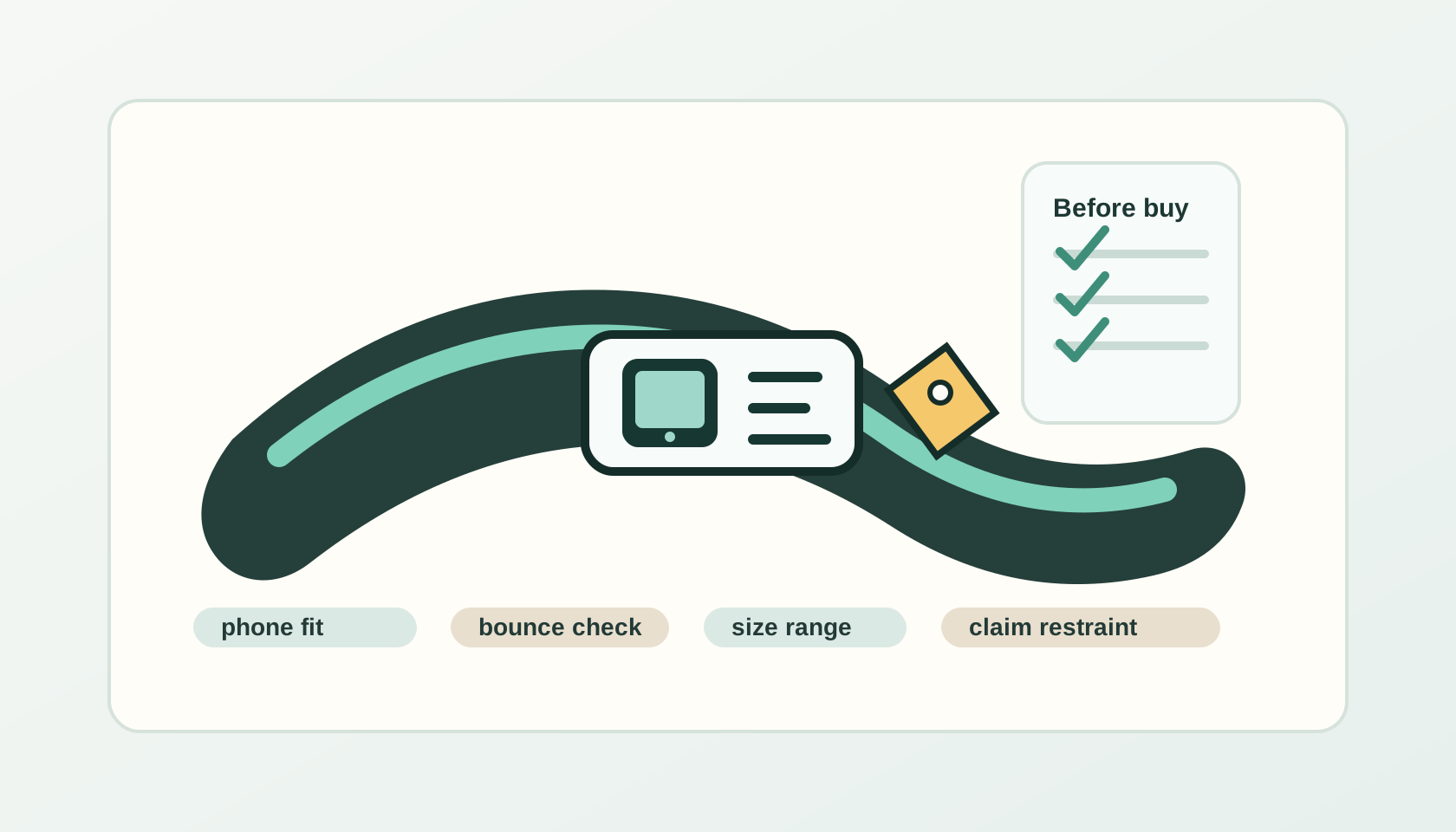
Compare walking belts by phone pocket dimensions, pocket security, adjustable fit, bounce control, visibility details, and care instructions.
Routine-support buying guide
Best Walking Belts for Phone and Keys During Beginner Walking Routines
A walking belt can make a short walk easier when pockets are unreliable, a phone feels awkward in your hand, or keys keep bouncing around. It cannot make walking safe in every setting, prevent every fall, treat a medical concern, or promise weight loss. The useful buying question is simple: which belt carries the basics without adding discomfort, pressure, or hype?
Who this guide is for
This guide is for adults who are starting or restarting short walking routines and want a simple way to carry a phone, keys, ID, transit card, inhaler, or other small essentials. It is especially useful when leggings, shorts, work clothes, or jackets do not have dependable pockets.
This page maps to the broader routine-support tools guide. If footwear comfort is still the larger blocker, start with the walking shoes guide or the walking socks guide before adding more accessories.
Best fit categories, not product rankings
GoodWeighFinds has not tested specific walking belts hands-on for this page, and this is not a ranked review list. Use these best-fit categories to compare listings without relying on fake precision, transformation claims, or customer anecdotes as proof.
- Best for large phones: Belts with clear phone-pocket dimensions, stretch limits, and photos showing recent phone sizes with a case.
- Best for keys and ID: A belt with a separate key clip or small zip pocket so metal keys do not scratch the phone screen.
- Best for low bounce: A close-fitting stretch belt or adjustable waist pack that can be snug without digging into the stomach, hips, or lower back.
- Best for evening walks: A belt with reflective details or a clip point for a light, while still relying on route judgment and visibility habits.
- Best for errands: A slightly roomier waist pack that can hold a card, cash, lip balm, or small medication item without becoming bulky.
Selection criteria that actually matter
A walking belt should disappear into the routine. If it bounces, twists, traps heat, or makes your phone hard to reach, it may become another reason to skip the walk.
- Phone pocket dimensions: Compare the listed pocket size against your phone with its case, not the phone alone.
- Pocket security: Zippers, key clips, and separate compartments matter if you carry keys next to a phone.
- Adjustable fit: Check the waist or hip size range, buckle design, and whether the belt is meant to sit over or under layers.
- Bounce and friction claims: Treat "no bounce" and "no chafe" as manufacturer claims unless the design details explain why the belt should stay put.
- Visibility details: Reflective panels can help drivers see movement, but they do not make a route safe by themselves.
- Weather-resistance wording: Water-resistant is not the same as waterproof. Check zipper coverage and phone-protection limits before walking in rain.
- Cleaning instructions: A sweat-exposed belt should be easy enough to wash or wipe down according to the manufacturer's care label.
Comparison framework
Before buying, picture one normal walk rather than an ideal product photo. A useful walking belt should solve the carry problem without turning a simple walk into a gear project.
- Can the belt hold your phone with its case, plus keys, without forcing everything into one tight pocket?
- Will the belt fit over the clothing layers you actually wear?
- Can you reach your phone or ID quickly without stopping for a long adjustment?
- Does the listing show the closure, pocket layout, zipper direction, and size range clearly?
- Would the belt still be useful if it had no effect on weight at all?
- Does the product stay in routine-support territory instead of making calorie-burn, toning, or body-transformation promises?
Walking belts versus waist packs
Stretch walking belts tend to sit close to the body and work best for a phone, keys, and a few flat items. Waist packs can carry more, but they may bounce more, feel warmer, or become bulky during short walks. Neither option is automatically better. The right choice depends on what you carry, where you walk, and what feels comfortable enough to repeat.
If you need to carry water, extra layers, larger medication supplies, or emergency items, a small belt may not be enough. A crossbody bag, small backpack, or planned route with stops may be more realistic.
Safety and medical boundaries
A walking belt can keep essentials reachable, but it does not replace basic route judgment, weather awareness, lighting, traffic caution, or a way to contact help when needed. Be careful with listings that imply reflective trim, phone access, or a slim fit can make every walking situation safe.
If walking triggers pain, dizziness, chest symptoms, balance problems, shortness of breath that concerns you, or symptoms tied to a medical condition, pause and talk with a qualified healthcare professional. If you carry medication or medical supplies, choose storage based on qualified guidance and the item's storage requirements rather than a generic product listing.
Weight-loss claim red flags
Be skeptical of walking belts sold with claims about burning belly fat, trimming the waist, sweating off weight, suppressing appetite, detoxing, or making weight loss automatic. A belt can carry things. It cannot create a safe exercise plan, determine whether walking is appropriate for you, or guarantee body changes.
Also slow down if a belt is bundled with waist-trimmer wraps, sweat belts, stimulant products, detox teas, patches, supplements, or GLP-1 alternative language. Those categories require warning-first review and should not be treated as ordinary walking accessories.
Who should skip this purchase
Skip a walking belt if your current pockets already work, if the belt would rub or compress in a way that feels uncomfortable, or if the product is mainly appealing because of body-result language. Also skip if the listing hides pocket dimensions, sizing, return terms, or cleaning instructions.
If walking accessories make the routine feel like a test, a status signal, or another weight-loss pressure point, keep the setup simpler. A phone in a jacket pocket, a key on a wrist coil, or a familiar short route may be enough.
Bottom line
The best walking belt for phone and keys is the one that fits your actual phone, stays comfortable with your clothing, separates scratchy items, and keeps the claim language modest. Buy it to reduce carry friction during walks, not because a listing promises weight-loss results.