Routine-support buying guide
Best Reusable Bread Bags for Freezer Meal-Prep Storage
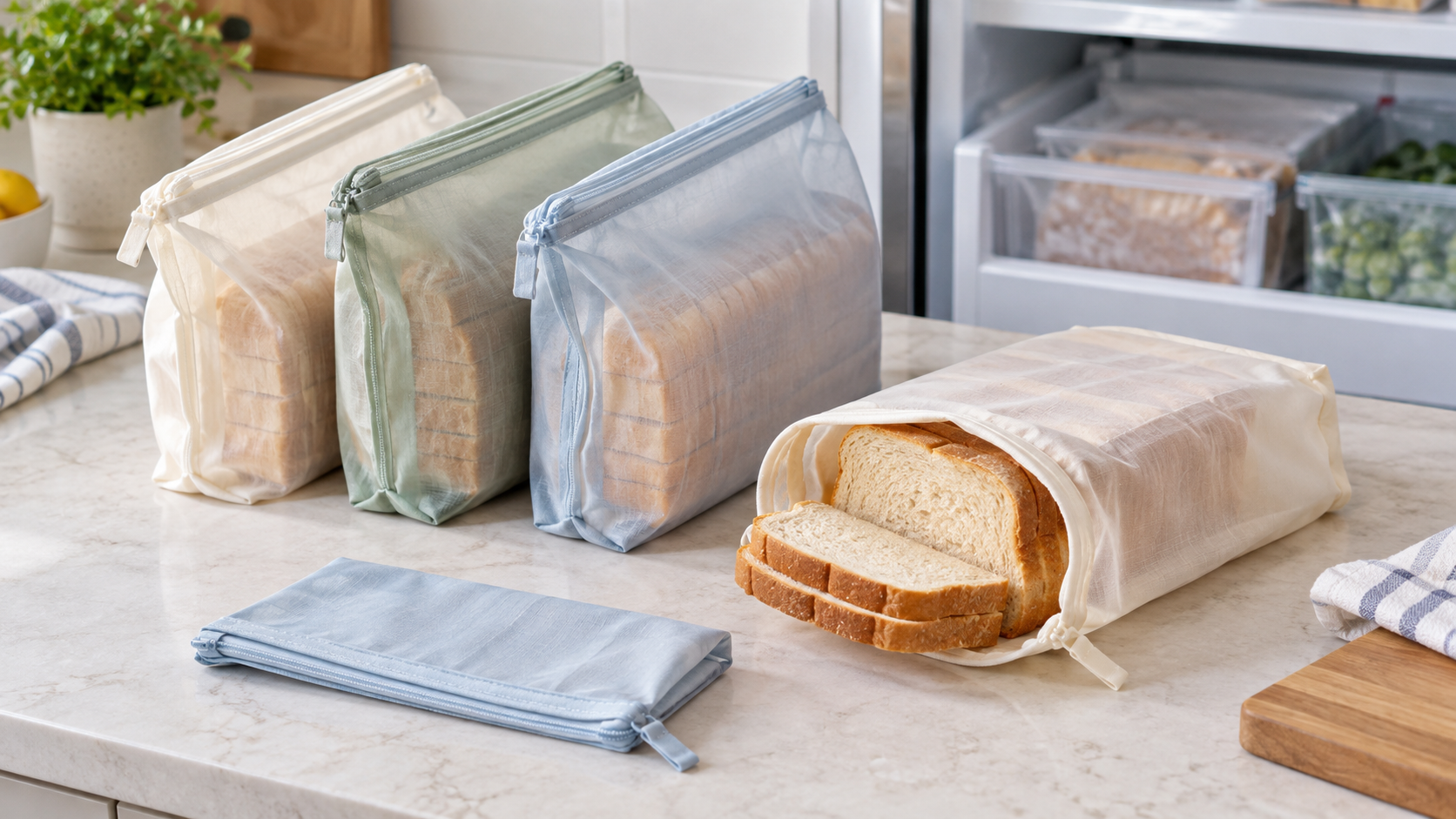
A reusable bread bag can replace some disposable bags when you freeze the same loaf shape repeatedly, but the category is not one-size-fits-all. Start with the loaded loaf dimensions, the freezer space, and a cleaning-and-drying routine you will actually complete.
As an Amazon Associate, GoodWeighFinds earns from qualifying purchases.
Who this guide is for
This guide is for adults who freeze sliced sandwich bread, homemade loaves, rolls, or similar baked goods often enough to reuse a dedicated loaf-sized bag. It focuses on bag geometry and upkeep, not meal plans, portions, or body results.
If you are choosing between flexible bags and rigid storage for a crowded freezer, start with the reusable freezer bag versus rigid container comparison. For broader batch-cooking storage, use the freezer-container guide and the routine-support tools guide.
Useful formats—not ranked winners
- Flat zip-closure bag: Can store compactly when empty. Check the usable interior below the closure and whether the opening accepts the loaf without squeezing it.
- Gusseted zip bag: A shaped base may better match a tall sandwich loaf, but measure the loaded depth as well as height and width.
- Roll-top or fold-over bag: Can adjust around different loaf lengths. Confirm the maker's closure method and how much material the fold consumes.
- Drawstring bread bag: May be easy to open and fill, but do not assume a drawstring provides the same closure conditions as a zipper. Use it in the freezer only when the maker explicitly labels that use.
Measure the loaded loaf, not the package name
Measure the loaf at its widest, tallest, and longest points before shopping. Add only the handling room needed to slide it through the opening and operate the closure without compressing the bread. A listing that says “bread bag” may be sized for rolls, a narrow homemade loaf, or a large commercial sandwich loaf.
Then measure the freezer location. Include the filled bag's irregular corners and closure, not just its flat dimensions. Check whether the bag will lie flat, stand in a bin, or share a shelf with other packages without being forced against a drawer rail, vent, or door seal.
Read the freezer and food-use labels literally
- Intended use: Look for explicit manufacturer wording for freezer storage. “Reusable,” “food storage,” and “refrigerator” do not automatically mean freezer use.
- Material disclosure: Confirm what the bag and closure are made from and follow the maker's temperature and appliance limits.
- Closure: Inspect how the zipper, fold, tie, or drawstring works at the bag's full loaf capacity. Do not infer airtightness or leak resistance from a photo.
- Labeling: Check which marker or removable label the maker allows, then keep the date and contents readable without obstructing the closure.
- Food contact: Prefer current, specific documentation for intended food use. Avoid treating vague phrases such as “eco” or “natural” as material or safety evidence.
Cleaning and drying are part of the fit
Crumbs collect in seams, gussets, and closure tracks. Read the care directions before buying: hand wash versus machine wash, permitted water temperature, whether the bag must be turned inside out, and how the closure should be cleaned. A narrow opening or deep gusset may make the bag harder to inspect.
Check the bag's fully opened drying footprint and where it can drain without blocking the sink. If flexible bags already stay damp or folded on your counter, first consider whether your current drying setup works; the reusable food-bag drying-rack guide has a no-buy test for that separate problem.
Run a no-buy test first
For one freezer cycle, note the exact loaf you store, where it fits, how often slices are removed, and what happens to the current bag or wrap afterward. Measure the filled package and the space it occupies. This reveals whether the real friction is disposable-bag use, an awkward loaf shape, a crowded shelf, or simply inconsistent labeling.
If an existing freezer-rated reusable bag already fits and is easy to clean and dry, a bread-specific version may add no useful function. If the loaf changes size every week, a rigid container or several verified bag sizes may be more realistic than one dedicated format.
Who should skip reusable bread bags
Skip the purchase when bread is rarely frozen, the current freezer-rated container works, the bag cannot be verified for the intended freezer and food use, the opening is smaller than the loaf, or the care routine does not fit your sink and drying space. Also skip listings that promise a fixed freshness period, guaranteed freezer-burn prevention, universal fit, food-safety results, or weight-loss outcomes without appropriate current evidence.
Bottom line
The best reusable bread bag is documented for freezer and food use, fits the actual loaf and freezer location when loaded, closes without crushing the contents, and can be cleaned, inspected, dried, and stored in your real kitchen. Buy only when those details solve a repeat problem that an existing bag or container does not.