Packed-lunch accessory guide
Best Reusable Ice-Pack Sleeves for Packed Lunches
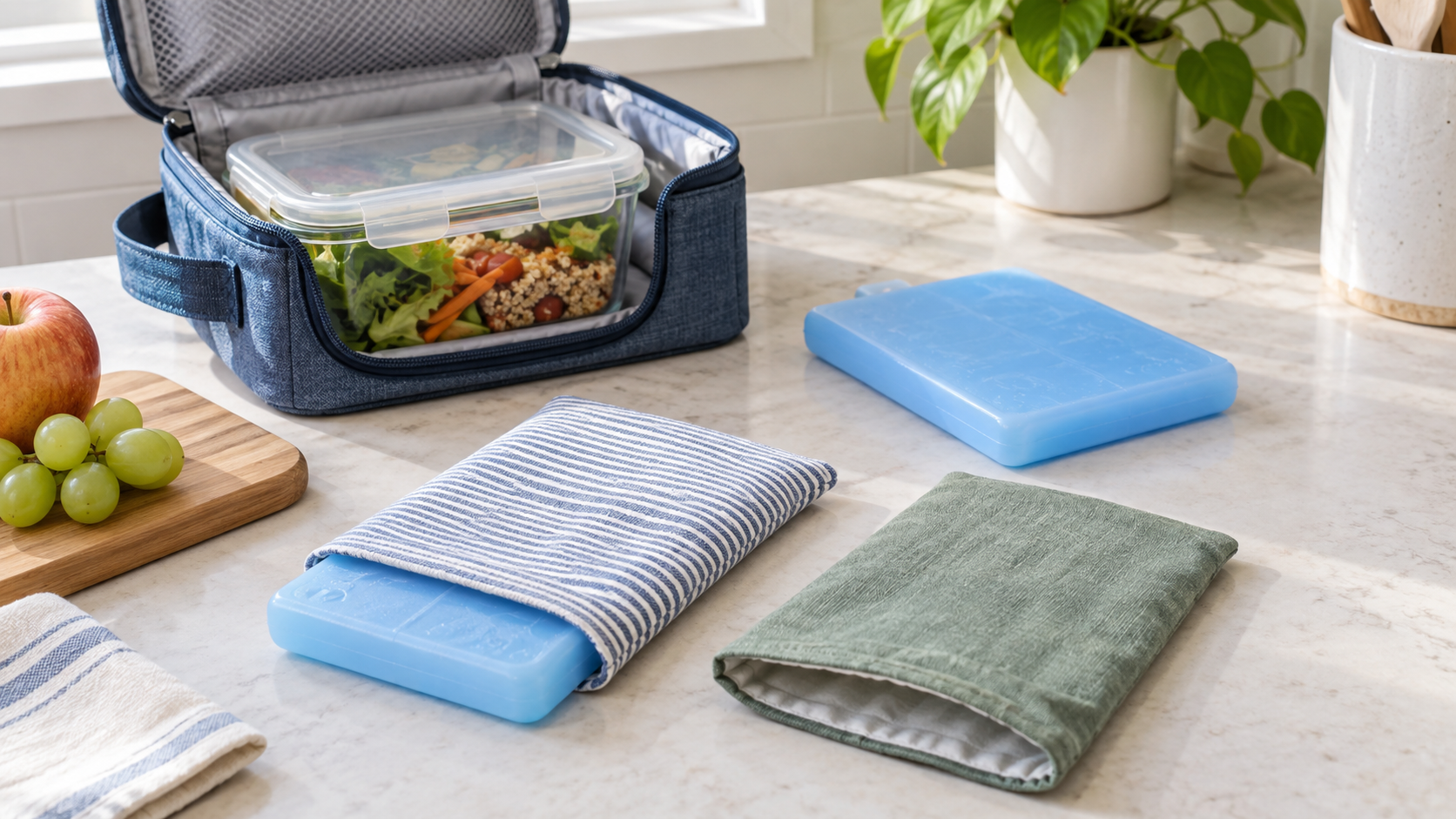
An ice-pack sleeve can separate a cold pack from containers and collect some surface moisture, but it also adds bulk and another item to wash. Start with the pack you already own, measure it, and choose a sleeve by fit and care—not by promises that it will eliminate condensation or keep food cold for a set time.
As an Amazon Associate, GoodWeighFinds earns from qualifying purchases.
Who this guide is for
This guide is for adults who already own a sound reusable cold pack and have a repeat problem with direct contact or surface moisture inside a packed-lunch bag. It is an accessory decision, not a reason to replace a working ice pack.
If you still need the cold pack itself, use the slim ice-pack guide. If the bag cannot hold the loaded meal comfortably, start with the insulated lunch-bag guide instead.
Best-fit formats, not unsupported rankings
- Best fit for a flat rectangular pack: A simple envelope sleeve whose listed interior dimensions leave room for the pack's full frozen thickness.
- Best fit for a pack with a cap or raised rim: A wider opening and flexible closure that does not press against the protruding area.
- Best fit for frequent washing: A sleeve with explicit machine- or hand-wash directions and a shape that can open fully for drying.
- Best fit for a very compact lunch bag: Often no sleeve. A thin washable barrier already owned may use less space if the cold-pack maker permits the setup.
Selection criteria that matter
- Interior dimensions: Compare usable length, width, and opening—not just an exterior size or a vague small/medium label.
- Frozen pack shape: Measure the pack after freezing if its shape or thickness changes. Include caps, thick seams, handles, and rounded corners.
- Closure: Check whether a flap, hook-and-loop strip, zipper, or drawcord stays clear of the pack and nearby food containers.
- Added bulk: Load the lunch bag with a cardboard template that includes the sleeve's stated thickness. Confirm the zipper closes without crushing food or tilting a container.
- Material wording: Treat absorbent, insulated, leakproof, waterproof, and food-safe as claims that require clear maker details and use limits.
- Cleaning and drying: Verify the exact wash method, drying method, and whether the sleeve can be turned out or opened enough to dry between uses.
- Pack inspection: A sleeve can hide cracks or swelling. The cold pack should remain easy to remove and inspect according to its maker's directions.
A practical comparison framework
Give each candidate a yes, no, or unclear for these questions:
- Are usable interior dimensions stated, and do they fit the frozen pack rather than only its nominal size?
- Can the pack slide in and out without force?
- Does the closure avoid caps, seams, and the loaded bag's zipper?
- Does the sleeved pack still fit beside the actual meal container?
- Are fabric, lining, washing, and drying directions clearly stated?
- Can the sleeve be opened enough to inspect both it and the cold pack?
- Are moisture and insulation claims limited and specific rather than absolute?
- Is the seller's return policy practical if measured compatibility is unclear?
What a sleeve does not establish
A fabric sleeve does not prove that food will stay within an appropriate temperature range. Cold-pack size, starting temperature, freezer conditions, bag insulation, food volume, opening frequency, travel time, and ambient temperature all affect the result. Follow current food-safety guidance and the cold-pack and lunch-bag makers' instructions rather than relying on an unspecified cooling-duration claim.
A sleeve also does not repair a cracked, swollen, leaking, or unidentified cold pack. Remove and inspect the pack regularly, and follow its maker's damage and disposal directions.
Who should skip this purchase
Skip a sleeve when the current setup has no repeat moisture or contact problem, the added thickness prevents the bag from closing normally, or a washable item already owned solves the same job. Skip listings that omit interior dimensions or care instructions, and skip any design that makes the cold pack difficult to inspect.
Also skip the accessory if the real problem is an undersized lunch bag, an ice pack that does not fit, or a transport period that needs a more carefully validated cooling setup. The lunch bag versus insulated food jar comparison can help when the meal format—not the sleeve—is the unresolved decision.
Bottom line
The best reusable ice-pack sleeve is a measured match for a cold pack you already use, fits the loaded lunch bag, has clear washing and drying directions, and remains easy to remove for inspection. If it adds more bulk and upkeep than it removes, skip it.