Packed-lunch buying guide
Best Reusable Utensil Sets for Packed Lunches
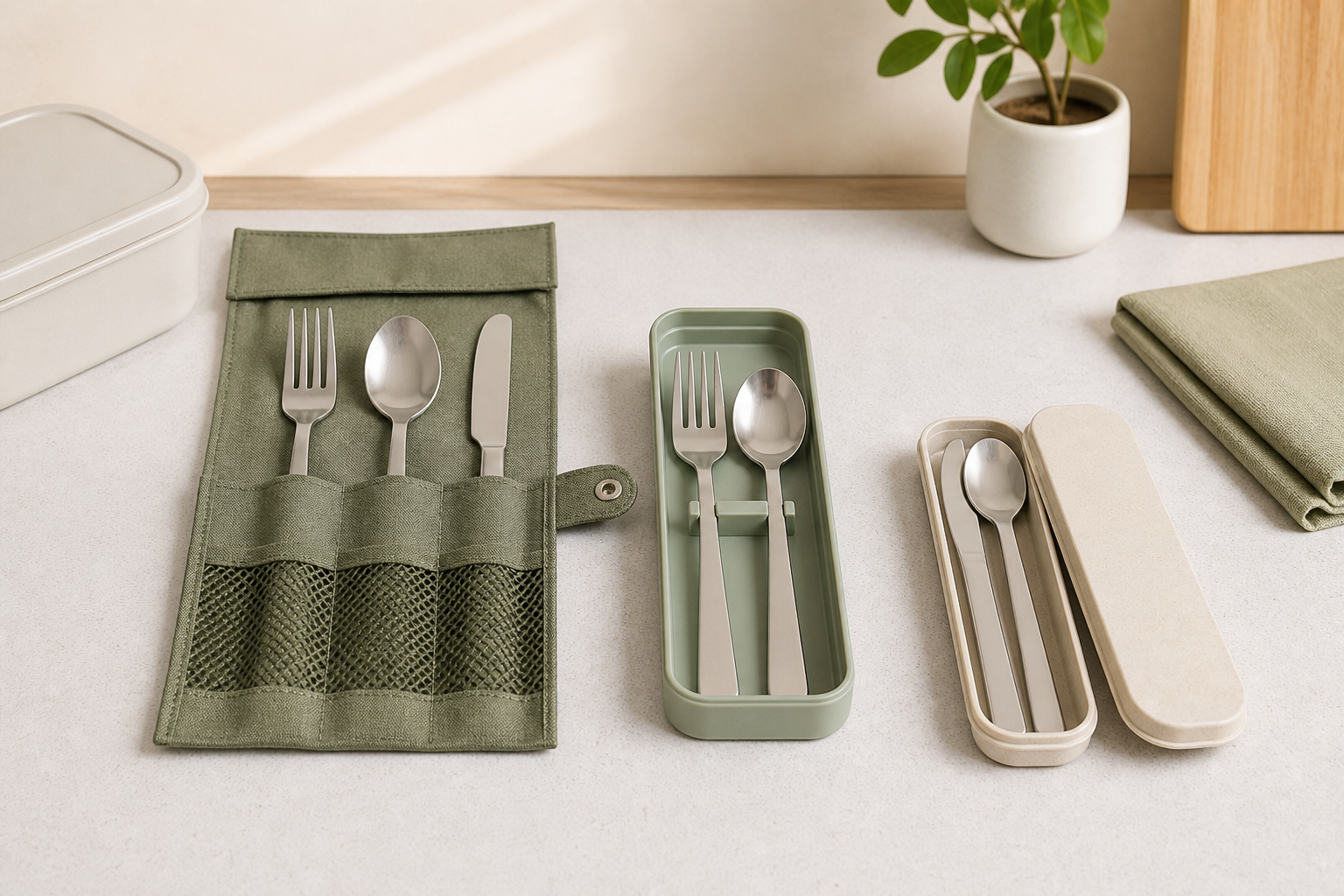
A useful travel utensil set is comfortable enough for a real lunch, stays contained in transit, and has a case you can wash and dry completely. Start with the meals you pack and the space in your bag—not the number of accessories in the set.
As an Amazon Associate, GoodWeighFinds earns from qualifying purchases.
Who this guide is for
This guide is for adults who regularly pack meals and want utensils that do not sit loose in a bag. A contained set can reduce forgotten-fork friction and disposable utensil use. It does not make a meal nutritionally appropriate for a particular person or produce weight-loss results.
For the broader buying framework, start with the routine-support tools guide. If the full packed-lunch setup is the problem, the work lunch-bag guide covers container fit, cleaning, and commute constraints.
Best-fit types, not unsupported rankings
- Best fit for ordinary eating comfort: A full-size fork and spoon with familiar handle length, carried in a washable roll or case.
- Best fit for a narrow lunch bag: A compact set after checking that the spoon bowl, fork tines, and handles are still usable for the meals you pack.
- Best fit for fewer loose pieces: A fork-and-spoon set without chopsticks, straws, brushes, or specialty tools you will not use.
- Best fit for saucy or oily lunches: A non-absorbent case that opens enough for every seam and corner to be washed and dried.
- Best fit for a quiet shared space: A fabric roll or fitted case that keeps metal pieces from rattling, if its care instructions are practical.
Selection criteria that matter
- Utensil dimensions: Check total length plus spoon-bowl and fork-head size. “Portable” can mean nearly full size or too small for a comfortable lunch.
- Included pieces: Buy for actual meals. A blunt table knife can help with soft foods; chopsticks, a straw, or a cleaning brush add value only if they will be used.
- Case hygiene: Look for an interior with reachable corners and a way for washed parts to dry. A sealed case is useful for transport but should not trap damp utensils between uses.
- Retention: Confirm whether each piece clips into place or can rattle and shift. Loose metal pieces can open a weak case in a crowded bag.
- Material details: Verify the material for every utensil and the case. Treat broad “food-grade,” odor-resistant, stain-resistant, or rustproof phrases as claims that need current product details.
- Care labels: Dishwasher-safe wording may apply only to the utensils, not the case, pouch, painted finish, or silicone pieces. Check each component.
- Handle comfort: Very flat handles pack neatly but may be awkward to grip. Rounded or wider handles take more space but can feel more familiar.
- Carry safety: Choose a normal blunt table knife rather than a sharp prep knife. Check workplace, school, venue, and transport rules before carrying any knife.
- Weight and noise: Stainless steel is familiar and durable but heavier and noisier than many plastic or composite sets. A fitted case or roll can limit rattling.
- Replacement options: Check whether the case or a lost piece can be replaced without buying the entire bundle again.
A practical comparison framework
Mark each candidate yes, no, or unclear. An unclear specification is a reason to check the current listing or manufacturer instructions, not to assume.
- Are the fork, spoon, and any knife long enough for the containers normally used?
- Does every included piece solve a recurring lunch need?
- Does the closed case fit the bag pocket without pressing against food containers?
- Can the case be opened, washed, and dried completely?
- Are care directions stated separately for utensils and case?
- Are sharp edges avoided and relevant carry rules clear?
- Will the set stay quiet and contained during the real commute?
- Can a missing utensil or damaged case be replaced?
- Would utensils already at home plus a washable pouch solve the same problem?
Rigid case or fabric roll?
A rigid case helps isolate used utensils from the rest of a lunch bag and is usually easier to wipe, but hinges, clips, and narrow grooves can hold residue or moisture. Measure its exterior because a thick case can take more room than expected.
A fabric roll can hold full-size pieces quietly and flex around other items. It also needs clear washing and drying instructions, especially after contact with oily or saucy utensils. A roll with separate pockets keeps pieces apart better than a simple sleeve.
Who should skip a dedicated set
Skip this purchase if a fork and spoon from home already fit a clean, washable pouch or existing lunch container. Also skip large accessory bundles when you use only two pieces, miniature handles that make eating frustrating, and cases whose seams or hinges cannot be reached for cleaning.
A travel set may be a poor fit where workplace or venue policies restrict knives, where shared cutlery is reliably available, or where remembering to bring the used set home creates more friction than it removes.
Claims and limits to keep straight
Reusable utensils can support a packed-lunch routine and reduce reliance on single-use cutlery when they are actually reused. They do not make a meal healthier, control portions, affect appetite, or cause weight loss. Environmental claims also depend on materials, manufacturing, shipping, cleaning, and how long the set remains in use; do not treat a “zero waste” label as proof.
Bottom line
The best reusable utensil set is the simplest one that fits the meals, bag, hands, cleaning routine, and carry rules involved. Compare real dimensions and component-specific care instructions, choose a case that can dry fully, and skip accessories that only add bulk.