Handheld coverage or wearable layer
Compact Umbrella vs Packable Rain Jacket for Walking Commutes
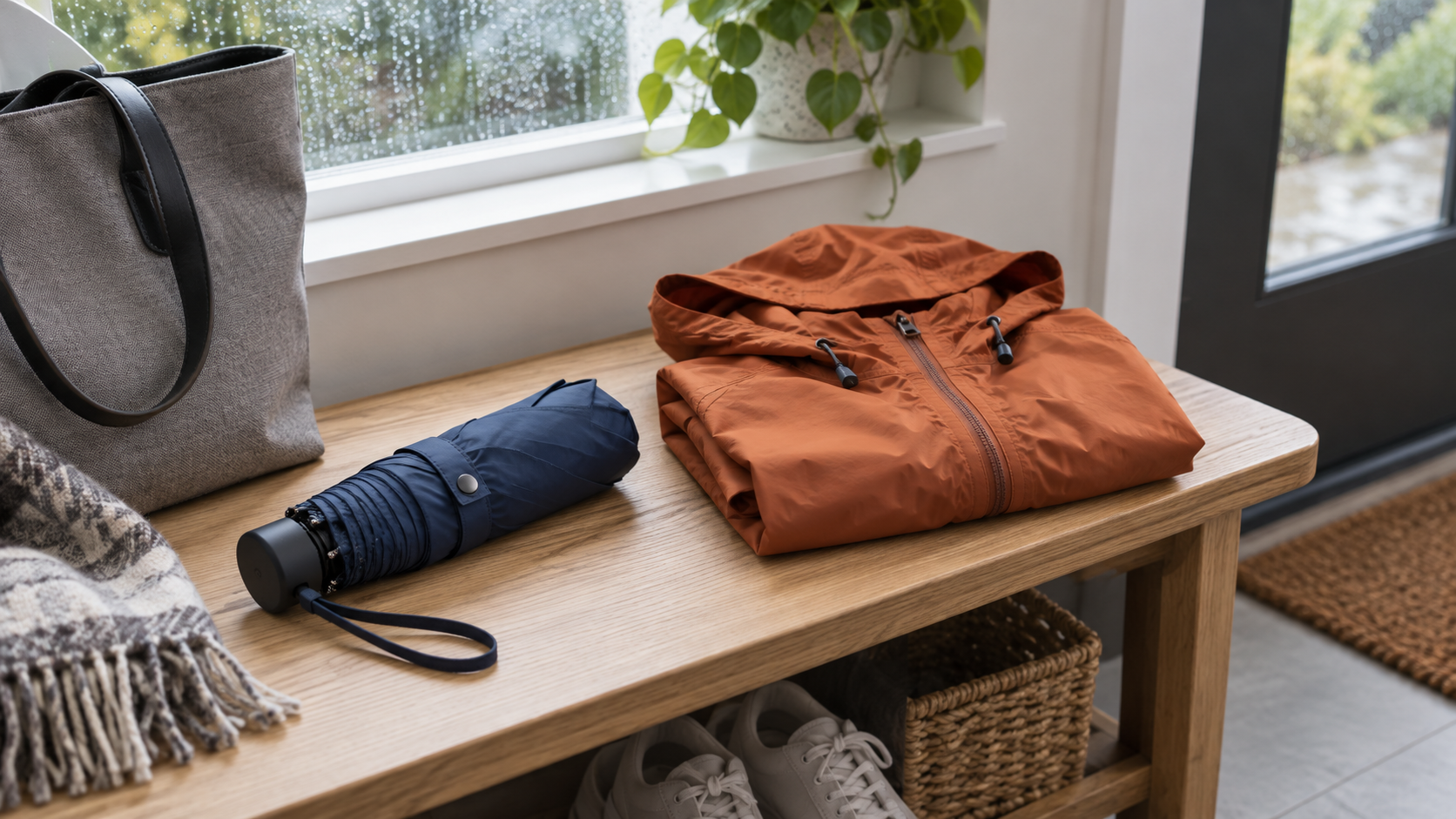
A compact umbrella keeps a layer off your body but occupies one hand and creates an open canopy to manage. A packable rain jacket keeps both hands available but adds a worn layer that must fit over commute clothing. Neither format makes every wet or windy route suitable; choose around the trip you actually repeat.
As an Amazon Associate, GoodWeighFinds earns from qualifying purchases.
The quick comparison
- Compact umbrella: may fit a short, less-exposed route when one hand can stay occupied and there is room to open, carry, and later dry the canopy.
- Packable rain jacket: may fit routes where hands-free movement and layering matter, provided the garment fits over commute clothing and its warmth and ventilation suit the conditions.
- Use both selectively: assign each format to different trips without treating either as universal protection.
- Choose neither: delay, change the trip, or use existing gear when conditions exceed the equipment, route, or your comfort level.
Who a compact umbrella fits
An umbrella fits best when the repeated route has enough clearance, the user can keep one hand on the handle, and opening or closing it will not conflict with bags, doors, crowds, or transit boarding. Compare the folded length and thickness with the actual tote or backpack pocket, then compare the open canopy with the spaces where it will be used.
It can also make sense for someone who does not want another worn layer. That advantage disappears when a phone, mobility aid, grocery bag, rail, stroller, or other task already needs the hand. Do not treat “windproof” or similar listing language as a guarantee; inspect the maker's wording, frame design, use limits, and return terms.
Who a packable rain jacket fits
A jacket fits a commute that needs both hands available and has a workable place for the garment before and after use. Measure chest, sleeve, and garment length against the maker's size chart while wearing the layers normally used on that route. Packed size matters, but so do hood adjustment, front closure, pocket access, and whether a backpack covers vents or creates another wet contact point.
“Packable” only describes a storage feature or small folded format; it does not establish weather performance. Check whether the jacket packs into its own pocket or a separate pouch, and read the exact material, seam, coating, washing, drying, and retreatment instructions.
Tradeoffs that decide the format
- Hands and carried load: count the items that already require a hand and test whether a shoulder strap, backpack, or transit rail changes the choice.
- Coverage: compare the specific canopy and garment dimensions without assuming either keeps every carried item dry.
- Heat and airflow: a jacket adds a layer; evaluate vents, openings, and layering space rather than accepting a broad “breathable” claim.
- Wind and clearance: an open umbrella has a larger profile. Severe weather, exposed routes, traffic, crowds, and restricted spaces may call for a different plan.
- Visibility: check whether the open canopy or hood interferes with the view needed for the route.
Setup, drying, and maintenance
For an umbrella, rehearse opening and closing it without forcing the mechanism. Identify a destination where the open canopy can drain and dry without blocking a walkway. Inspect fabric, tips, ribs, shaft, handle, closure strap, and storage sleeve, and follow the maker's care instructions.
For a jacket, adjust the hood and closures before the first commute, with normal layers and carried bag in place. Plan where a wet jacket will hang and whether it must be repacked before fully dry. Follow its wash, dry, and coating-care directions; do not infer machine-wash, dryer, or retreatment compatibility.
Skip criteria
- Skip a new umbrella if one already fits the bag, hand use, route clearance, and drying setup.
- Skip a new jacket if an existing outer layer fits the conditions and care routine.
- Skip the umbrella format when the repeated trip requires both hands or regularly involves crowded, tight, or highly exposed spaces.
- Skip the jacket format when layering, sensory comfort, heat, sizing, or the absence of a drying location makes it unlikely to be used.
- Skip the trip or change the route when current conditions, warnings, visibility, surfaces, or wind make the planned walk unsuitable. A product listing cannot settle that decision.
Choose the format, then compare models
If handheld coverage fits, use the compact umbrella guide to compare folded size, open dimensions, handle, frame wording, drying, and carry. If a wearable layer fits, use the packable rain jacket guide to compare sizing, closures, ventilation, care, and verified weather labels. For the broader buy-or-skip framework, return to the routine-support tools guide.
Bottom line
Choose a compact umbrella when one-handed canopy use and destination drying fit a relatively clear route. Choose a packable rain jacket when hands-free wear and layering fit better. Measure the real load, read model-specific weather and care wording, and keep changing or postponing the trip available as a valid option.