Transit lunch-carrier comparison
Insulated Lunch Tote vs Lunch Backpack for Transit Commutes
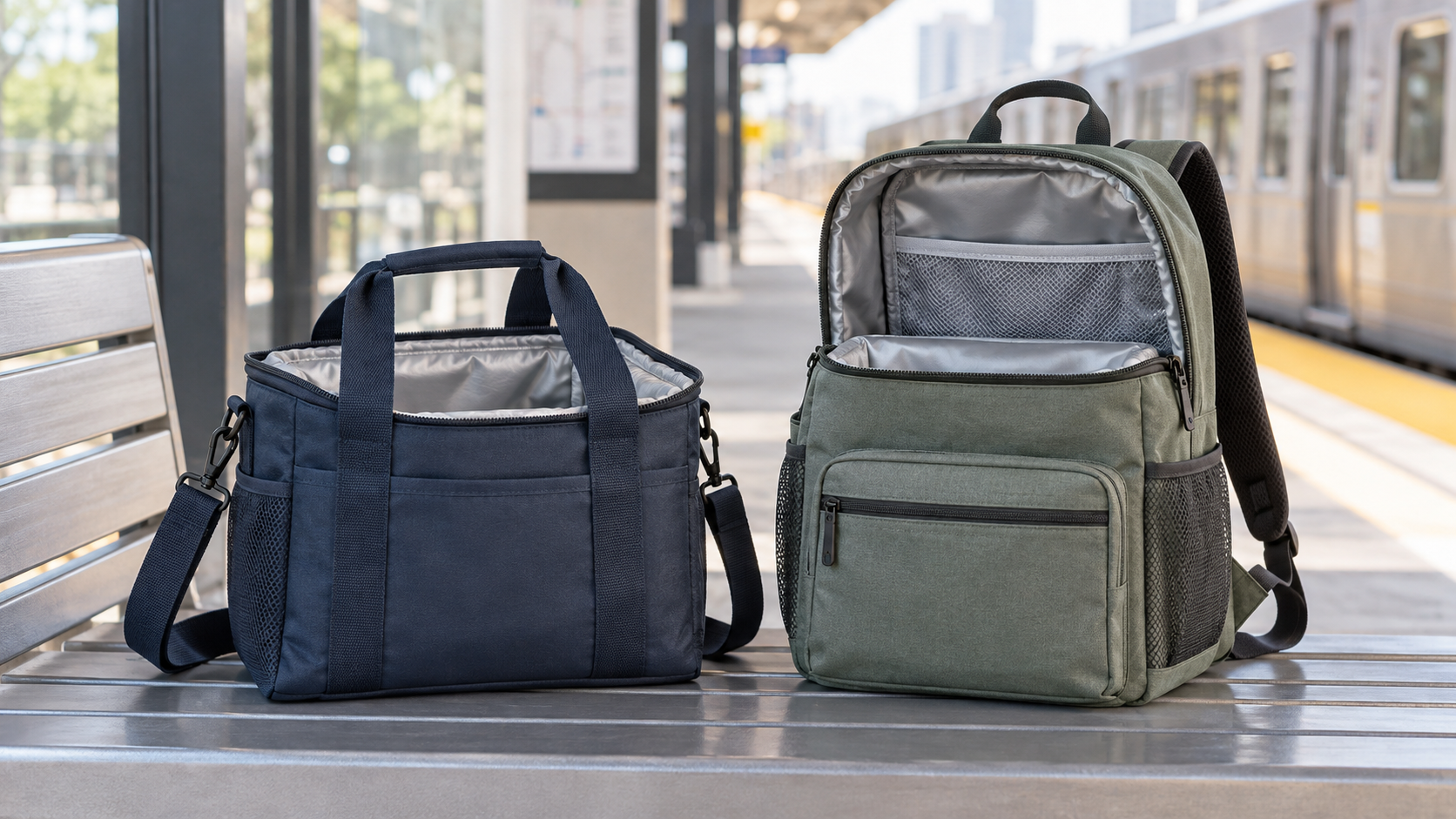
A lunch tote keeps a compact meal separate and easy to set down. A lunch backpack moves the load onto two shoulders and usually adds capacity. Neither format guarantees comfort, leak protection, or a safe holding time: the better choice fits the real containers, the complete transit route, workplace storage, cleaning routine, and bags you already carry.
As an Amazon Associate, GoodWeighFinds earns from qualifying purchases.
Quick decision
| Choose an insulated lunch tote when… | Choose an insulated lunch backpack when… |
|---|---|
| Your packed meal is compact and you can dedicate one hand, forearm, or shoulder to it. | You need both hands for railings, tickets, mobility aids, or another task. |
| You want quick access without removing a bag from your back. | The route is longer and the measured load fits a stable two-strap carry. |
| A separate small bag fits under the seat, at your feet, and in workplace storage. | One larger bag can replace both a lunch tote and a separate day bag. |
| Your existing work bag does not already compete for the same hand or shoulder. | The loaded depth will not become awkward in crowded vehicles or narrow aisles. |
Who each option fits
An insulated lunch tote fits commuters who carry one meal, use containers that must stay upright, and value being able to place or retrieve the bag without removing a backpack. Short handles are simple for brief walks, while an adjustable shoulder strap can free a hand. The tradeoff is another separate item to track, plus possible competition with a work bag, umbrella, phone, or transit card.
An insulated lunch backpack fits commuters who need hands-free movement through stairs, transfers, or longer walks and whose lunch plus daily essentials fit the stated compartments. Two straps distribute the load differently from a hand-carried tote, but product photos do not prove comfort or fit. A loaded backpack also projects behind the wearer, so it may need to come off in a crowded vehicle.
Map the full transit route
List every carry change from kitchen to workplace: walking, stairs, platform waiting, turnstiles, boarding, standing, transfers, and final storage. Note when you need a free hand and where the bag must be moved off the body. A format that works on the sidewalk can still be awkward at a narrow gate or under a crowded seat.
Measure the normal packed meal, including the container, bottle, cold pack, utensils, napkin, and any separate work items. Compare those loaded dimensions with the bag's stated usable interior—not just its exterior capacity claim. Then tape the bag's full footprint and depth onto an existing bag or box and carry it through an ordinary commute before buying.
Container orientation and access
A wide tote floor may keep a broad container flat, while a taller backpack compartment may suit stacked containers. Neither shape proves that a container will remain upright. Compare the exact container base with the bag floor, note whether internal dividers move, and check how the closure presses on lids or bottles when the bag is full.
For access, rehearse the real stop. A tote may open while resting on a bench or desk. A backpack normally must come off, be supported, and be opened without smaller items falling out. Exterior pockets can help with transit cards or utensils only when their dimensions, closures, and placement match the task.
Setup and maintenance
- Straps and handles: Verify stated adjustment range, attachment points, padding, and care. Do not infer comfort or safe load from appearance.
- Interior: Check whether the lining turns out or opens far enough for cleaning, and whether seams, folds, and dividers remain reachable.
- Cold packs: Use the food and cold-pack makers' directions. A bag's “insulated” wording does not establish a safe holding time for every commute.
- Spills: Treat “leakproof” or “waterproof” as exact-product claims. Use closed containers and inspect the lining and seams after any spill.
- Drying: Follow maker instructions and leave every compartment open until dry before storage.
- Storage: Measure the complete bag, including handles and straps, in the location where it will live between commutes.
Costs and tradeoffs beyond the bag
Include cold packs, containers, replacement straps if offered, cleaning supplies, and return shipping in the decision. A backpack may cost more and may duplicate a work backpack. A tote may be cheaper but can create a second-bag problem that later prompts another purchase. The best value is the smallest setup that carries the measured meal through the repeated route.
If you already own a sound tote or backpack, run two normal commutes with that bag and an empty box shaped like the intended meal load. Record hand conflicts, boarding friction, container tilt, access, and workplace storage. This no-buy test reveals more about format fit than a listing's lifestyle photo.
Who should skip each format
- Skip the tote when you already carry another hand or shoulder bag, need both hands during the route, or cannot set the tote down without blocking an aisle or exposing it to a dirty surface.
- Skip the backpack when loaded depth is awkward in crowds, the straps do not fit, removing it is difficult, or the tall compartment forces the usual containers into an unsuitable orientation.
- Skip both when a washable bag you already own handles the measured load, current listings omit usable dimensions or care directions, or workplace refrigeration makes a dedicated insulated carrier unnecessary.
- Choose another route when keeping one hot meal separate is the main job; compare a lunch bag with an insulated food jar and verify the exact maker's use directions.
Next steps
If the backpack format fits, compare meal-sized insulated backpack formats for transit by usable dimensions, container orientation, access, straps, cleaning, and loaded profile. If a compact tote wins, use the insulated lunch bag pillar for container fit, lining care, cold-pack layout, and realistic skip criteria. The broader routine-support tools guide keeps this purchase tied to a repeated carry problem rather than a promised body result.
Bottom line
Choose an insulated lunch tote when the meal is compact, quick access matters, and a separate small bag does not compete with the rest of the commute. Choose an insulated lunch backpack when hands-free carry solves a repeated route problem and the measured load, straps, crowd fit, cleaning, and storage all check out. Skip a new carrier when a bag you already own passes the route test.