Buy, delay, or skip
Is a Clip-On Pot Colander Worth It for a Small Kitchen?
A clip-on pot colander can be worth buying when you repeatedly drain one or two compatible pots, cabinet space is tight, and the attachment leaves you a controlled grip and a workable path to the sink. Skip it when rim fit is uncertain, batches are large, or a colander you already own is easier to handle and clean.
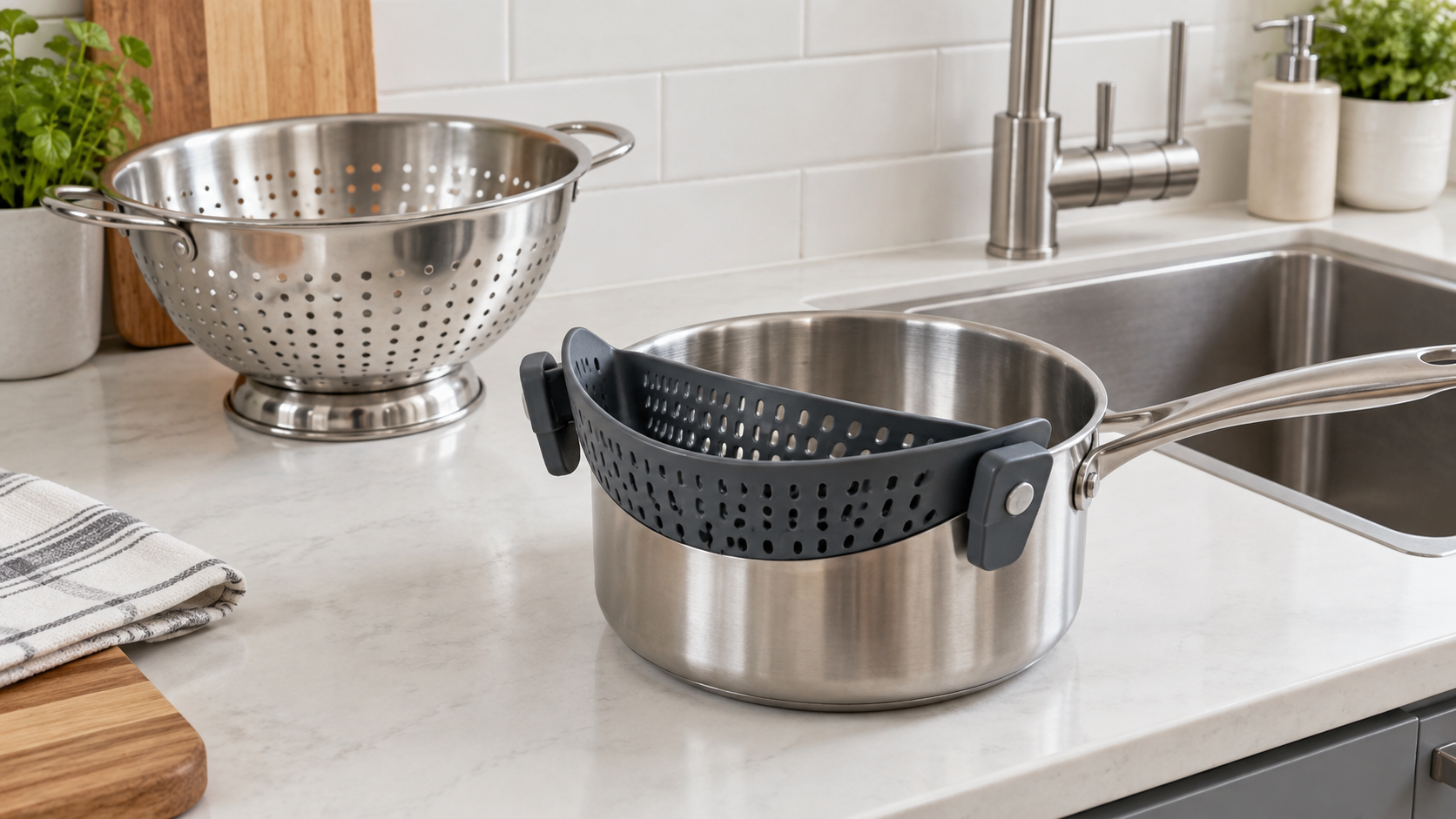
The quick decision
- Buy: the same compatible pot handles most draining jobs, the usual batch is modest, and removing a separate bowl-shaped colander would meaningfully free storage.
- Delay and measure: you have not checked rim shape, outside diameter, attachment clearance, handle position, or the route from counter to sink.
- Choose an alternative: use a full-size or collapsible colander when you drain larger batches, switch among very different pots, or want food supported independently of the cookware.
- Skip: your existing method works, the listing relies on “universal fit” without useful dimensions, or attaching another part makes grip and cleanup more awkward.
Start with the pots, not the product
List the cookware you actually drain from and measure the outside diameter where a strainer would attach. Note whether each rim is rolled, flared, lipped, or interrupted by a handle mount or pouring spout. Product photos can suggest fit, but they cannot establish compatibility with your cookware.
Check the maker's stated range and attachment directions against those measurements. “Fits most pots” and “universal” are marketing claims unless the listing provides dimensions and exclusions. If fit cannot be established before purchase, the return policy becomes part of the cost.
Audit the complete draining setup
- Frequency: count how often a separate colander comes out during a normal week, not an unusually ambitious meal-prep day.
- Batch and drainage area: compare the usual amount with the attachment's covered rim width and opening pattern; a compact screen is not the same as a full bowl.
- Grip clearance: confirm the attachment does not crowd the pot handles or the places your hands normally need. Follow the cookware and attachment makers' directions.
- Sink path: account for faucet, basin, counter edge, and nearby objects. This page does not provide hot-liquid handling technique.
- Cleanup: inspect slots, folds, clips, or silicone edges that may need separate washing and drying.
- Storage: measure the attachment's complete dimensions rather than assuming every clip-on design fits a shallow drawer.
Cost, maintenance, and setup tradeoffs
The purchase price is only one cost. Add any return shipping, the time needed to attach and remove the tool, the cleaning steps around clips or flexible edges, and the storage location it will occupy. A compact item that only fits one rarely used pot can be poorer value than the larger tool already in the cabinet.
Material labels also need product-specific checking. Do not infer temperature limits, dishwasher suitability, stain resistance, or durability from appearance. Verify the current maker's wording for the whole attachment and follow the cookware manufacturer's instructions too.
Red flags on a listing
- No measured cookware range, attachment diagram, material disclosure, or care directions.
- “Universal,” “spill-proof,” or “hands-free” language without defined conditions.
- Photos that hide the rim connection, pot handles, or the attachment's full stored shape.
- Safety or durability conclusions based only on seller copy or customer anecdotes.
- An unclear seller, return window, or return-shipping policy when fit cannot be confirmed locally.
Who should skip this format
Skip a clip-on attachment if securely holding and moving the loaded cookware is uncertain, if your cookware's directions conflict with the accessory, or if hand strength, reach, vision, balance, or kitchen layout makes the combined setup hard to control. Use a stable alternative that fits your needs; when a health condition or functional limitation affects safe kitchen-tool use, an occupational therapist or another qualified professional can help assess the setup.
Also skip it when a freestanding colander already works, when one tool must serve very different pot sizes, or when cleaning and drying would cancel the storage benefit.
Try a no-buy test first
For one week, note each time you drain food, which pot you use, the batch size, and what is actually inconvenient about the current method. Measure the candidate attachment zone and drawer space. Do not improvise a strainer or use an attachment not designed for the task; the test is an audit of frequency and geometry, not a substitute draining method.
When to move from deciding to shopping
If the same measured pot and compact draining job recur often enough, use the clip-on pot colander comparison guide to compare attachment styles, drainage area, grip clearance, material labels, cleaning, storage, and returns. If you still need to choose the tool format, compare a clip-on colander with a full-size colander before treating compactness as the deciding feature.
Bottom line
A clip-on pot colander is worth considering only when verified cookware fit, a repeat small-batch task, controlled handling, easy upkeep, and meaningful storage savings line up. If any remain uncertain, keep the dependable colander you own or choose a measured freestanding alternative. For the wider buy-or-skip framework, see the routine-support tools guide.