Small-kitchen comparison
Clip-On Colander vs Full-Size Colander for Small Sinks
Choose a clip-on colander when one measured pot handles most small draining jobs and cabinet space is the main constraint. Choose a full-size colander when you need independent support, broader cookware compatibility, or room for larger batches. Neither format is a universal winner, and neither makes a meal routine more effective by itself.
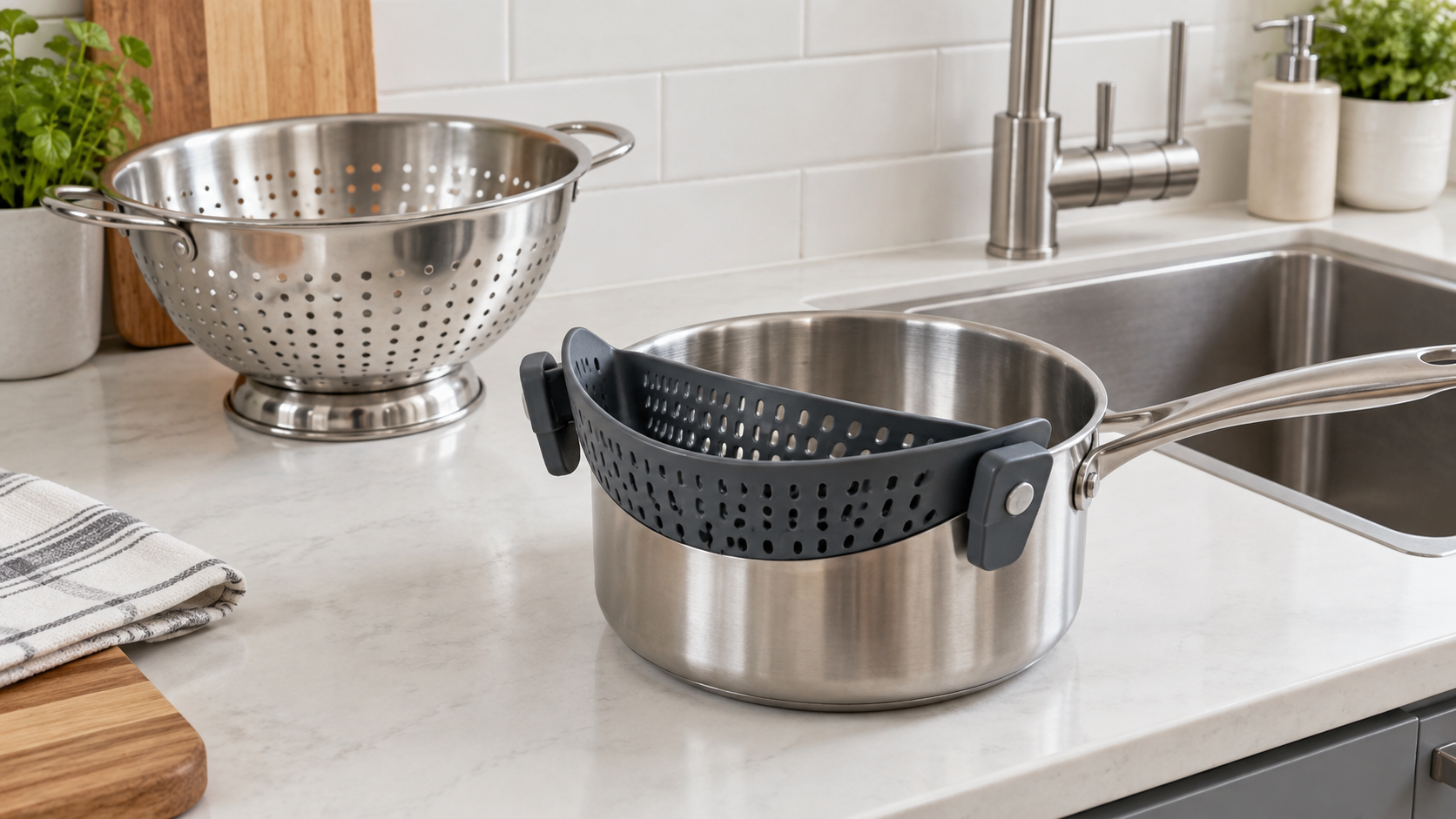
The short answer
| Decision | Clip-on colander | Full-size colander |
|---|---|---|
| Best fit | Repeat draining from one or two compatible pots | Different cookware and larger or varied batches |
| Main advantage | Small stored footprint and no separate transfer | Food rests independently from the cookware |
| Main constraint | Rim fit, attachment, and combined-pot handling | Sink, cabinet, and drying footprint |
| Skip when | Fit or grip is uncertain | The usual batch is small and storage is the real bottleneck |
Who a clip-on colander fits
A clip-on format fits a narrow, repeated job: the same compatible saucepan or pot, a modest batch, and a clear route to a small sink. It can make sense when storing a bowl-shaped colander is genuinely difficult and the attachment does not crowd the cookware handles or your grip.
Measure the outside rim where the attachment sits and note rolled, flared, lipped, or interrupted sections. Treat “universal fit” as a claim, not proof. The current maker's compatibility range and exclusions need to match the cookware you own.
Who a full-size colander fits
A full-size colander fits readers who drain different pots, want the food supported separately, or regularly handle batches larger than a compact rim screen covers. A stable freestanding bowl can also separate the draining stage from the cookware, but it needs enough basin or counter support, faucet clearance, cabinet space, and drying space.
Do not assume a listed capacity equals comfortable usable capacity. Check the complete outside dimensions, base, handles, drainage openings, and how the tool sits in the actual sink. A collapsible full-size colander may reduce cabinet height, but its working footprint and support still matter.
Handling and setup tradeoffs
- Clip-on: attachment and draining remain tied to the loaded pot. Confirm the maker's directions, attachment clearance, and the places your hands need. This guide does not provide hot-liquid handling instructions.
- Full-size: transfer adds a separate step and tool, while the food can rest independently. Check that the bowl or handles have stable support in the sink setup.
- Both: trace the complete route from counter to sink, including faucet, basin edge, nearby dishes, handles, and where the tool will rest after use.
Cleaning, drying, and storage
A clip-on tool may occupy less cabinet space, but clips, folds, slots, or flexible edges can add cleaning and drying work. A full-size colander exposes more surface area and takes more drying room, while its open bowl may be easier to inspect. Verify dishwasher wording for the exact product rather than inferring it from appearance or material category.
Measure the complete stored shape. Include handles and rigid projections on a full-size colander, and do not assume a flexible clip-on attachment will stay compressed in a shallow drawer. If either tool needs awkward stacking or stays damp in its intended location, the storage advantage is weaker than the listing suggests.
Cost and maintenance
Compare purchase price with return shipping, replacement expectations, cleaning time, and the storage space surrendered. A compact attachment that fits only one rarely used pot can be poorer value than the larger tool already in the cabinet. A full-size colander bought for one small weekly task can be equally unnecessary.
Check current seller and return terms when fit cannot be confirmed locally. Do not rely on customer anecdotes as evidence of universal fit, spill prevention, heat tolerance, or durability.
When to skip both
- Your existing draining method is compatible with the food, cookware, and maker directions and is not creating a repeat problem.
- The proposed tool does not have useful dimensions, care instructions, material details, or a clear return path.
- Neither format fits the sink, storage, grip, reach, or cleaning routine after measuring.
- The purchase is being justified by weight-loss, nutrition, or habit-result promises rather than a specific kitchen task.
If hand strength, reach, vision, balance, or another functional limitation affects safe kitchen-tool use, choose a setup suited to your needs; an occupational therapist or another qualified professional can help assess the workspace.
A no-buy test before shopping
For one ordinary week, note which pot you drain from, the usual batch, where the current tool rests, and what actually creates friction. Measure the candidate rim, sink opening, cabinet, and drying area. Do not improvise an attachment or draining technique; this is a workflow and geometry audit, not a substitute for following cookware and tool instructions.
Next steps
If the pot-attached format wins, first decide whether a clip-on colander earns a place in your kitchen, then compare attachment styles in the clip-on pot colander guide. If a freestanding format wins but storage is tight, compare collapsible colanders by working and folded dimensions. For the broader buy-or-skip framework, use the routine-support tools guide.
Bottom line
A clip-on colander is the narrower choice for verified cookware and repeat small jobs; a full-size colander is the more independent and broadly compatible format. Measure the real setup, include cleanup and storage, and keep the tool you already own when neither option removes meaningful friction.