Buy, reuse, or skip
Is a Countertop Compost Bin Worth It for Meal-Prep Scraps?
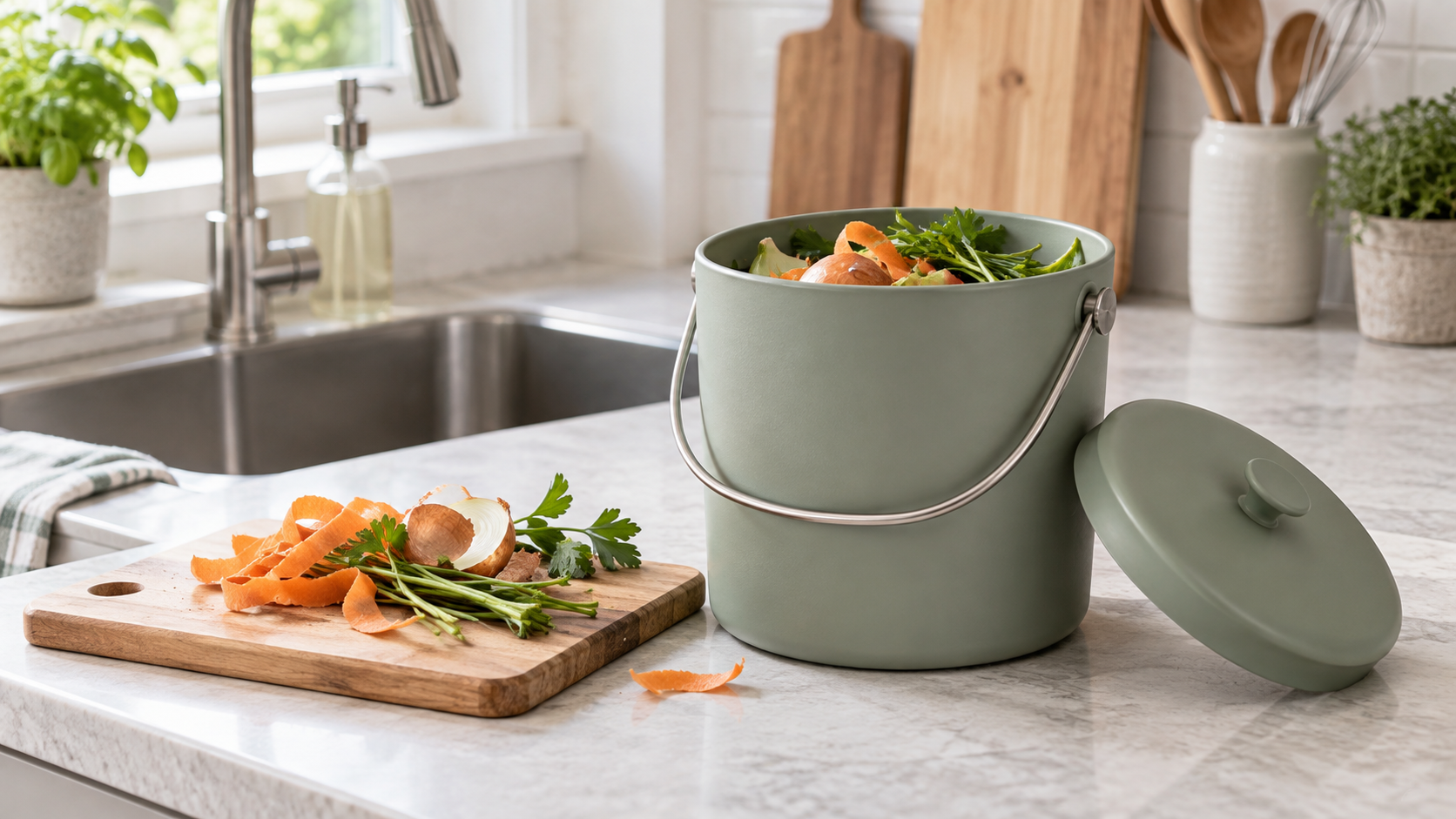
A dedicated countertop bin can shorten the trip between the cutting board and your compost or organics collection. It is only worth buying when that convenience fits a real downstream collection route, the available counter, and an emptying-and-cleaning routine you will maintain.
As an Amazon Associate, GoodWeighFinds earns from qualifying purchases.
Quick answer
A countertop compost bin may be worth it if you prepare food often, have an accepted organics destination, repeatedly need a close-by scrap container, and can empty and clean it without adding more friction. Reuse a bowl or lidded container when it already fits the job. Skip the purchase when collection is unavailable, scraps are rare, counter space is tight, or a freezer container or direct trip works better.
Confirm the destination before buying
“Compostable” is not one universal disposal route. Municipal pickups, drop-off programs, community sites, and home compost setups can accept different materials and apply different rules to liners, food scraps, packaging, and contamination. Check the current instructions for the program you will actually use.
If there is no workable destination, a countertop bin cannot solve that missing step. It may simply hold scraps until they enter ordinary trash. That can still be a deliberate cleanup choice, but it differs from buying for an established organics routine.
Run a no-cost routine test
For several typical prep sessions, use a bowl or food-storage container you already own. Note how much scrap accumulates, how long it sits, where you empty it, and which step is inconvenient. This shows whether the problem is collection, carrying, storage between trips, cleaning, or the downstream route.
- Buy may make sense: the temporary container repeatedly fills, lacks a useful lid or handle, or occupies awkward work space.
- Reuse may be enough: an existing bowl or container is easy to reach, carry, empty, wash, and return.
- A freezer container may fit: you need to hold accepted scraps longer and have freezer space; follow the local program's rules.
- Direct disposal may win: the outdoor bin is close and an indoor container creates more cleaning than convenience.
Measure the whole footprint
Measure the intended spot with nearby cabinet doors, outlets, appliances, sink edges, and cutting-board movement in mind. Listing capacity does not reveal whether the base, lid swing, handle, or open height fits. Compare exterior width, depth, and height as well as the opening.
Capacity should match the realistic interval between emptying trips, not the largest bin the counter can hold. No ordinary caddy guarantees an odor-free, pest-free, or mess-free kitchen; contents, temperature, time, closure, cleaning, and the surrounding environment all matter.
Check emptying and cleaning friction
A handle helps only if its position and attachment work with the loaded container. Check whether the lid must be removed, flipped, slid, or held during prep, and whether that motion works with messy hands. Look for crevices, removable parts, filters, and edges that need separate cleaning.
Use the maker's care directions for the exact model. Do not infer dishwasher compatibility from material alone. If a listing calls for proprietary liners or replacement filters, check whether they are required and whether the local collection accepts the liner material. Treat replacement intervals as manufacturer guidance, not a universal schedule.
Count the complete cost
Include recurring liners, filters, replacement parts, and supply storage. Inspect the seller and return terms, too. A poor-fit countertop item can be difficult to return when the decision depends on lid access and loaded handling that photos do not demonstrate.
If the no-cost test works, a dedicated caddy may not improve the routine. If it identifies a repeated problem, use the countertop compost-bin comparison guide to evaluate formats without treating “best” as universal.
When to skip it
- You have not confirmed an accepted destination or current scrap and liner rules.
- An existing bowl, container, freezer setup, or direct trip already works.
- The bin would reduce needed prep space or interfere with cabinets, outlets, or appliances.
- The listing omits dimensions, care directions, included parts, seller information, or understandable returns.
- You expect guaranteed odor, pest, leak, sanitation, environmental, or durability outcomes.
- Ongoing liners, filters, cleaning, or carrying add more friction than the tool removes.
Keep the purchase in perspective
This is an ordinary kitchen cleanup tool, not a weight-loss product and not proof of a healthier or more sustainable routine. The routine-support tools guide keeps purchases tied to specific tasks. For other prep friction, compare bench scrapers for moving dry debris or cutting boards by measured workspace fit.
Bottom line
A countertop compost bin is worth considering only after you confirm the destination and prove that a dedicated caddy fixes a repeated collection, carrying, or lid problem. Test what you own, measure the full working space, and include emptying, cleaning, and supplies. If the existing setup works, keep it.