Buy, rearrange, or skip
Is a Freezer Bin Divider Worth It for Meal-Prep Storage?
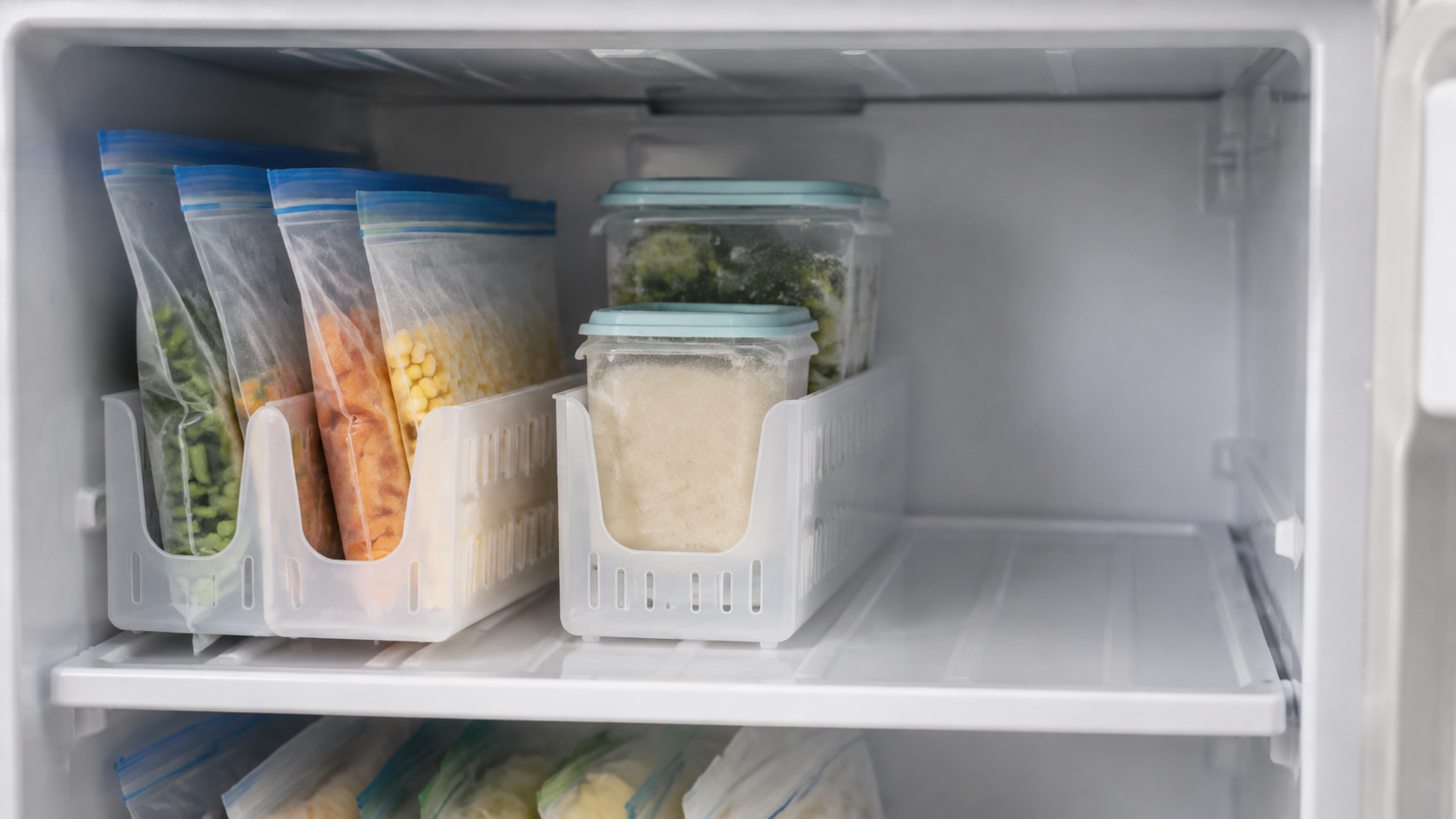
A freezer bin divider can be worth buying when slim bags repeatedly slump into a mixed pile and a measured upright lane would make them easier to see and remove. It is usually unnecessary when regrouping what you already own fixes the problem, or when bulky containers—not loose bags—fill most of the shelf.
As an Amazon Associate, GoodWeighFinds earns from qualifying purchases.
The quick answer
- Likely worth it: the same slim bags or small packages keep falling over, upright labels would improve retrieval, and a divider fits the exact shelf or bin without blocking vents, doors, or drawers.
- Rearrange first: expired or unidentified items, inconsistent bag sizes, and unrelated foods are creating the pile. Grouping and labeling may solve more than new hardware.
- Probably skip it: the freezer mostly holds rigid boxes or large containers, the shelf shape changes often, or the divider would consume the narrow space it is meant to recover.
Define the repeat problem before shopping
A divider separates a usable area into narrower lanes. It does not create freezer volume, preserve food beyond safe storage practices, or make every package stack well. Its own walls, clips, feet, or tension mechanism take up room.
Empty one shelf at a time, discard food according to applicable safety guidance, and group what remains by shape and how often you reach for it. If a few upright bags repeatedly collapse after that reset, a divider may address a real pattern. If the mix changes every week, a fixed layout may add friction.
Test an upright lane at no cost
For a short layout test, use an existing freezer-safe bin or arrange similar rigid packages as boundaries. Do not place cardboard, improvised clips, or materials not intended for freezer use into long-term cold storage. Stand the bags or packets as you expect to store them, with labels visible.
Over several normal retrievals, notice whether the lane stays useful after one item is removed. If everything leans into the gap, a movable divider may help. If you still need to unload the shelf to find items, clearer labels or a shallow pull-out bin may be the better fix.
Measure the real freezer geometry
- Usable shelf width and depth: measure around rails, lips, hinges, drawer paths, and the closed door—not just the largest interior span.
- Package range: measure the narrowest and widest bags or containers that must stand in one lane.
- Vertical clearance: include the height needed to lift an item over any divider wall.
- Adjustment or clip range: confirm it matches the shelf, bin wall, or rail thickness named by the listing.
- Vent and sensor clearance: follow the appliance manual and keep required airflow areas unobstructed.
- Removal path: make sure the divider and surrounding items can come out for cleaning without forcing or bending appliance parts.
Compare the main formats
Clip-on dividers
These attach to the edge of a compatible bin or shelf. Check the required wall thickness, clip depth, and whether the attachment is intended for your surface. A clip that fits loosely can shift; one that is forced onto an incompatible edge can damage the organizer.
Freestanding adjustable dividers
These can move as package widths change, but feet and bases may reduce usable floor area. Look at the full footprint rather than judging only the upright panel.
Bins with built-in sections
A divided bin can pull several small items forward together, but its outer walls use more space and must clear the shelf and door. If rigid food storage is the broader need, compare it with the freezer-container buying guide rather than adding an organizer by default.
Check materials, cleaning, and appliance fit
Use only products whose maker identifies the intended cold-storage use, and follow both the product and freezer instructions. Do not assume any plastic is suitable for prolonged freezer temperatures. Review washing directions, seams where spills can collect, and whether the divider must warm before adjustment or cleaning.
A divider should not cover vents, interfere with a drawer, press against a temperature control, or keep the door from sealing. If the appliance manual limits shelf accessories or loading, that guidance takes priority over a seller photo.
When a simpler alternative is better
- Labels solve identification: Use freezer-suitable labels when the issue is knowing what each package contains; compare that with a shared overview in the labels-versus-inventory-board guide.
- A shallow bin solves retrieval: Group small loose items that need to be pulled out together, provided the measured bin fits and does not obstruct airflow.
- Rigid containers solve slumping: For foods suited to them, existing freezer-labeled containers may stand more predictably, though they can consume more space than bags.
- A reset solves crowding: Consolidate only when food-safety and labeling practices allow, and keep an inventory simple enough to maintain.
What a divider cannot do
A freezer divider can support organization; it cannot verify food safety, prevent freezer burn, extend storage life, or compensate for an overloaded or malfunctioning appliance. Follow authoritative food-storage guidance and the appliance maker's directions rather than treating organization as a safety control.
Bottom line
A freezer bin divider is worth it when a recurring group of slim packages needs an upright lane, your measurements match the attachment and adjustment range, and the layout still works after items are removed. Rearrange and test first. For the broader product framework, use the routine-support tools guide.