Transit commute buy-or-skip guide
Is an Insulated Lunch Backpack Worth It for Transit Commutes?
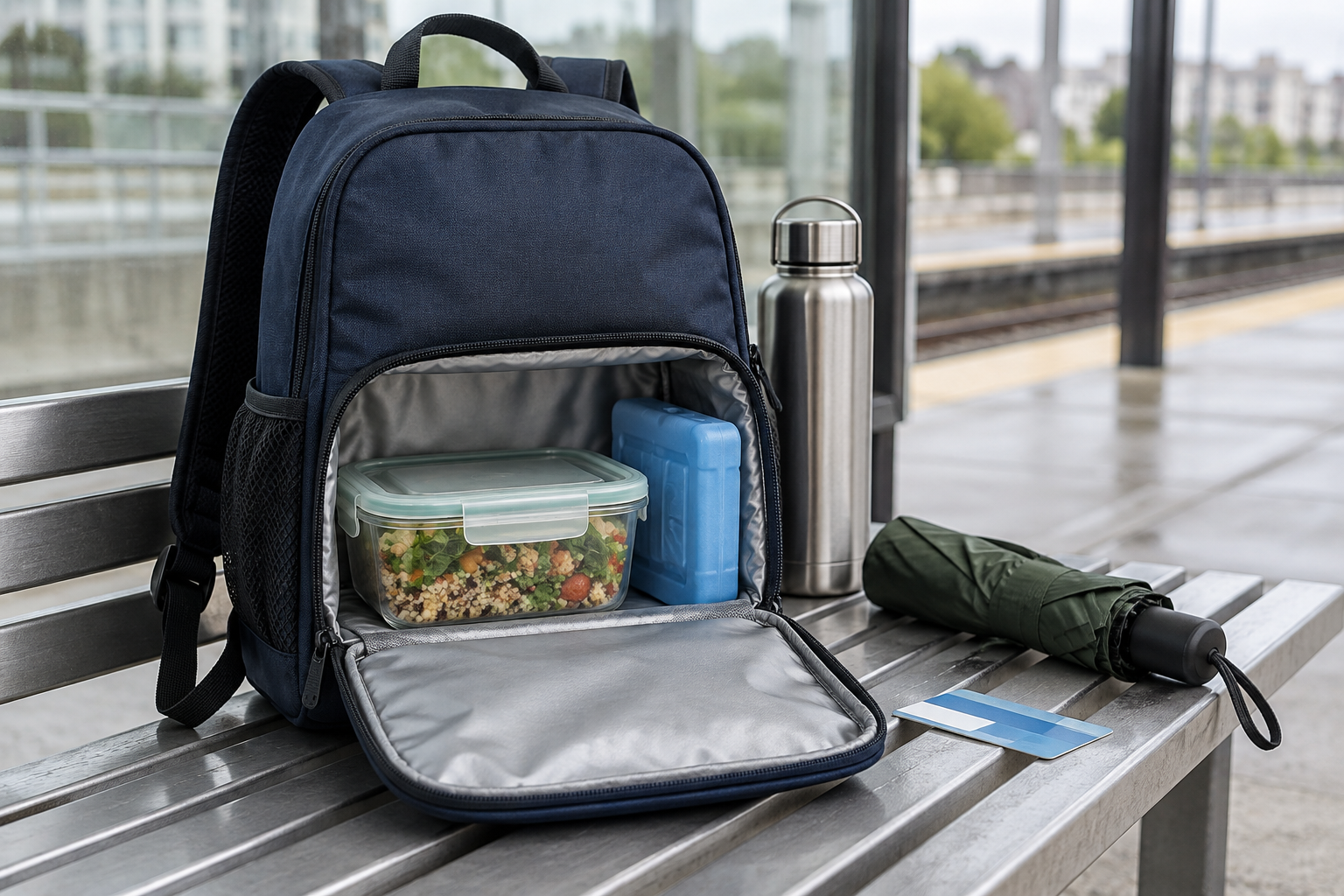
An insulated lunch backpack can be worth buying when you carry a full meal several days a week, need both hands during transfers, and can store and clean the bag without adding more friction. Delay or skip it when an existing backpack, compact tote, or workplace refrigerator already handles the job.
As an Amazon Associate, GoodWeighFinds earns from qualifying purchases.
The short decision
| Decision | When it fits |
|---|---|
| Buy | You commute with a meal often, hands-free carry solves a repeated route problem, and one measured backpack can replace separate lunch and day bags. |
| Delay | You have not packed the usual load, traced crowded sections, or tested an existing bag through a representative week. |
| Choose an alternative | A compact insulated tote gives easier access, or an existing backpack can hold a separate insulated insert without tipping containers. |
| Skip | The bag duplicates what you own, projects awkwardly in crowded vehicles, will not fit workplace storage, or has cleaning and return details you cannot verify. |
| Escalate | Pain, balance, mobility, or a medically necessary food-temperature requirement makes generic product guidance inadequate; get individualized advice. |
Run a five-commute ownership test
For five representative commutes, list every item you carry: filled containers, cold packs, bottle, utensils, laptop, charger, coat, umbrella, and anything needed for accessibility or care. Note where a separate lunch bag gets in the way, when you need both hands, and whether the bag must come off on a crowded vehicle. If the issue is really format choice, compare an insulated lunch tote with a lunch backpack before buying.
Pack the same items into bags you already own. A small insulated insert inside an ordinary backpack may solve the task; so may a compact tote placed beside a work bag. The backpack format earns its cost only when it removes a recurring hand-carry or consolidation problem without creating a larger crowd, storage, or cleanup problem.
Measure the loaded bag, not the staged photo
- Container footprint: Measure the widest and tallest closed container, including lid clips, and check whether it must stay level.
- Usable compartment: Ask for interior dimensions. Thick insulation, seams, curves, and dividers reduce the space suggested by exterior measurements.
- Loaded depth: Include the filled front compartment and outside pockets. A deep bag may need to come off before boarding or standing in an aisle.
- Total load: Add the maker-stated empty weight to the actual food, cold packs, bottle, and daily gear; do not infer comfort from a model photo.
- Strap and torso fit: Verify adjustment range and return terms. “Ergonomic” or “comfortable” is not proof of individual fit.
- Destination fit: Measure the locker, desk, shelf, refrigerator space, and any bag-size limits at work.
Cost, setup, and maintenance tradeoffs
Compare total ownership cost, not just the listed price. A dedicated backpack may also require correctly sized cold packs, replacement food containers, cleaning supplies, or return shipping if the dimensions do not work. Multiple compartments can organize a long day, but every zipper, seam, pocket, and insulated panel adds an area to inspect and dry.
Setup includes adjusting both straps, deciding where a transit card and bottle can be reached, and packing the heaviest items so the bag remains manageable. Follow the maker's cleaning directions. If the lining cannot be opened wide, inspected after a spill, and dried in the space you have, the design may be more upkeep than it is worth.
Food-temperature claims need context
An insulated backpack can slow temperature change; it does not prove that perishable food will remain safe for an entire commute or workday. Starting temperature, cold packs, outdoor heat, trip duration, opening frequency, workplace refrigeration, and the food itself all matter. Follow current public-health food-safety guidance rather than a seller's broad hour claim.
If you must maintain a specific temperature for medication, infant feeding, allergy management, or another medical need, use guidance from the relevant healthcare professional and product manufacturer. A general lunch backpack listing is not a validated medical-storage plan.
Listing red flags
- No complete interior dimensions, empty weight, or clear view of the insulated compartment.
- “Leakproof” language with no explanation of whether it describes the lining, zipper, seams, or closed food containers.
- Exact temperature-duration claims without test conditions, starting temperature, cold-pack setup, or limitations.
- Comfort, posture, pain-relief, or injury-prevention promises based only on padded straps.
- Photos that hide how far the loaded bag projects behind the wearer.
- No care instructions, drying guidance, seller identity, or practical return terms.
- Weight-loss, appetite-control, “no excuses,” or body-transformation claims attached to an ordinary carry product.
Who should skip an insulated lunch backpack?
Skip it if you carry lunch only occasionally, your existing bag keeps containers upright, a small tote is easier to access, or the new backpack would duplicate a work or school bag. It is also a poor fit when the loaded depth is awkward on crowded transit, the straps do not adjust to you, the bag will not fit destination storage, or the lining is difficult to clean and dry.
Do not treat a backpack as a fix for pain, balance limitations, or unsafe loading. If carrying the ordinary packed load causes pain, numbness, instability, or other physical difficulty, individualized guidance is more useful than marketing about padded or ergonomic straps.
Alternatives that may solve the job for less
| Alternative | Best fit | Tradeoff |
|---|---|---|
| Compact insulated tote | One meal, short walking segments, quick access | Uses a hand, forearm, or shoulder and remains a separate item |
| Insulated insert in an existing backpack | You already own a well-fitting bag with enough measured space | May reduce organization and needs a stable, cleanable setup |
| Workplace refrigerator and minimal carry | Reliable storage is available and food can be brought in smaller loads | Depends on workplace rules, space, and labeling practices |
| Buy food near work | Occasional office days and suitable local options | Recurring cost and less control over availability |
Bottom line
An insulated lunch backpack is worth it when frequent transit, a repeatable hands-free need, a measured meal load, workable crowd behavior, destination storage, and realistic cleaning all line up. Delay until you have tested the route with what you own; skip the dedicated format when it merely duplicates another bag. For detailed lunch-bag criteria, continue with the insulated lunch bag pillar. If the backpack decision is settled, compare meal-sized insulated backpack formats for transit by dimensions, container orientation, access, straps, care, and crowded-vehicle profile.