Buy, delay, or skip
Is a Pantry Inventory Notepad Worth It for Meal Planning?
A pantry inventory notepad can be worth buying when your household repeatedly loses track of staples, one person will keep the list current, and the pad can live where stock changes happen. Skip it when a grocery list, phone note, or quick shelf check already covers the job.
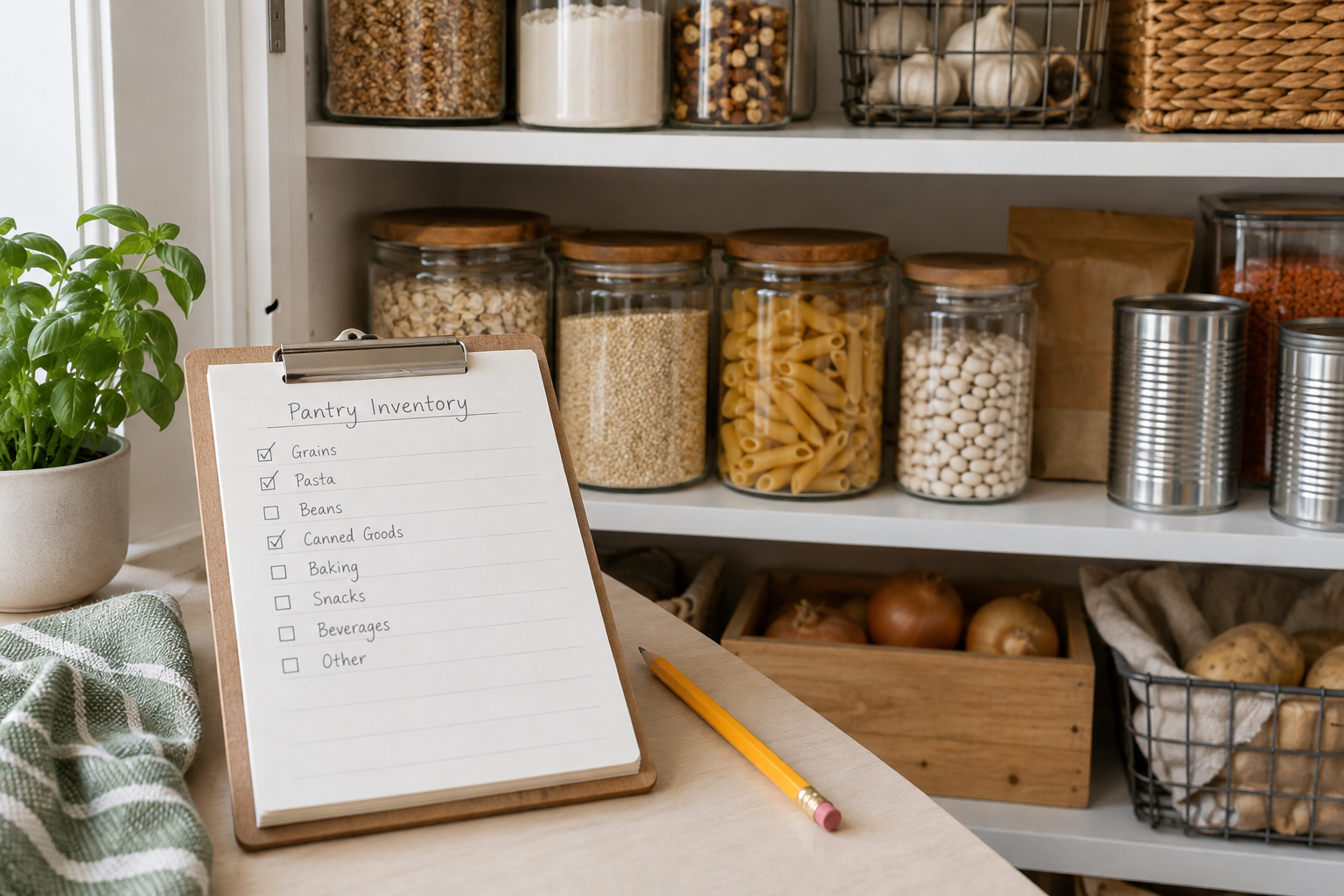
The quick decision
- Buy: missed or duplicate pantry purchases happen often, everyone can see the same pad, and one simple update rule fits the household.
- Delay and test: use plain paper for one week before paying for a dedicated layout.
- Choose an alternative: use a shared phone note when the list must travel and several people update it away from the pantry.
- Skip: stock changes too quickly, nobody wants the upkeep, or a shelf check and ordinary grocery list already work.
Start with the problem, not the pad
A pantry inventory is a record of what is on hand. A grocery list is a record of what someone plans to buy. Those jobs overlap, but maintaining both creates an extra handoff. Name the recurring problem first: forgotten staples, duplicate purchases, items hidden on deep shelves, or uncertainty before starting a shopping list.
For one ordinary week, tape plain paper near the pantry. Record only the few categories that create trouble. When an item is opened, finished, or restocked, mark it using one agreed rule. If the test sheet stays accurate and saves a useful stock check, a purpose-made pad may improve readability. If it goes stale after two days, a nicer layout will not fix the workflow.
Check the update workflow
- Owner: decide whether one person maintains the list or every household member updates what they use.
- Trigger: choose one clear moment to write—when the last backup is opened, when an item runs out, or during a scheduled shelf check.
- Fields: use only what guides the next decision. Item and restock status may be enough; detailed quantities can become needless upkeep.
- Handoff: decide how the pantry record becomes a shopping list. A removable page, phone photo, or manual transfer each adds a step.
- Reset: pick a simple way to clear outdated entries without rewriting the whole pantry.
The pad records household information; it does not improve nutrition, make meal planning effective, or cause weight loss. Avoid layouts that turn ordinary pantry use into rigid food rules or pressure.
Measure placement and writing space
Measure the complete pad against its intended spot. A refrigerator mount only helps if the surface is compatible and the pad is near the pantry workflow. Stainless-looking appliance doors are not always magnetic. Adhesive mounting needs maker-approved surface and removal guidance; do not assume it will release cleanly.
Compare the usable writing area rather than the outside dimensions. Check line height, category labels, margin lost to binding, and whether the lowest lines remain easy to write on. Confirm sheet count from the current listing if refill cost matters. Product photos and customer comments are not reliable measurements.
Cost, maintenance, and setup tradeoffs
The purchase price is only part of the cost. Include replacement pads, special refills, markers or pencils, mounting accessories, and the time needed to keep a second list current. A branded or preprinted layout can make setup faster, but fixed categories may waste space or force a pantry into someone else's system.
A plain pad is cheaper and flexible. A shared digital note travels easily and can be updated remotely, but it requires device access and a notification or sharing setup everyone accepts. A dry-erase board avoids paper refills but needs cleaning and cannot be carried to the store unless photographed. Choose the least complicated format that survives your one-week test.
Red flags on a listing
- No clear outside dimensions, usable page view, sheet count, backing, or mounting details.
- “Strong magnet,” “residue-free,” or “fits every pantry” language without defined surfaces or conditions.
- Photos that hide binding, page layout, backing, or how a pen is stored.
- Claims that a notepad reduces waste, saves money, improves eating habits, or supports weight loss without suitable evidence.
- An unclear seller, refill source, or return path when dimensions and mounting cannot be checked locally.
Who should skip it
Skip a dedicated pad if reading or writing in the intended position is difficult, the pantry is shared but updates are unlikely, the list would expose private household information, or keeping an item-by-item inventory feels stressful. A short “replace soon” grocery list can be calmer and easier.
Also skip when pantry stock is visible at a glance, purchases are infrequent, or the household already relies on a shared digital list. Buying another planning tool is not useful when the actual bottleneck is deciding meals, coordinating shoppers, or making time for a shelf check.
When to compare layouts
If the plain-paper test works, compare current pads by the fields you actually used, readable line spacing, complete dimensions, placement, portability, refill cost, and return terms. Keep the scope narrow: this is an inventory tool, not a diet plan.
If the real need is a portable purchase list rather than an on-hand inventory, use the magnetic grocery-list notepad guide. If you want to compare a tear-off list with a reusable household board, see the paper notepad versus dry-erase board comparison.
Bottom line
A pantry inventory notepad is worth considering only after a simple test proves that a separate on-hand record solves a repeat problem and someone will maintain it. Delay the purchase until the update and shopping-list handoff work on plain paper. For a broader way to choose planning tools without shame or body-result promises, use the non-shaming tracking guide.