Worth-it decision guide
Is a Water Bottle With Time Markers Worth It?
A time-marker bottle is worth it when an optional visual cue solves a real reminder problem and the bottle itself fits your carry and cleaning routine. If you already use a plain bottle, dislike schedules, or would struggle to clean the lid and straw, the markings are not enough reason to buy another one.
As an Amazon Associate, GoodWeighFinds earns from qualifying purchases.
Quick verdict
- Buy when you routinely forget a visible bottle, respond well to gentle printed prompts, and the exact bottle passes the carry, cleaning, and comfort checks.
- Delay when you have not tested a free reminder first or measured your bag pocket, cup holder, desk space, and sink clearance.
- Choose a plain bottle when you want more choice in size, insulation, lid style, or appearance and do not need a printed schedule.
- Choose a cheaper alternative when a removable band, note near your desk, calendar cue, or placing your current bottle in sight solves the reminder problem.
- Skip when the marks feel like a quota, the listing ties the bottle to weight loss or detox claims, or an existing bottle already works.
- Escalate when you have individualized fluid instructions or restrictions; a generic printed schedule should not replace guidance from a qualified healthcare professional.
What the extra money actually buys
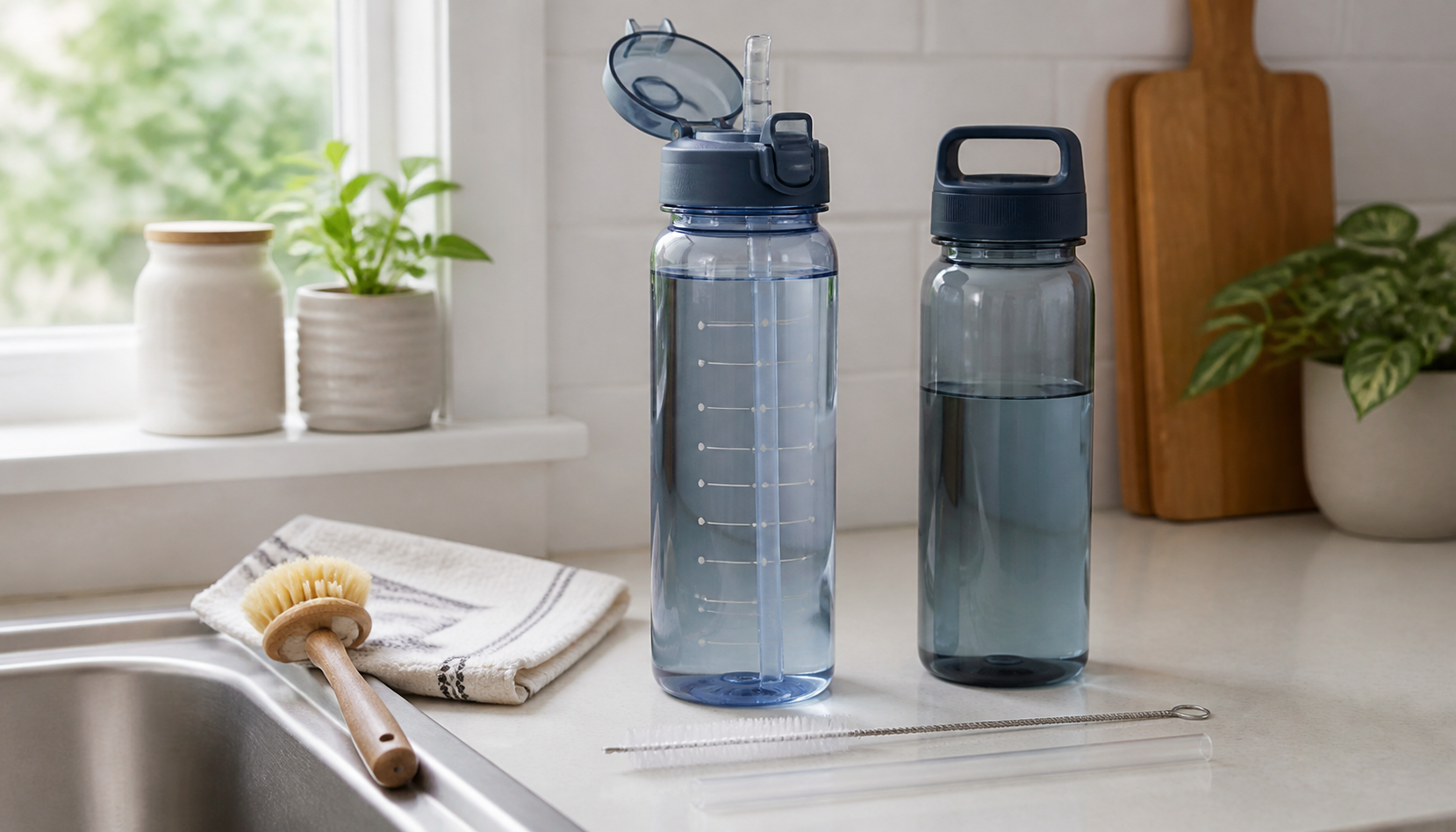
The distinctive feature is a visible sequence of prompts. It may reduce the effort of remembering during desk work or another predictable routine without an app, alarm, account, or subscription. That is a convenience benefit, not evidence that the bottle changes appetite, metabolism, body weight, or health.
The marks add little value if the bottle stays in a bag, the schedule does not match your day, or you already drink in a way that works for you. Printed times are generic. They do not account for drinks from other containers, weather, activity, food, refills, health circumstances, or professional guidance.
Run a no-cost test before buying
Use your current cup or bottle for three ordinary days and put it where you will see it. Pair it with one existing cue, such as the start of a break, rather than setting a new intake target. If visibility consistently solves the problem, you may not need another bottle. If you still want a cue directly on the bottle, the marked format has a clearer job.
Also record the practical failure, not a body outcome: forgotten bottle, too many refills, hard-to-clean lid, poor bag fit, leaking in transit, or uncomfortable full weight. A new bottle should address one of those concrete issues.
Cost, setup, and maintenance tradeoffs
Count the whole setup: bottle, any model-specific replacement straw or seal, a brush that reaches the base, and the storage space for loose lid parts. A very large bottle can reduce refills but becomes heavier, harder to fit under a tap, and more awkward in a bag or cup holder.
Maintenance matters more than the graphics. Straw lids, vents, hinges, and removable gaskets create places that need regular cleaning and complete drying. Printed markings may also have special dishwasher or scrubbing instructions. Check the current manufacturer directions for the exact model instead of assuming every component is dishwasher-safe.
Seven criteria that decide whether it is worth it
- Reminder fit: The marks should feel optional and useful on an irregular day, not like a pass-fail schedule.
- Capacity and full weight: Choose an amount you can comfortably lift and carry; do not treat a larger printed target as automatically better.
- Measured fit: Check bottle height and base width against bags, cup holders, shelves, taps, and bottle-drying space.
- Cleaning access: Count lid parts and verify that brushes can reach the bottle base, straw, vent, seal channel, and spout.
- Lid and carry design: Compare handle comfort, one-handed use, opening protection, and the conditions behind any leak-resistance claim.
- Parts and care: Confirm whether replacement lids, straws, and seals exist for the exact model and follow component-specific care labels.
- Return terms: Check the current policy before filling or washing because full weight, grip, and carry fit are difficult to judge from photos.
Red flags that turn the answer into “skip”
Skip listings that connect the bottle to fat burning, appetite suppression, detoxification, metabolism changes, rapid results, or guaranteed weight loss. A bottle can hold a drink and provide a prompt. It cannot establish a personalized fluid target or prove a body result.
Also pause when the listing hides bottle dimensions, material details, care instructions, lid construction, replacement-part compatibility, seller identity, or return terms. Treat “leakproof,” “odor-free,” “non-toxic,” and broad dishwasher claims as manufacturer or seller statements until the exact documentation explains what is covered.
Who should skip this format
Skip a time-marker bottle if tracking creates guilt, you feel pushed to catch up with the printed line, or rigid prompts have made food or hydration routines stressful. A plain bottle—or no bottle when cups already work—can be the calmer choice. The non-shaming tracking guide offers a broader pressure check for routine tools.
People with fluid restrictions or individualized hydration instructions should follow the plan from their qualified healthcare professional rather than the schedule printed on a consumer product. If swallowing, persistent thirst, dizziness, or another symptom is driving the purchase, a bottle comparison is not the right way to resolve the underlying concern.
Alternatives that may fit better
A plain reusable bottle offers more freedom to prioritize insulation, easy cleaning, low weight, or a specific lid. A removable marker band preserves flexibility. A glass at a regular workspace may eliminate carrying and cleaning extra lid parts. If the opening is the main problem, compare wide-mouth bottles for easier cleaning rather than paying for printed prompts.
Use the water-bottle claim check to screen capacity, materials, seller language, and weight-loss promises. This decision also maps to the routine-support tools pillar, where ordinary tools are judged by the task they solve rather than a promised body result.
Bottom line
A water bottle with time markers is worth buying only when the printed cue solves a repeated reminder problem and the exact bottle is comfortable to carry, straightforward to clean, and free of body-result hype. Delay for a no-cost visibility test, choose a plain bottle when flexibility matters more, and skip the purchase when the schedule adds pressure or duplicates what you own.