Fridge-storage cover comparison
Silicone Stretch Lid vs Reusable Bowl Cover for Fridge Storage
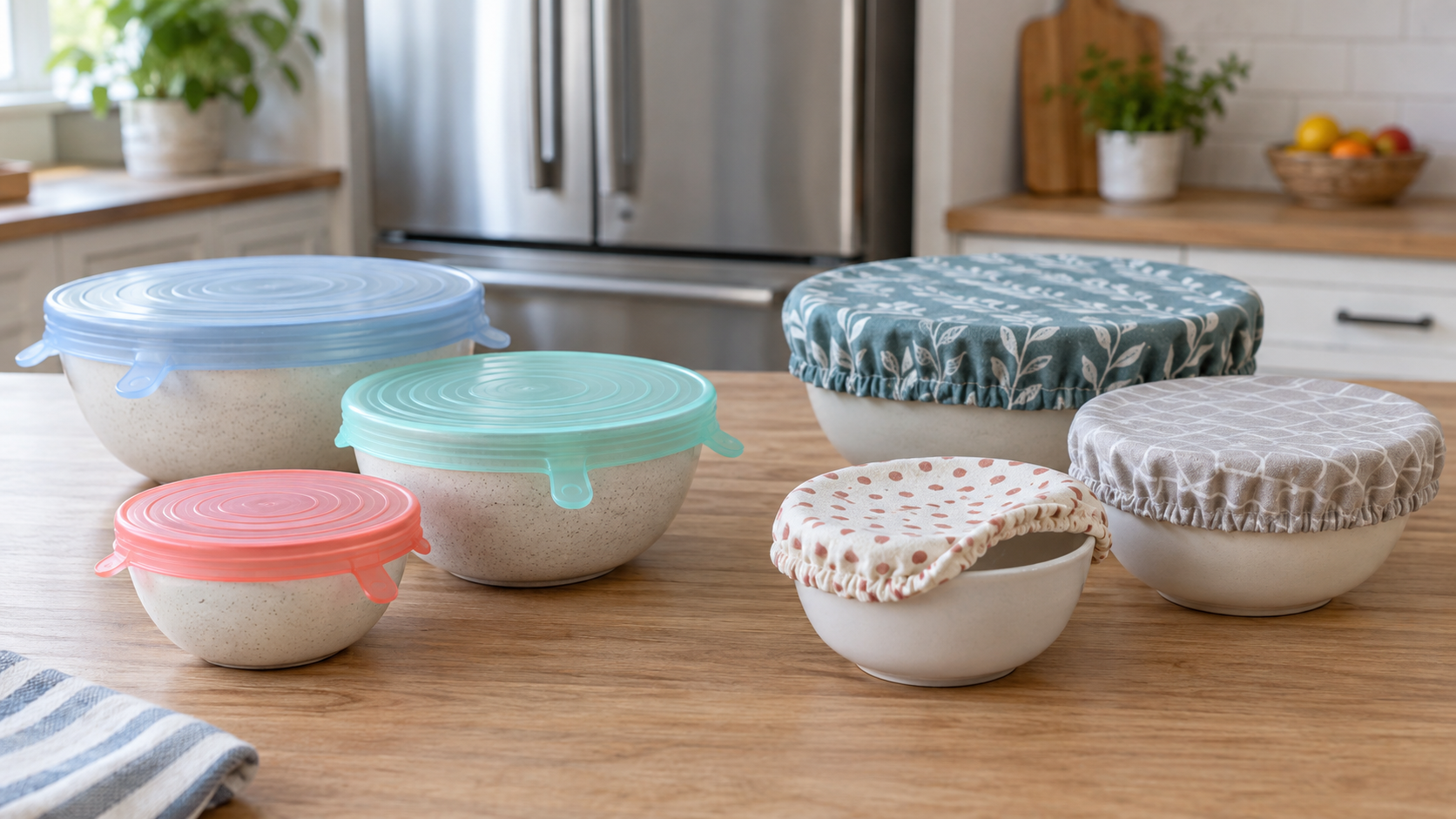
A silicone stretch lid uses tension around a compatible rim; an elastic reusable bowl cover drapes over the bowl and gathers below the edge. Neither format fits every bowl or proves a seal. Choose by measured rim shape, refrigerator layout, visibility, handling, washing, drying, and where the covers will live between uses.
As an Amazon Associate, GoodWeighFinds earns from qualifying purchases.
Quick decision
| Choose a silicone stretch lid when… | Choose an elastic bowl cover when… |
|---|---|
| The measured rim shape and diameter match the maker's stated fit range. | You need a forgiving cover for bowls whose shape works with the stated elastic range. |
| Seeing the contents through a translucent cover matters. | A fabric or flexible cover's opacity is acceptable, or a clear version is documented. |
| You can apply and remove tension comfortably without tipping the bowl. | Pulling a gathered edge around the rim is the simpler handling motion. |
| The stretched top and covered bowl fit the shelf without relying on unsupported stacking. | The looser top profile fits the shelf and nothing must be stacked on it. |
Who each format fits
A silicone stretch lid fits a repeated set of bowls when the lid size, rim shape, and pulling tabs work together. It can make contents visible and may create a flatter top than a gathered cover, but tension can be awkward on light bowls, wide rims, handles, spouts, or irregular shapes. Do not infer airtight, watertight, or leak-resistant performance from appearance.
An elastic reusable cover fits readers who want quick cover-in-place handling and do not need a taut transparent surface. Its gathered edge may accommodate a stated range of bowl sizes, but loose fabric, a lining, or an interrupted rim can change the fit. It is a refrigerator cover, not automatically a carry lid or stacking surface.
Measure before opening a listing
- Outer rim: Measure the widest point, not the bowl's labeled capacity.
- Shape: Note round, oval, square, flared, textured, handled, or spouted rims.
- Loaded height: Measure the covered bowl and the shelf clearance above it.
- Handling room: Leave space to stretch or gather the cover without contacting nearby containers.
- Storage: Reserve a clean, dry drawer, bin, or hook location for every included size.
Compare setup and maintenance
Stretch lids need a compatible rim and enough grip to apply evenly. Check the maker's directions for orientation, pull tabs, surface condition, and any limits on wet or oily rims. Elastic covers need the edge opened fully and distributed around the bowl. Check whether a lining or seam changes which side faces the food.
For either format, read material and appliance statements literally. Refrigerator, freezer, microwave, dishwasher, and temperature directions can differ even when listings use similar material names. Inspect edges, seams, tabs, and elastic for damage under the maker's replacement guidance.
Count drying friction as part of ownership. A flat silicone lid may hold water in rings or tabs; a gathered cover can keep folds and elastic damp. Plan how each piece will be opened or spread for complete drying before it goes back into storage.
Tradeoffs that matter in a refrigerator
Visibility can reduce the need to lift a cover, but a translucent top still may not show what is at the bottom of a deep bowl. A simple date label placed according to the product directions can be more useful than choosing solely by transparency.
Neither flexible format should be assumed to support another container. If vertical stacking is essential, a matched rigid container and lid may be the more predictable system. The existing bowl-cover versus container-lid comparison covers that separate decision.
Run a no-buy fit test first
- List the bowls you actually cover during one week.
- Measure each outer rim, shape, loaded height, and refrigerator position.
- Note whether visibility, stacking, carrying, or simply avoiding a transfer is the real problem.
- Try a plate or compatible lid you already own where appropriate.
- Buy only when one format solves a repeated gap and every relevant dimension and use direction is available.
When to skip either purchase
- A plate, matching lid, or existing container already handles the recurring job.
- The size chart omits outer-rim dimensions or compatible bowl shapes.
- You need spill-resistant carrying, rigid stacking, or a verified closure rather than a flexible cover.
- Applying tension or pulling elastic would be uncomfortable or unstable with the bowls you use.
- The included size set would leave several unused pieces or create more drawer clutter.
- The care directions do not fit your washing and drying routine.
Next steps
Once a flexible cover is clearly the right category, use the reusable bowl cover guide to compare documented size ranges, rim compatibility, materials, care, and storage. The broader routine-support tools guide keeps kitchen purchases tied to a repeat friction point rather than body-result marketing.
Neither cover format causes weight loss, controls an appropriate portion, extends a safe storage time, or makes food safe. Follow applicable food-storage guidance and the exact product directions; treat freshness, preservation, seal, and food-safety wording as claims that require specific support.
Bottom line
Choose a silicone stretch lid when verified rim fit, visibility, and a tensioned top suit the bowls and your handling routine. Choose an elastic reusable bowl cover when a gathered flexible edge is easier and a looser, sometimes opaque cover fits the refrigerator job. Skip both when what you need is a rigid, portable, or stackable closure—or when something already in the kitchen works.