GoodWeighFinds is for general information only and is not medical advice. Readers should talk with a qualified healthcare professional before starting weight-loss products, supplements, diets, or exercise changes.
Marketing red-flags pillar
Weight-Loss Product Marketing Red Flags: Claims, Urgency, and Subscription Traps
Weight-loss product marketing often tries to make a complicated decision feel urgent, emotional, and simple. This pillar helps adults slow down before buying and separate ordinary product details from pressure tactics, vague health-adjacent claims, and hidden cost risks.
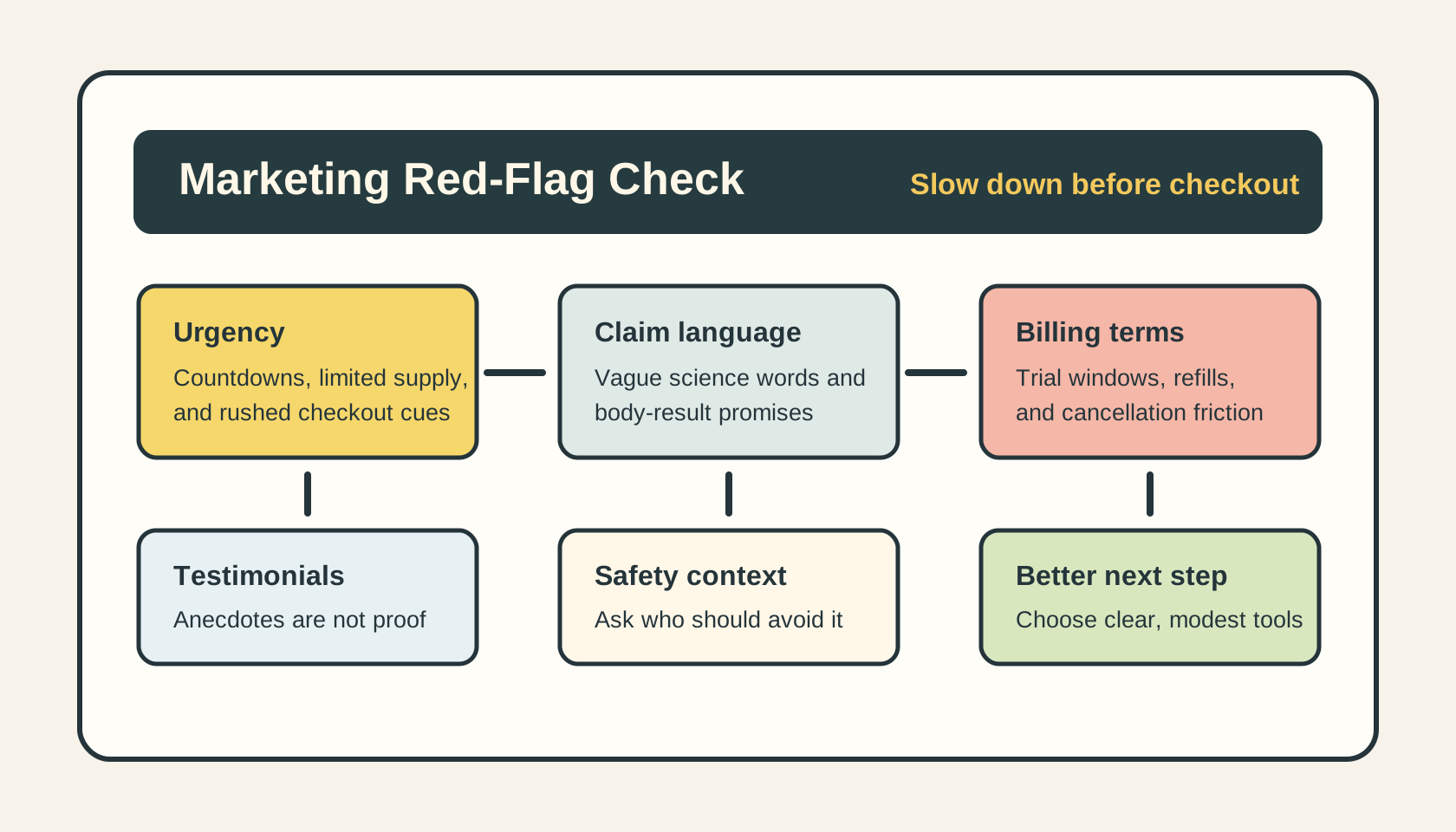
This is not a product recommendation page. It is a warning-first framework for reading ads, landing pages, Amazon listings, social posts, free-trial offers, and checkout flows with more skepticism.
Start With the Pressure, Not the Promise
Before deciding whether a claim sounds exciting, look at how the page is trying to move you. Countdown timers, limited-stock messages, aggressive pop-ups, big discount anchors, and "just pay shipping" offers can push shoppers into acting before they understand the claim, the product, or the billing terms.
A practical routine-support product should still make sense after the urgency is gone. If the page needs pressure to feel persuasive, that is a reason to slow down.
Claim Language That Deserves Extra Caution
Be careful when marketing leans on body-result promises instead of clear product functions. Phrases such as "melt fat," "detox," "block carbs," "boost metabolism," "flatten," "shrink," "clinically inspired," or "works without diet or exercise" often sound more precise than they are.
Those phrases are especially risky when attached to supplements, patches, appetite-suppression products, stimulant-positioned products, GLP-1 alternative claims, hidden-ingredient concerns, or body-composition promises. GoodWeighFinds treats those topics as escalation items before any positive recommendation.
Testimonials Are Not Evidence
Customer stories can describe one person's experience, but they do not prove that a product caused weight loss, that the result is typical, or that the product is appropriate for another person. A testimonial may be influenced by diet changes, exercise changes, medication, illness, water shifts, lighting, timing, or selective editing.
If a page depends on dramatic stories but does not clearly explain the product, the evidence, the limits, and who should avoid it, treat that as a weak claim. For a deeper framework, use the weight-loss product claim checks pillar.
Subscription and Trial Terms Can Change the Risk
Marketing risk is not only about ingredients or devices. A confusing offer can turn a small first order into recurring charges, refill commitments, or refund friction. Before entering payment details, find the full post-trial price, next charge date, cancellation method, refund rules, return shipping terms, and seller contact details.
If the page includes a starter kit, autoship, refill, free trial, or "just pay shipping" language, use the free-trial and subscription red-flag guide before checkout.
Better Buying Standard
GoodWeighFinds prefers products with modest, visible jobs: measuring, storing, planning, tracking, walking support, hydration support, or meal-prep organization. Even then, the product should be judged by fit, usability, cleaning, privacy, return terms, safety context, and claim restraint rather than body-result promises.
For lower-risk categories, start with routine-support tools that do not promise fat loss. For marketplace pages, use the Amazon weight-loss product red-flag guide and the listing hype checklist.
When to Close the Page
- The page promises fast, effortless, guaranteed, or targeted weight loss.
- The product involves ingestion, stimulation, appetite suppression, detoxing, patches, or medical-sounding body changes.
- The seller hides ingredients, warnings, billing terms, cancellation details, or refund rules.
- The page relies on shame, before-and-after pressure, influencer urgency, or customer stories as proof.
- The offer feels hard to explain plainly after you remove the hype.
Bottom Line
Good weight-loss-adjacent product research should make decisions calmer, not more pressured. If the marketing makes a purchase feel urgent before the product, terms, evidence, and safety context are clear, the safest next step may be to pause, compare, or skip it entirely.