Routine-support buying guide
Best Countertop Caddies for Frequently Used Meal-Prep Tools
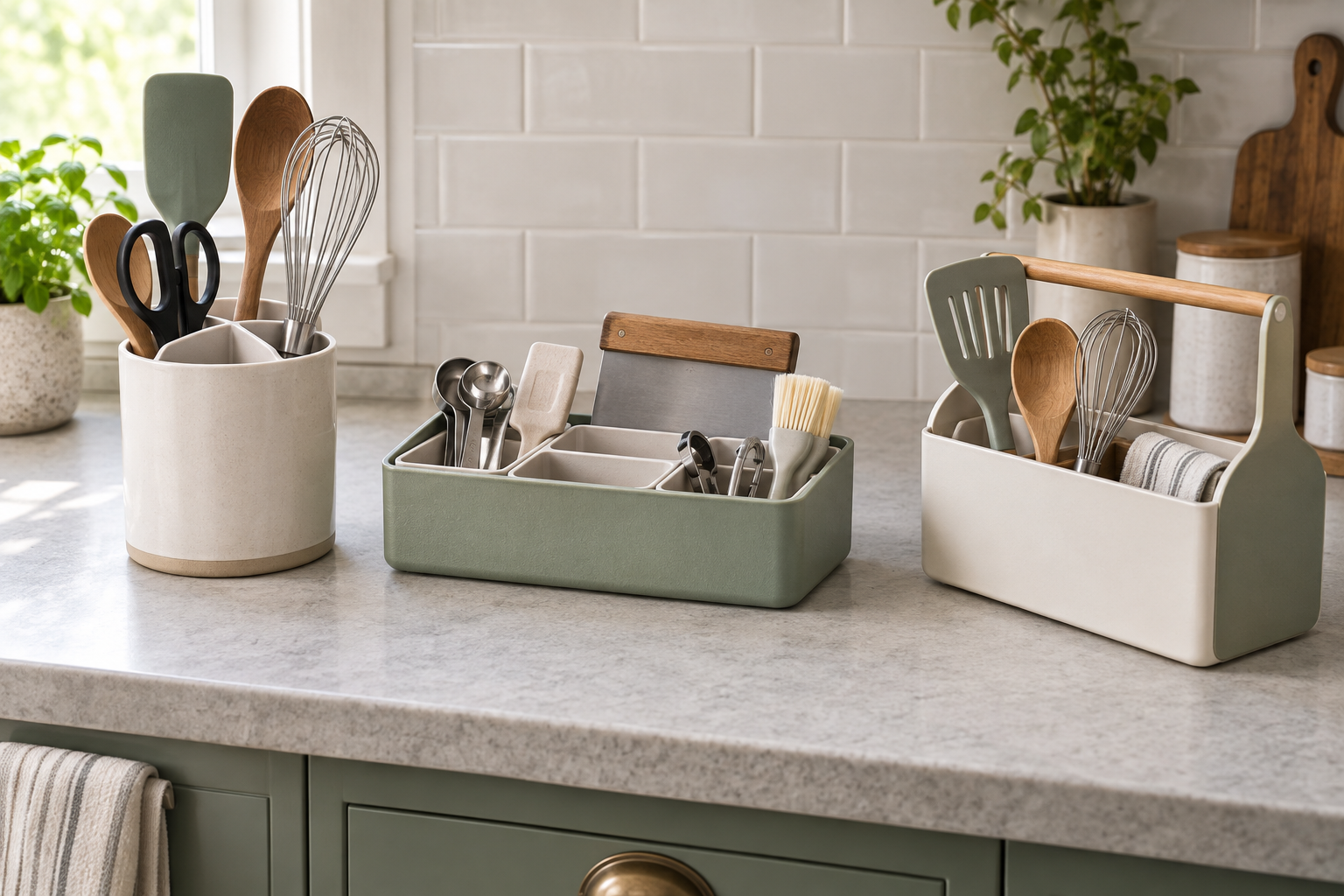
A countertop caddy can keep a small set of frequently used spatulas, spoons, scissors, and measuring tools within reach. The useful choice is not the caddy that holds the most—it is the one that fits the available counter, keeps actual tools stable and visible, and is easy enough to empty and clean.
As an Amazon Associate, GoodWeighFinds earns from qualifying purchases.
Who this guide is for
This guide is for adults with limited drawer space who repeatedly use the same small set of meal-prep tools and want them visible on the counter. It covers dry storage for ordinary utensils, not wet brush storage beside a sink, knife blocks, or broad countertop organization.
For the broader buy-less, measure-first framework, start with the routine-support tools guide. If the tools fit in a drawer but slide into one pile, compare drawer dividers for meal-prep tools instead.
Useful formats—not ranked winners
- Tall divided utensil holder: Separate sections can keep handles from tangling. Check compartment width, interior height, and whether shorter tools disappear below the rim.
- Low wide caddy: Shallow compartments can expose measuring spoons, clips, or a bench scraper. It uses more horizontal counter space and may not support tall tools.
- Handled portable caddy: A central handle can move tools between a cabinet and prep area. Measure clearance around the handle and test whether the loaded balance stays manageable.
- Removable-compartment caddy: Lift-out inserts can simplify sorting or cleaning, but seams and extra parts add places to inspect, wash, and dry.
Measure the loaded setup
Mark the proposed footprint on the counter with removable tape or paper. Include handles, feet, a rotating base, and the widest tool handles. Keep clear space around the sink edge, cooktop, appliance vents, outlets, and the counter area used for cutting or hot cookware.
Load a temporary container with only the tools used several times a week. Record the tallest handle, widest head, shortest tool, and total bundle. A listing’s outside height does not reveal usable interior depth, and a photographed arrangement does not prove that your tools will stand securely.
Selection criteria that matter
- Complete footprint: Compare outside dimensions with the exact clear counter zone, including access needed to remove tools.
- Compartment fit: Narrow dividers may reject thick handles; broad wells can let small tools lean, hide, or tangle.
- Base and stability: Look for a level base and maker guidance for rotating or removable parts. Do not infer tip resistance from photos.
- Tool visibility: Short measuring tools need a lower section or separate cup; tall utensils need support without blocking cabinets.
- Carrying: Check grip clearance and balance with the real load. Carry the caddy itself, not protruding utensils.
- Cleaning and drying: Follow current care directions for every component. Check whether dividers are removable and seams reachable.
- Material claims: Treat rust-resistant, stain-resistant, nonslip, dishwasher-safe, or antimicrobial wording as claims requiring current maker documentation.
A practical comparison framework
- Edit the tool set: Keep specialty and duplicate utensils elsewhere for one week; count what genuinely needs instant access.
- Test an existing container: Use a stable, washable holder you already own to learn whether countertop storage helps.
- Measure counter and tools: Compare footprint, usable compartments, tallest loaded height, and nearby clearances.
- Choose the layout: Pick upright, low divided, portable, or removable-compartment storage based on the tool mix—not advertised slot count.
- Check upkeep: Read current care instructions and decide where every piece will dry.
- Check seller terms: Confirm what is included, the current seller, and return terms before ordering.
When another setup fits better
A caddy is for repeat-access tools. If the counter is already the bottleneck, use an existing drawer, surface-approved wall rail, or cabinet container instead. The cookbook stand guide covers holding one recipe source during prep rather than storing utensils.
If the recurring problem is crumbs after chopping or packing, compare compact crumb tray and brush sets. If the tools are wet bottle brushes or scrapers that need drainage, this dry-storage category is the wrong fit.
Who should skip a countertop caddy
Skip it when an existing cup or drawer works, when it would reduce usable prep space, or when it would sit beside a cooktop, unstable edge, appliance vent, or splash-heavy sink zone. Also skip listings that omit usable dimensions or care directions, and avoid sharp knives or heavy tools in an open caddy not designed for them.
Bottom line
The best countertop caddy is the smallest format that keeps a proven set of frequently used tools visible, stable, and easy to clean without stealing needed prep space. Audit the tool set first, test a holder you already own, and buy only when measured fit and everyday access clearly improve.