Everyday-carry buying guide
Best Packable Tote Bags for Unplanned Grocery Stops
A packable tote earns its place in a coat pocket or work bag only if it folds small enough to carry routinely, opens quickly, and handles an ordinary last-minute grocery load without awkward straps or complicated repacking.
As an Amazon Associate, GoodWeighFinds earns from qualifying purchases.
Who this guide is for
This guide is for adults who want one small reusable bag available when a grocery stop was not part of the original plan. If you are not sure another bag will stay in your daily kit, start with the packable tote buy-or-skip test. The focus here is model-format selection after that ownership decision—not insulated transport, bulk shopping, or heavy-haul claims.
For larger planned loads on a bus or train, use the public-transit grocery bag guide. If carrying the load rather than remembering a bag is the main problem, compare compact grocery carts. The broader routine-support tools guide can help identify whether a product solves the actual routine bottleneck.
Useful formats, not named winners
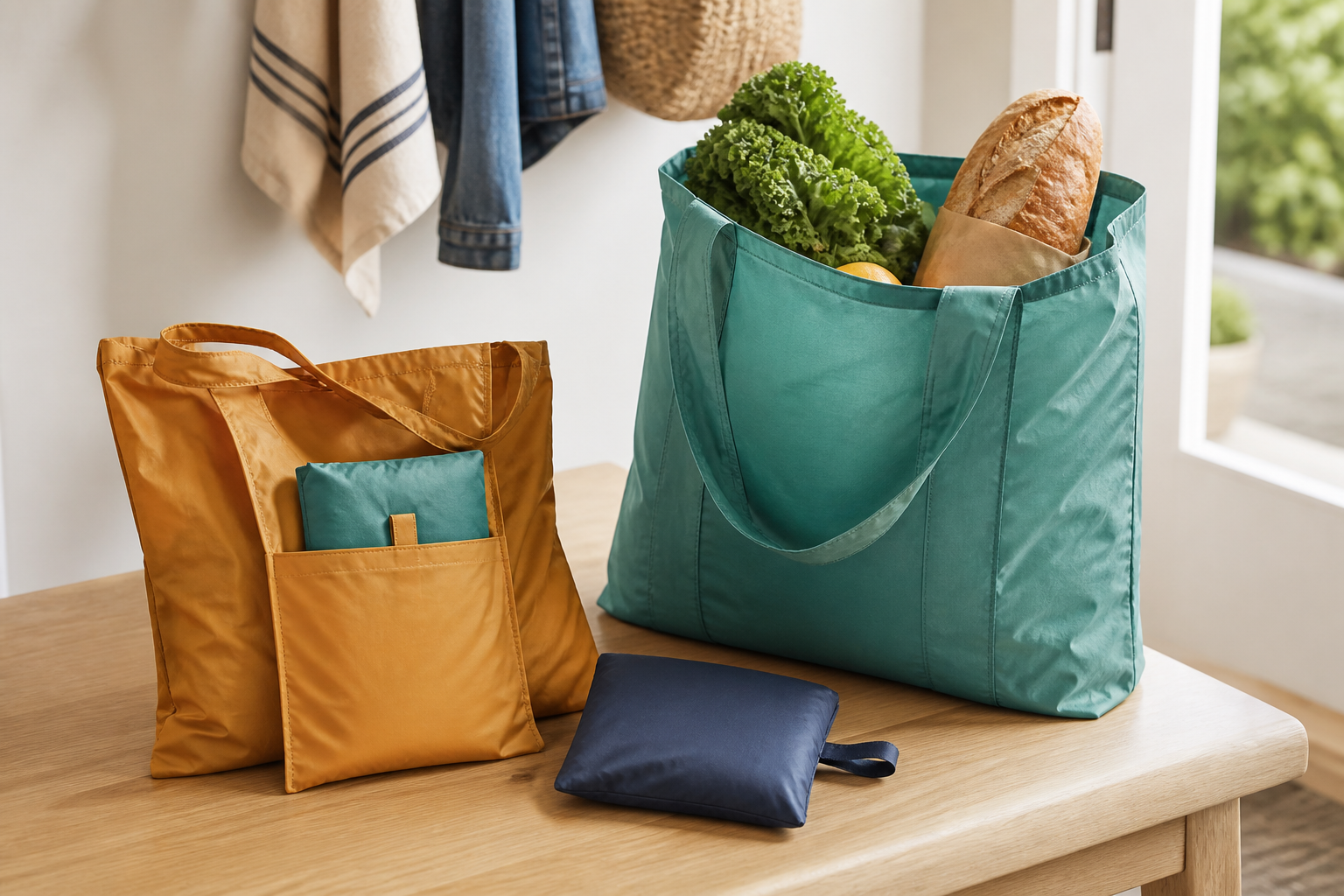
- Tote with an attached pocket: The storage pocket cannot be lost, but its seams and closure add a small lump to the open bag.
- Tote that folds into itself: A built-in flap or elastic can reduce loose parts; compare whether the folding sequence is simple enough to repeat.
- Tote with a separate pouch: The open bag may feel cleaner and simpler, but the pouch is another item to keep track of.
- Clip-on packed tote: A loop or carabiner-style attachment can keep it accessible outside a bag. Treat included hardware as light carry hardware unless the maker states a supported load.
Selection criteria that matter
- Packed dimensions: Look for actual length, width, and thickness, not only “pocket size.” Compare those measurements with the intended coat pocket, handbag, backpack, or glove box.
- Open dimensions and shape: A flat width-and-height measurement does not fully describe usable volume. Check base depth, side gussets, opening width, and whether tall items can stand securely.
- Handle drop: Measure the distance from the bag opening to the top of the handle. A shoulder carry needs different clearance from a hand carry, especially over a coat.
- Handle construction: Wider straps can spread pressure, while narrow straps pack smaller. Check whether handles are continuous, reinforced, or simply stitched at high-stress points.
- Closure: An open tote is quick to load; a zipper, snap, or drawcord may retain loose items but adds weight and steps. A closure does not make the bag leakproof.
- Self-stowing method: Compare folding steps and whether the pocket turns inside out cleanly. A bag that is annoying to repack may stop being carried.
- Empty weight: An always-carried tote should be light enough to remain in the usual bag without becoming clutter.
- Material and seams: Treat “ripstop,” “heavy duty,” and load-capacity language as manufacturer claims. Look for disclosed fabric, reinforced seams, care limits, and a specific test explanation where offered.
- Wash and dry care: Grocery bags may contact spills and floors. Confirm machine- or hand-wash instructions and whether heat drying is allowed.
A practical comparison framework
Measure the storage spot first, then mark each candidate yes, no, or unclear:
- Does the packed tote fit without crowding keys, medication, or other essentials?
- Can it be unfolded and repacked without a hard-to-remember sequence?
- Does the open base suit the kinds of items bought unexpectedly?
- Do the handles fit the intended hand, shoulder, clothing, and mobility needs?
- Is there a closure if loose-item retention matters?
- Are fabric, seams, care instructions, and any load claim clearly described?
- Can the bag be cleaned and fully dried with the available routine?
- Are current seller and return terms clear?
What this category does differently
A full-size reusable grocery bag is usually chosen around capacity, structure, leak containment, and a known trip. A packable tote gives up some structure and often some carrying comfort in exchange for being present when the trip is unexpected. That tradeoff is the entire reason to consider the category.
Do not treat the smallest packed pouch as automatically best. If it creates thin, twisting handles or too little usable base depth, a slightly larger packed tote may be more practical. For a predictable weekly shop, a structured bag already stored near the door may be the simpler choice.
Who should skip this purchase
Skip a new tote if one already at home folds small enough and is consistently carried. Also skip this lightweight category for sharp packages, very heavy loads, long walking distances, or items that need insulation or reliable spill containment. A structured bag, insulated bag, split load, delivery option, or cart may fit those jobs better.
Anyone who needs both hands for a rail, mobility aid, child, or balance should consider the full carry route before choosing a hand or shoulder tote. The right product format depends on access and stability, not on a universal ranking.
Claims and limits to keep straight
A packable tote can make an unexpected purchase easier to carry and may reduce reliance on a store-provided bag. It does not organize meal planning, guarantee a safe load, preserve food temperature, prevent leaks, or cause weight loss. Environmental benefit claims also depend on materials, manufacturing, reuse, cleaning, and end-of-life assumptions; a durable bag already owned is often the most practical starting point.
Bottom line
The best packable tote is small enough to stay in the place where it will actually be available, simple enough to repack, and comfortable enough for the ordinary unplanned load. Compare measured packed size, open shape, handles, care, and claim limits—and skip the purchase if an existing bag already solves the job.