Buy, carry, or skip
Is a Packable Tote Worth Carrying for Unplanned Grocery Stops?
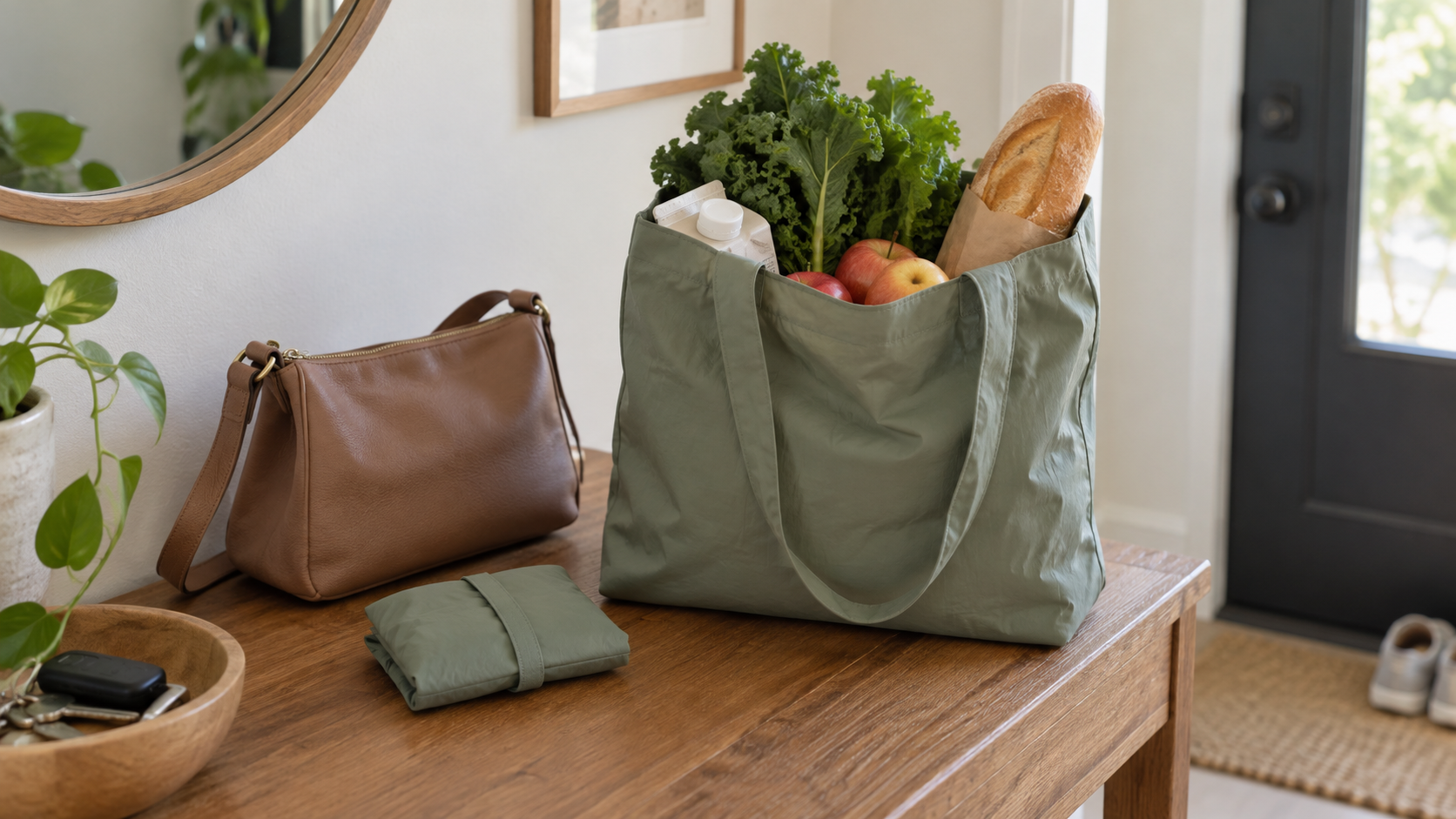
A packable tote can be worth carrying when unexpected grocery stops happen often enough and the folded bag reliably stays in your everyday kit. It is probably unnecessary when a reusable bag you already own can live in the same place—or when unplanned loads routinely exceed a lightweight tote's practical fit.
As an Amazon Associate, GoodWeighFinds earns from qualifying purchases.
The quick answer
- Likely worth it: unplanned stops recur, the folded tote fits a place you already carry every day, and its open shape and handles suit the typical small load.
- Test first: put a suitable reusable bag you already own in that daily-carry spot for one week and note whether it is present when needed.
- Probably skip it: surprise stops are rare, you already remember another bag, or the likely purchases need insulation, rigid support, or a larger transport plan.
Run a one-week carry test
Choose the exact place where a folded tote would live: a coat pocket, work bag, backpack, bicycle pannier, or transit kit. Carry an existing lightweight bag there for a week. The useful question is not whether a tote can fold; it is whether it remains available without crowding keys, medication, mobility items, or other essentials.
Record each unplanned stop, what you bought, whether the bag was present, and what made carrying awkward. One repeated problem is more useful than an imagined edge case. If no stop occurs—or the existing bag works—the new purchase can wait.
Measure both states before buying
- Folded size: compare length, width, and thickness with the actual pocket or bag compartment. “Compact” and “pocket size” are not measurements.
- Open shape: check opening width, base depth, side gussets, and height against the items usually bought unexpectedly.
- Handle drop: confirm whether the handles fit the intended hand or shoulder and the clothing normally worn on that route.
- Closure: decide whether an open top, snap, zipper, or drawcord fits the load. A closure does not establish spill containment.
- Self-storage: an attached pocket or built-in fold can reduce loose pieces, but the routine only works if repacking is simple enough to repeat.
Match the tote to the route
A short walk from a nearby shop creates a different decision from stairs, crowded transit, or a long commute. Consider how many hands must remain free, whether the load will bump against people or railings, and whether the bag can be set down without spilling. A packable tote does not guarantee a safe load or comfortable carry.
If planned trips involve larger or heavier loads, compare reusable grocery bags for public-transit shopping or decide whether a compact grocery cart fits the route. The packable option is mainly about low-bulk readiness.
Check claims, care, and return terms
Treat stated capacity, load limits, “ripstop,” water-resistance, and durability as manufacturer or seller claims unless the listing explains the basis. Look for disclosed fabric, seam and handle construction, wash instructions, heat restrictions, and a clear current return policy. Do not assume a small packed tote is suitable for sharp packages, hot food, leaks, or temperature-sensitive groceries.
Cleaning and drying also affect whether the bag returns to its carry spot. If the tote needs an inconvenient wash method or stays unfolded between uses, the apparent storage advantage may disappear.
When it is worth buying
A packable tote has a credible job when all three conditions are true: unplanned stops recur, an exact everyday storage spot is available, and a measured candidate suits the ordinary load and route. Then use the packable tote buying guide to compare self-stowing formats, handles, closures, and care without treating any category listing as a named winner.
Reasons to skip or delay
- A suitable bag already fits the intended carry spot and is consistently present.
- The listing omits folded dimensions, open dimensions, material, care, or clear handle details.
- The usual purchase needs insulation, rigid shape protection, reliable spill containment, or more capacity.
- You need both hands for a rail, mobility aid, child, or balance and the tote would interfere with that route.
- The purchase is justified mainly by broad sustainability language; using a durable bag already owned may be the simpler next step.
Bottom line
A packable tote is worth carrying when it solves a demonstrated availability problem without creating a fit, load, or cleanup problem. Test the daily-carry habit first, measure both folded and open states, and buy only if a candidate matches the ordinary route. For other low-claim tools, use the routine-support guide to start with the actual friction rather than a promised body result.