Packed-lunch buying guide
Best Reusable Sandwich Wraps for Packed Lunches
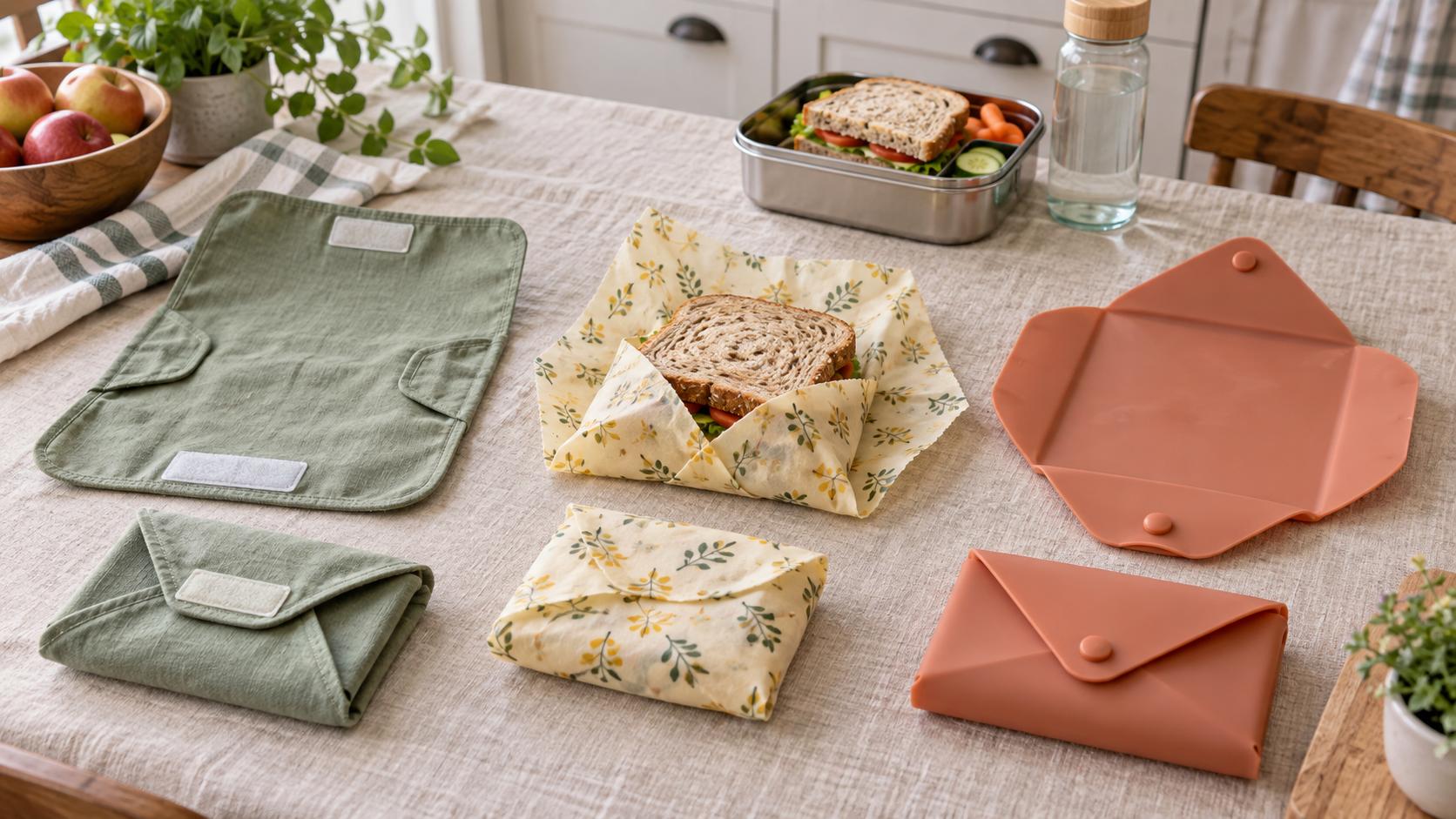
A reusable sandwich wrap can pack flatter than a rigid box and unfold into a small eating surface, but only if its usable area, folding pattern, closure, and cleanup fit the food and your routine. Compare the job and measurements—not promises about freshness, leak protection, or lifespan.
As an Amazon Associate, GoodWeighFinds earns from qualifying purchases.
Who this guide is for
This guide is for adults packing sandwiches or other relatively dry foods who want a flexible, flat-storing alternative to a rigid container. It is most useful when lunch-bag space and empty storage matter more than crush protection.
If the food regularly gets compressed, use the reusable sandwich-box guide instead. For smaller loose snacks, compare reusable snack bags; a sandwich wrap is not automatically the better closure or containment format.
Best-fit formats, not unsupported rankings
- Best fit for a standard square sandwich: A wrap with enough usable area to overlap all four sides without pulling the closure out of position.
- Best fit for variable sandwich thickness: An adjustable fold or broad fastening area that the maker shows for the intended load.
- Best fit for flat storage: A single-layer or lightly structured design that dries fully and stores without a dedicated container slot.
- Best fit for messy or liquid-heavy fillings: Usually a compatible rigid container. Do not treat a flat wrap as leakproof unless the exact maker documents the claim and limits.
Selection criteria that matter
- Open dimensions: Measure the full sandwich at its widest and thickest points, then confirm the wrap leaves enough overlap for the specified folding method.
- Usable shape: Corners, curved edges, fold lines, and closure placement can reduce usable area even when the overall dimensions look generous.
- Closure: Compare ties, snaps, hook-and-loop areas, and self-folding designs by adjustment range, crumb traps, hand feel, and whether the closure touches food.
- Material disclosure: Look for specific maker information about the food-contact surface, backing, coatings, and intended food and temperature limits. A vague “eco” label is not a material specification.
- Cleaning: Follow the listed hand- or machine-wash method. Check seams, fasteners, textured surfaces, and folded corners for places that are harder to clean.
- Drying: Confirm that the wrap opens flat and fits the available drying space. A wrap that stays folded or damp between uses adds friction rather than removing it.
- Packed shape: Make a paper template, fold it around the usual lunch, and check whether it stays closed beside the other packed items.
- Storage: Compare the actual folded size and whether the wrap must stay flat, rolled, or loosely folded to protect its materials.
A practical comparison framework
Give each candidate a yes, no, or unclear for these questions:
- Are the open dimensions and the closure method both shown?
- Does the wrap close around the typical sandwich without stretching or forcing the fastener?
- Does the maker identify the food-contact surface and its intended uses?
- Are heat, freezer, microwave, dishwasher, and direct-food limits stated where relevant?
- Can every seam, corner, and closure area be reached during cleaning?
- Can it open fully and dry before the next use?
- Does the folded package fit the loaded lunch bag without relying on squeeze pressure to stay closed?
- Are freshness, leak, stain, odor, and longevity claims specific enough to evaluate rather than absolute?
Wrap, bag, or rigid box?
Choose by the failure you are trying to prevent. A wrap prioritizes flexible packing, a bag contains small loose items, and a rigid box protects shape. None is a universal replacement for the others. If you are deciding between two enclosed formats, the bento box versus sandwich box comparison covers capacity, compartment, and protection tradeoffs.
Before buying, use a paper template to test the folded, loaded size. The trial will not reproduce care or closure performance, but it can reveal whether the flexible format solves the packing problem at all.
Who should skip this purchase
Skip a reusable sandwich wrap when a container already owned fits the food and bag, the lunch is easily crushed, the filling is likely to drip, or the care routine will not allow the wrap to dry fully. Skip listings that omit usable dimensions, material details, intended-use limits, or cleaning directions.
Also skip claims that one wrap keeps food fresh for a fixed period, prevents every leak, resists all stains or odors, or lasts for a guaranteed number of uses without a clear test basis and conditions. Pack and store food using current food-safety guidance; a wrap does not establish safe time or temperature.
Bottom line
The best reusable sandwich wrap is large enough for the actual packed food, closes without strain, clearly identifies its food-contact materials and use limits, cleans and dries within your routine, and fits the loaded lunch bag. If rigid protection or liquid containment is the real need, choose the appropriate container instead.