Walking-gear care guide
Best Shoe Brushes for Cleaning Muddy Walking Shoes
A shoe brush can loosen dried surface dirt before walking shoes are dried or stored. The useful format depends on where the dirt sits, what the shoe maker permits, how firmly you can hold the tool, and where the debris will land—not on promises to restore, sanitize, or extend footwear life.
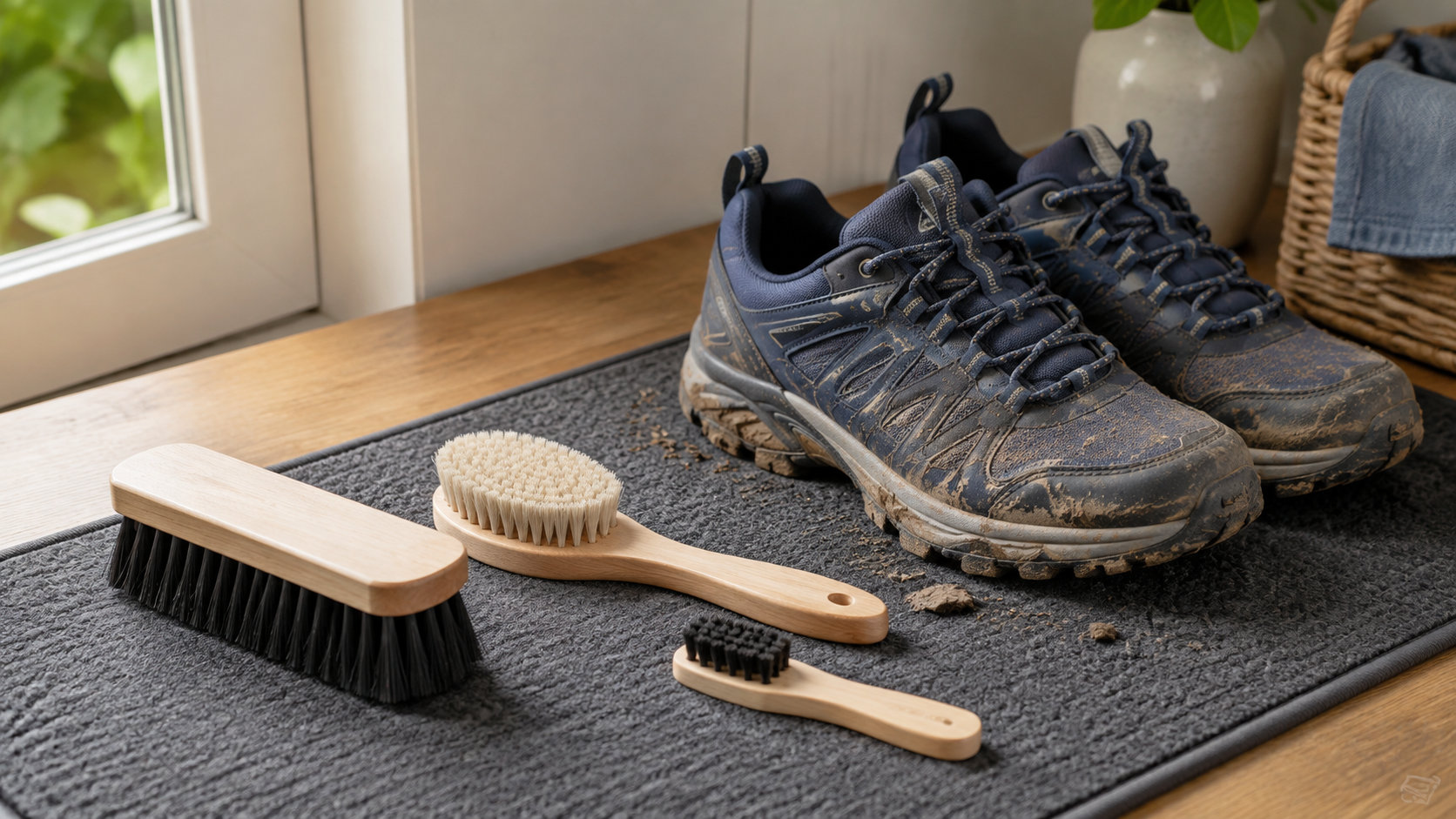
As an Amazon Associate, GoodWeighFinds earns from qualifying purchases.
Who this guide is for
This guide is for adults whose walking shoes collect ordinary dried mud or loose surface dirt and who want a dedicated manual tool for the cleanup step. It does not cover stain treatment, washing machines, solvents, leather restoration, waterproofing, odor treatment, or fungal and skin concerns.
This page maps to the routine-support tools guide. If the recurring problem is where wet footwear drips or dries, compare compact boot trays or passive shoe-drying racks instead.
Useful formats—not named winners
- Long-handled utility brushes: A broad head can cover outsole edges and larger tread areas while keeping hands farther from loose dirt. Check whether the handle remains controllable when the brush is angled.
- Small detail brushes: A narrow head may reach grooves, welt edges, and tight transitions more easily. Small handles can require a tighter grip, so compare actual handle length and thickness.
- Softer upper brushes: A separate, clearly identified softer brush may suit surface dust on materials whose maker permits brushing. Do not assume one bristle type is suitable for mesh, suede, nubuck, coated fabric, or leather.
- Fixed boot-scraper mats: Side and base brushes allow hands-free use, but the base needs stated dimensions, a stable surface, cleaning access, and enough clearance for the shoe. They are not a substitute for inspecting tread by hand.
Selection criteria that matter
- The shoe-care label comes first: Read the footwear maker's cleaning directions before choosing stiffness, water, cleaner, or technique. If brushing is not addressed, do not infer compatibility from a generic listing.
- Bristle stiffness: Firmer bristles may move packed dry dirt from durable outsole tread, while softer bristles offer a gentler starting point for permitted upper cleaning. “Soft” and “stiff” are not standardized measurements.
- Tread reach: Compare bristle length and head width with the shoe's actual grooves. A large head can skate over narrow channels; a very small brush can make broad cleanup slow.
- Grip and control: Look at handle length, thickness, texture, finger clearance, and whether the tool can be controlled without bending bristles into your hand.
- Debris containment: A tray, washable mat, newspaper, or outdoor spot can catch loosened dirt. A brush does not contain debris by itself.
- Cleaning access: Check how trapped grit is removed from the bristle base and whether the maker permits rinsing. A rinsed brush also needs a practical place to dry.
- Storage: A hanging hole or compact head can help, but store a dirty brush away from food-prep tools, clothing, and clean shoe-care supplies.
- Return terms: Dimensions and stiffness can be difficult to judge from a picture, so verify the current seller and return route before buying.
A practical comparison checklist
Use yes, no, or unclear for each listing. An unclear material or care claim is a reason to verify, not to assume.
- Does the listing identify the bristle material and give useful brush and handle dimensions?
- Does the head fit the tread grooves or upper area that actually collects dirt?
- Can the handle be held and angled comfortably for the intended task?
- Do the shoe maker's instructions allow this kind of brushing on the relevant material?
- Can grit be removed from the brush and can the tool dry between uses?
- Is there a defined place to catch debris and store the brush?
- Does the listing avoid unsupported restoration, sanitizing, waterproofing, deodorizing, or injury-prevention promises?
- Would an old permitted cleaning brush you already own solve the same problem?
Dry first or brush first?
There is no universal sequence for every shoe. Loose, dried surface dirt can be easier to contain than wet mud, but allowing heavy soil to dry may not suit every upper, finish, adhesive, or stain. Follow the shoe maker's directions and avoid direct heat unless the footwear instructions explicitly permit it.
Remove only components the maker says are removable, and use liquids or cleaning products only as directed for the exact material. This guide does not establish that a shoe is clean enough for a particular environment or free of bacteria, fungus, allergens, or other contaminants.
Claims to skip
A manual brush can provide friction and reach. It cannot prove that footwear has been restored, disinfected, waterproofed, made odor-free, or made safer to walk in. Skip listings that turn ordinary brushing into medical, hygiene, traction, injury-prevention, or guaranteed-lifespan claims.
Also skip a kit when its included liquids do not clearly disclose intended materials and directions. This guide's category route is for brushes; cleaners, protectants, dyes, and treatments require their own product and footwear-compatibility checks.
Who should skip a dedicated shoe brush
Skip or delay the purchase if dirt is occasional and a maker-permitted brush you already own works; if the shoes need repair rather than surface cleaning; if the upper has specialized care requirements you have not checked; or if limited grip, reach, or balance makes a floor-mounted or handheld format awkward to use safely. If a fixed entryway station is also under consideration, start with the shoe-brush versus boot-scraper comparison rather than choosing by product size alone.
If the visible issue is cracking, sole separation, worn tread, damaged fastening, or a changed fit, brushing does not solve it. Use the walking-shoe replacement check to separate cosmetic dirt from structural and fit concerns.
Bottom line
The best shoe brush is the simplest format that matches the dirt location, reaches the tread or permitted upper surface, feels controllable, and can be cleaned and stored. Check the footwear instructions first, contain loosened debris, and do not pay extra for hygiene, restoration, durability, or safety promises a brush cannot establish.