Walking-shoe cleanup comparison
Shoe Brush vs Boot Scraper for Muddy Walking Shoes
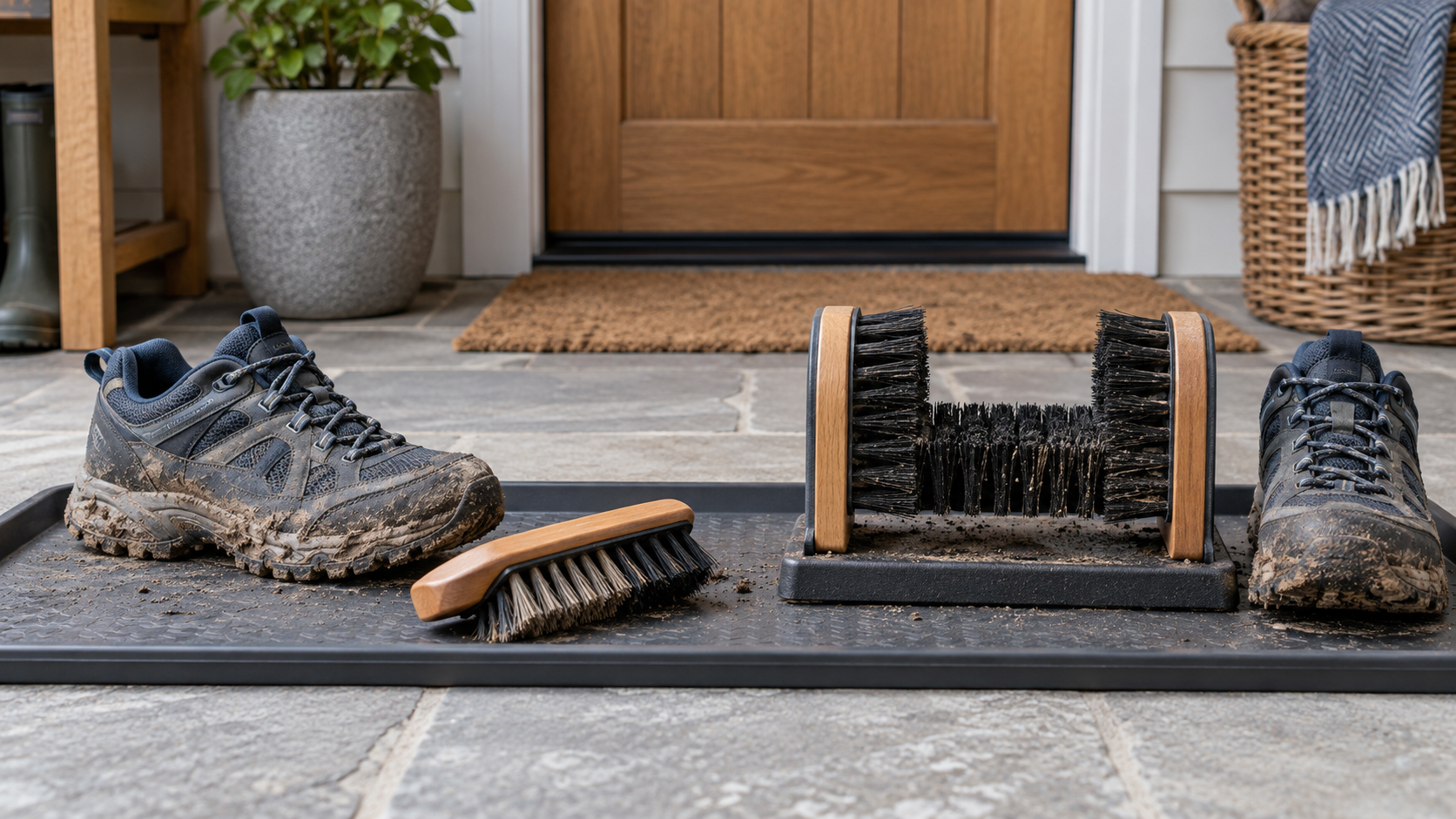
A handheld shoe brush offers controlled, shoe-off access to tread edges and permitted upper surfaces. A floor boot scraper creates a fixed entryway station for removing loose mud before stepping inside. Neither format restores traction, prevents falls, sanitizes footwear, or suits every shoe: choose by the real mud pattern, footwear care directions, handling needs, placement, and cleanup job.
As an Amazon Associate, GoodWeighFinds earns from qualifying purchases.
Quick decision
| Choose a handheld brush when… | Choose a floor scraper when… |
|---|---|
| You remove the shoe and want controlled access to tread grooves, edges, or maker-permitted upper surfaces. | Loose mud repeatedly reaches one entrance and a fixed station can sit in a stable, permitted location. |
| Mud is occasional, shoes differ, or a small tool must store in a drawer, tray, or utility area. | The usual footwear fits between the side brushes and across the base without awkward movement. |
| You can hold the shoe and brush comfortably over a surface that catches loosened debris. | Users can operate it comfortably without treating the scraper as a balance aid or safety device. |
| You are willing to clean and dry the brush after use. | You can clean around and beneath a rigid object that remains at the entryway. |
Who a handheld shoe brush fits
A handheld brush fits occasional mud, several shoe shapes, and detailed tread cleaning after the shoe is removed. Different brush heads can reach edges or broad sole areas, but a listing's “all-material” wording does not replace the shoe maker's instructions. Use only the bristle type, pressure, and cleaning method permitted for the specific sole and upper.
The handling tradeoff is real. One hand stabilizes the shoe while the other controls the brush, and debris needs somewhere to fall. A shallow washable tray, utility sink, or suitable outdoor work surface may make the routine easier to contain. If grip, reach, or seated handling is difficult, do not assume a small brush is the simpler option.
Who a floor boot scraper fits
A floor scraper fits a household where muddy shoes regularly arrive at the same entrance and a permanent station will actually be used. Base bristles target the sole while side bristles may contact the edges of compatible footwear. Measure the clear opening against the widest regular shoe and check that no part presses against an upper the maker says not to brush.
The scraper also needs use space, not just storage space. Include the user's stance, the full movement of the shoe, nearby steps and doors, the debris zone, and access for cleaning. “Heavy duty,” “non-slip,” or “stable” are seller claims to inspect, not guarantees. Do not use a scraper as a handhold or rely on it to prevent a fall.
Compare setup and space
For a handheld brush, define where shoes come off, where the person sits or stands, where the debris lands, and where the brush dries. Measure the handle for a controllable grip and the head against the broad sole and narrow tread areas. A compact brush may store easily but still be awkward to use if the cleanup surface is poorly placed.
For a scraper, trace the complete base in the proposed spot and add foot-placement space on both sides. Open doors fully, follow the normal walking path, and check local or property rules before fixing anything to a floor, step, wall, or deck. A scraper that narrows a shared entrance or becomes an obstacle fails the setup test even if its footprint looks small on a listing.
Debris control, cleaning, and maintenance
- Contain the dirt: decide whether loosened debris falls into a removable tray, onto an outdoor surface that can be cleaned appropriately, or directly onto an indoor floor.
- Clean the bristles: follow the product directions for removing packed mud and washing or wiping the tool; do not assume every wood, metal, rubber, or fiber part can be soaked.
- Dry the tool: give a washed brush or scraper a ventilated place to dry according to its instructions before enclosing or storing it.
- Inspect the setup: look for loose hardware, damaged bases, splayed bristles, sharp edges, trapped debris, and changes to the floor or mounting surface.
- Check replacement options: verify whether worn brush heads, side brushes, feet, trays, or hardware are replaceable instead of assuming the whole product has a stated lifespan.
- Separate cleaning from repair: brushing cannot fix worn tread, sole separation, damaged fastening, or a changed fit.
Run a no-buy comparison
For the next several relevant walks, remove the shoes over a washable tray and use a maker-permitted brush you already own. Record where mud collects, whether it is loose or packed into grooves, how much handling is required, and whether everyone uses the same entrance. This tests the job without assuming a new tool is necessary.
If shoe-off brushing is quick and the tool stores easily, a floor scraper may add clutter. If the repeated problem is loose mud crossing the threshold before shoes come off, mark out a scraper-sized station and test whether that space can stay clear. An ordinary mat may handle light surface dirt, while a tray may be the better tool when the real problem is wet runoff rather than packed mud.
Who should skip each option
- Skip the handheld brush when the shoe maker prohibits brushing, controlling the shoe and tool is uncomfortable, debris cannot be contained, or an existing permitted brush already solves the occasional job.
- Skip the floor scraper when the entrance is narrow, uneven, shared, close to steps, or lacks a stable permitted placement; when regular footwear does not fit; or when users would need awkward balancing.
- Skip both when the visible issue is damage rather than dirt, mud exposure is rare, care instructions are unavailable, or the listing hides complete dimensions, materials, maintenance, or placement requirements.
- Choose another route when shoes are mainly wet rather than muddy: compare a passive drying rack with a containment tray instead.
Next steps
If detailed shoe-off cleaning fits, use the shoe-brush criteria guide to compare tread reach, grip, bristle stiffness, material fit, cleaning, and storage. If a permanent entryway station fits, use the boot-scraper buy-or-skip guide to test route frequency, placement, stability wording, maintenance, and simpler alternatives. For the wider buying framework, the routine-support tools pillar keeps walking-gear purchases tied to a repeated job rather than weight-loss promises.
Bottom line
Choose a handheld shoe brush for controlled, shoe-off cleaning when the footwear instructions permit it and the handling and debris routine work. Choose a floor boot scraper when muddy arrivals are frequent, the usual shoes fit, and a clear, stable, maintainable entryway station is available. Skip a new tool when a brush, mat, or tray you already own solves the actual cleanup problem.