Entryway buy-or-skip guide
Is a Boot Scraper Worth It for Muddy Walking Routes?
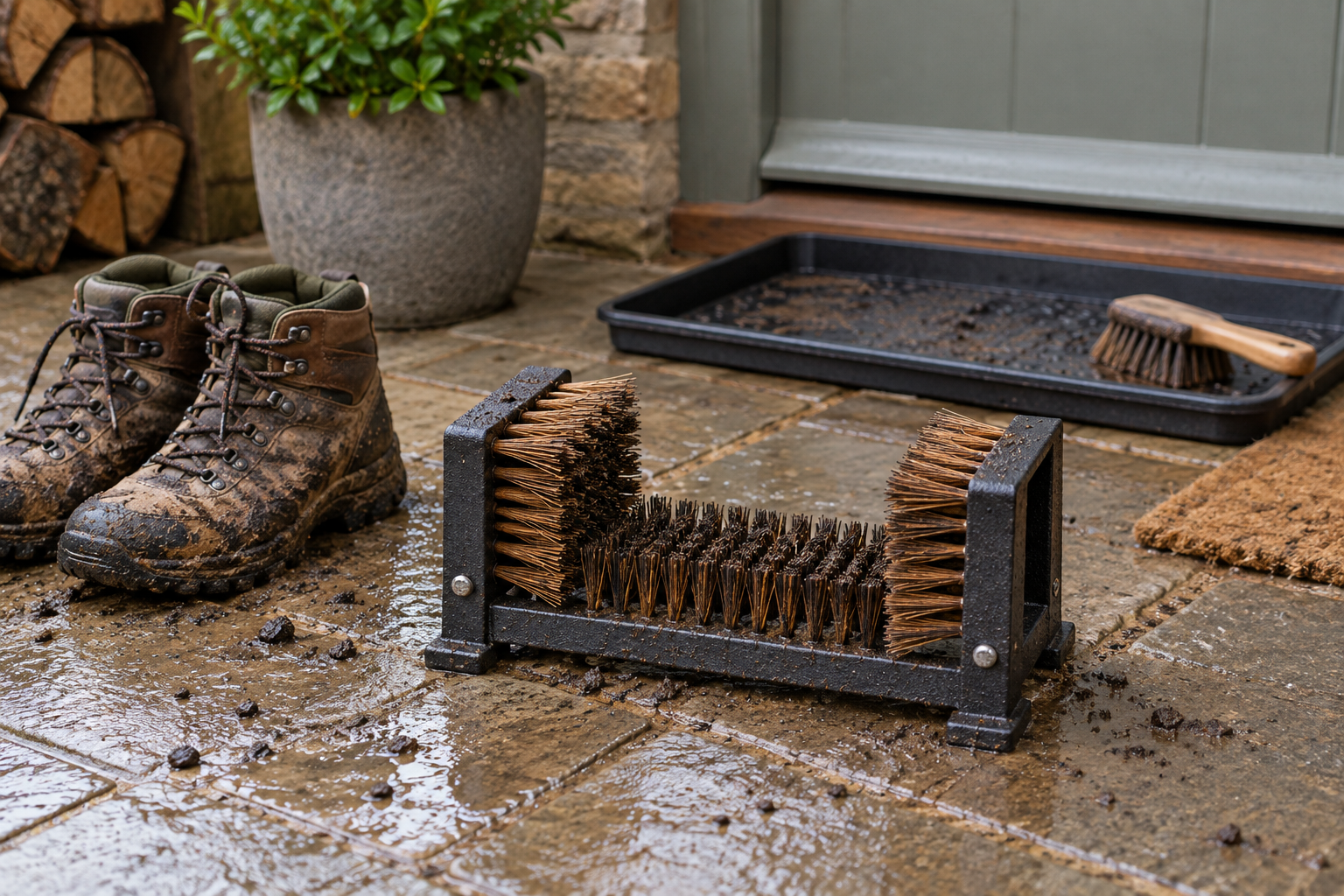
A boot scraper can be worth buying when mud is a predictable part of several walks each month, the usual shoe tread traps clumps, and there is a stable outdoor or covered spot where debris can be collected. It is easy to skip when the problem is occasional, a handheld brush already works, or the scraper would obstruct the entrance.
As an Amazon Associate, GoodWeighFinds earns from qualifying purchases.
The short decision
| Decision | When it fits |
|---|---|
| Buy | Muddy tread is recurring, a stable permitted location fits, and the debris can be swept or emptied routinely. |
| Delay | You have not tracked how often mud occurs or tested a brush and tray through representative weather. |
| Choose an alternative | A handheld brush reaches the tread better, storage must be portable, or a boot tray alone solves the floor problem. |
| Skip | The scraper would narrow a walkway, slide in use, damage footwear, remain exposed beyond its stated use, or duplicate tools you own. |
| Escalate | Balance, mobility, pain, or safe one-foot use is uncertain; get individualized guidance rather than relying on the product listing. |
Run a seven-walk cleanup test
Before shopping, record the next seven relevant walks rather than waiting for seven consecutive days. Note whether mud actually reaches the door, which shoes collect it, where the cleanup happens, and whether a brush, tray, or mat handles it. This separates a recurring route problem from one unusually muddy outing. If the choice is already between two tool formats, compare the full shoe-brush and boot-scraper tradeoffs before selecting a fixed station.
Use a handheld shoe brush you already own, or an inexpensive brush intended for the footwear material, over a washable tray or suitable outdoor surface. Follow the shoe maker's care directions. If that takes little effort and stores easily, a fixed scraper may not earn its footprint.
Measure the complete setup
- Usable width: compare the space between side brushes—not just the outside frame—with the widest ordinary shoe.
- Loaded footprint: allow room for the entire shoe and for the user to step on and off without a door, stair edge, or stored item interfering.
- Support: confirm whether the model is freestanding, must be stepped on, or requires permanent mounting. Follow the maker's installation instructions.
- Placement permission: renters and shared-building residents should confirm that mounting and debris at the entrance are allowed.
- Debris path: decide where loosened mud will land and how it will be collected without washing it into an unsuitable drain or public walkway.
Match the scraper to the shoes, not the marketing
Deep outsole lugs may hold debris differently from flatter soles, and side brushes that fit a work boot may rub the upper of a lower walking shoe. Check the usable opening, bristle locations, and maker-stated footwear use. A scraper should not be assumed safe for delicate mesh, coatings, decorative finishes, loose trim, or every tread pattern.
“Heavy duty,” “all-weather,” and “cleans any boot” are broad marketing phrases, not evidence of fit or service life. Look for named frame and fastener materials, stated placement, installation details, replaceable parts if any, and specific care limits. Do not infer that scraping restores traction, prevents falls, sanitizes footwear, or removes every contaminant.
Cost, setup, and maintenance tradeoffs
The purchase price is only part of the decision. A freestanding scraper consumes permanent floor space; a mounted model requires suitable hardware and permission; wood, metal, rubber, and bristle components may have different exposure and cleaning limits. Check whether packed dimensions, assembly tools, replacement brushes, and return shipping add cost or effort.
Plan to remove collected soil, inspect loose fasteners and worn bristles, and clean the unit only as directed. A design that traps wet debris in hard-to-reach corners can create more work than a brush and tray. Delay the purchase if there is no realistic place for dirty-water-free cleanup, drying, or off-season storage.
Red flags on a listing
- No usable opening dimensions or only staged photos without scale.
- No explanation of whether the unit must be mounted, anchored, or held down.
- Claims that it is universally compatible with every shoe or boot.
- Promises to prevent slips, restore grip, sanitize shoes, or deliver health benefits.
- Weatherproof or rustproof language without named materials, placement limits, or care instructions.
- Images that hide the base, fasteners, debris area, or contact points.
- Unclear seller identity, return terms, replacement parts, or assembly instructions.
Who should skip a boot scraper?
Skip a fixed scraper when the entrance is narrow, uneven, shared, or close to stairs; when anyone would need to balance awkwardly to use it; when the usual shoes have delicate uppers or incompatible care instructions; or when mud occurs too rarely to justify permanent storage. A handheld brush used while the shoe is off the foot is often the more controllable alternative.
If using the scraper would be difficult because of pain, balance, mobility, sensation, or a recent injury, do not treat the product as a safety device. A qualified professional can help with individualized footwear and movement questions. For an ordinary cleanup choice, a stable chair away from the doorway, a removable brush, and a tray may be simpler.
Choose the alternative that solves the actual problem
| Alternative | Best fit | Tradeoff |
|---|---|---|
| Handheld shoe brush | Occasional mud, detailed tread access, portable storage | Requires handling each shoe and cleaning the brush |
| Boot tray | Containing drips and loose grit at the entrance | Contains debris but does not remove packed mud |
| Outdoor mat | Light surface dirt across many everyday shoes | May not reach deep tread and still needs cleaning |
| Route or timing change | A particular unpaved section creates most of the mud | May not be practical or desirable every day |
Bottom line
A boot scraper is worth it only when repeated muddy walks, compatible shoes, a stable permitted location, and an easy debris routine line up. Test a brush-and-tray setup first, measure the loaded use area, and reject claims that turn a simple cleaning tool into a safety guarantee. For broader walking-gear and entryway decisions, continue with the routine-support tools guide; if floor containment is the main problem, compare boot trays for small entryways, and if detailed brushing is the better format, use the shoe-brush criteria guide.