Routine-support buying guide
Best Walking Hats for Sun and Light Rain
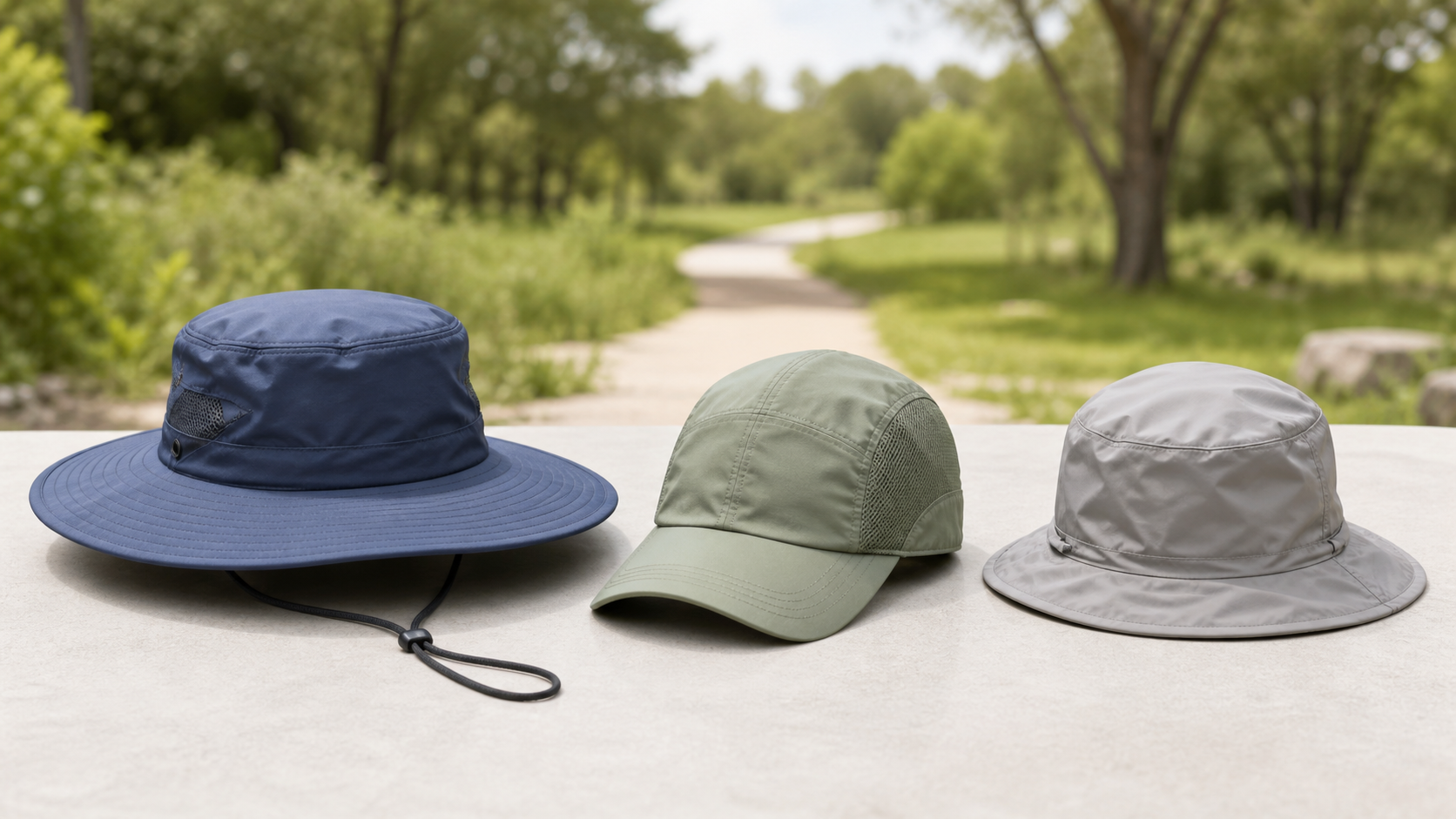
A walking hat can make bright, breezy, or drizzly conditions less annoying, but the best format depends on coverage, fit, ventilation, and what you will actually carry. A hat supports a routine; it does not guarantee sun protection, prevent heat illness, make rain harmless, or produce weight loss.
As an Amazon Associate, GoodWeighFinds earns from qualifying purchases.
Who this guide is for
This guide is for adults choosing ordinary headwear for outdoor walks in changing conditions. It covers practical buying criteria, not treatment for sun sensitivity, heat-related illness, skin conditions, headaches, or other health concerns.
For the broader buying framework, start with the routine-support tools guide. Pair a hat decision with the reflective gear guide when low-light visibility is the problem, or the walking belt guide when carrying essentials is the main friction.
Best-fit formats, not unsupported rankings
- Best fit for broader shade: A brimmed hat with published brim dimensions and a size that stays stable without squeezing.
- Best fit for windy routes: An adjustable chin cord or secure closure that can be loosened or removed when it is not needed.
- Best fit for lower bulk: A ventilated cap with a measured size range, accessible adjustment, and enough bill coverage for your preference.
- Best fit for uncertain forecasts: A packable hat with explicit care and drying instructions and a brim that can recover after storage.
- Best fit for frequent washing: A simple construction with a manufacturer-approved wash method and no hard-to-dry hidden layers.
Selection criteria that matter
- Brim dimensions: Look for actual front, side, and back measurements. “Wide brim” alone does not tell you what will be covered.
- Size range: Measure around the head where the hat will sit and compare that number with the current size chart. One-size claims still have limits.
- Adjustment: Check the closure type, usable adjustment range, and whether hardware rests against the head or catches hair.
- Ventilation: Mesh panels and eyelets may help air move, but do not assume they make a hat safe in high heat.
- Packability: Look for a stated packed method or dimensions and care directions. Crushing any hat into a pocket may deform the brim.
- Cleaning and drying: Verify whether the whole hat is machine washable, hand wash only, or spot clean, and whether stiff brim inserts need special handling.
- Weather wording: “Water resistant,” “water repellent,” and “waterproof” are different seller claims. Check the stated test or material details and expect openings and seams to limit coverage.
- Return terms: Fit is personal. Confirm that the exact seller permits a useful try-on and return window.
A practical comparison framework
Start with the route and conditions you actually encounter, then compare the three or four details that could stop you from wearing the hat. A useful shortlist answers:
- Does the published size range include your measurement with room for the intended adjustment?
- Are the brim dimensions useful for your coverage preference without blocking your view?
- Will the closure stay comfortable in wind and release easily?
- Can you wash, dry, pack, and store the hat according to the maker’s directions?
- Are UPF or rain claims specific to this exact model and supported by current manufacturer information?
- Would the hat still solve a real comfort problem if it had no effect on body weight or walking performance?
How to read UPF and rain claims
A current UPF claim can be a useful product detail, but it applies to the covered area and does not turn a hat into complete sun protection. Coverage changes with brim width, angle, wind, wear, and exposed skin. Use current public-health sun-safety guidance for the conditions and your needs; do not rely on a product badge alone.
Likewise, a rain hat can shed light drizzle without keeping the head, face, glasses, or clothing dry in sustained or wind-driven rain. Treat “storm proof” or absolute protection language skeptically unless the seller gives a precise standard and use conditions.
Health note: Seek prompt help for symptoms of heat illness, and use guidance from a qualified healthcare professional when a medication, health condition, or unusual sun sensitivity changes what outdoor exposure is appropriate for you.
Who should skip this purchase
Skip a new hat if one you own already fits, covers what you want covered, and is practical to wash. Skip a wide brim if it blocks peripheral vision on your route, or a chin cord if it snags on clothing or equipment. A cap may be the simpler choice when packability and familiarity matter more than side coverage.
Also skip listings that promise calorie burn, appetite control, detox effects, “sweat weight” loss, or guaranteed performance. Those are not credible reasons to buy ordinary headwear. Avoid black or dark nighttime use as a substitute for dedicated visibility gear.
Bottom line
The best walking hat is the one whose measured fit, brim, closure, care, and packability suit your actual route. Verify model-specific UPF and weather claims, plan separately for sun and heat safety, and ignore body-result marketing.