Buy, improvise, or skip
Is a Shoe Drying Rack Worth It After Wet Walks?
A passive shoe drying rack can be worth buying when several rain-damp pairs regularly crowd the floor, need separation for ordinary airflow, and have no stable place to sit over a washable drip surface. For one occasionally damp pair, a boot tray, towel, and existing ventilated spot may do the job with less cost and clutter.
As an Amazon Associate, GoodWeighFinds earns from qualifying purchases.
The quick decision
- Likely worth it: wet shoes recur, two or more pairs need separation, a measured rack fits without narrowing the walkway, and drips can land on a washable surface.
- Try what you have first: one pair gets damp occasionally and can sit open in a ventilated place over a towel or tray, following the footwear maker's care directions.
- Probably skip it: the rack would obstruct a door or exit, collect standing water, force incompatible shoe positioning, or solve a problem caused mainly by mud that should be cleaned first.
Run a one-week wet-shoe test
Before shopping, note what actually happens after wet walks for one representative week of rainy weather. Count damp pairs, where they land, how far they project into the walkway, whether water reaches the floor, and whether anyone needs the same pair again before it is ready under the maker's care instructions.
Then try a no-cost station: a washable towel or existing boot tray in an open, stable location, with laces loosened and removable parts handled only as the shoe maker permits. If this keeps pairs separated and the entryway usable, another rack may add little. Do not put wet footwear near a heater or improvise heated drying unless the footwear instructions explicitly allow it.
Measure the loaded setup, not just the rack
- Floor footprint: record the available width and depth after the door is fully open.
- Loaded projection: add the length and width of the largest shoes; footwear may extend well beyond a narrow frame.
- Vertical clearance: check shelves, hooks, coats, and the space needed to place and remove shoes without snagging.
- Contact spacing: compare peg or rail distance with each shoe opening and upper. The rack should not force or stretch the footwear.
- Drip coverage: confirm every likely drip point sits above a removable tray, washable mat, or suitable floor surface.
- Walking clearance: preserve a comfortable route through the entryway and keep doors, vents, stairs, and exits clear.
What a passive rack actually changes
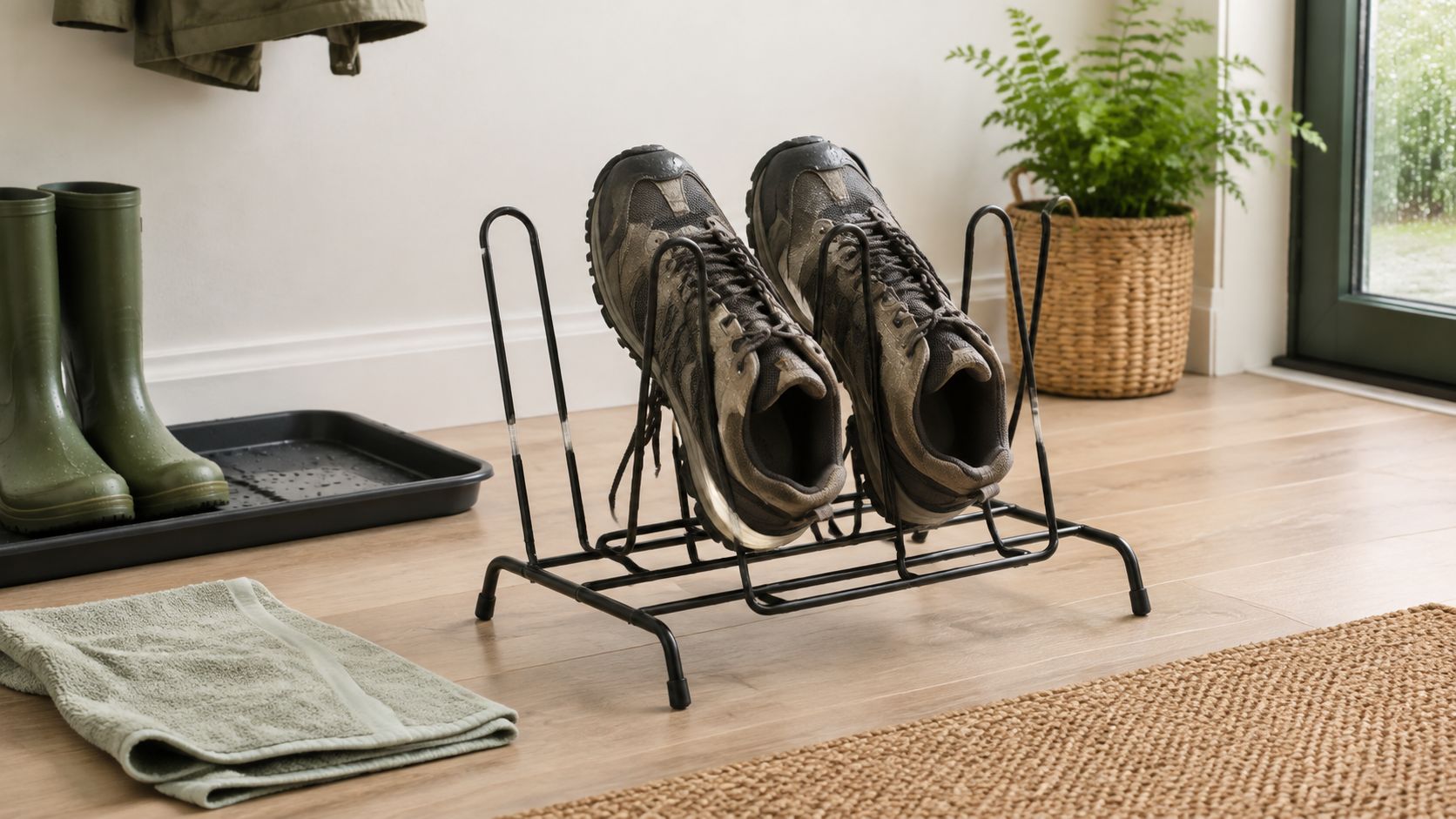
A rack can lift shoes from a wet pile, separate pairs, and keep the routine in one location. Its open construction may allow room air to move around more of each shoe than a tight floor pile. Actual drying still depends on how wet the shoe is, its materials and construction, room humidity, temperature, ventilation, and care directions.
A passive rack does not establish a specific drying time. It also does not prove that footwear is sanitized, free of fungus or mold, deodorized, restored, or safe for immediate reuse. Listings that turn a simple stand into a treatment or hygiene promise deserve skepticism.
Rack, boot tray, or both?
| Setup | Useful when | Main limit |
|---|---|---|
| Passive rack | Several pairs need separation and vertical organization. | It may not catch drips and adds loaded height and projection. |
| Boot tray | Floor protection and easy grit cleanup are the main jobs. | Shoes may still sit close together or in standing water. |
| Rack over a tray | Both separation and drip control recur often enough to justify the footprint. | Two products add cleaning, storage, fit, and stability checks. |
| Towel and open shelf | Wet shoes are occasional and existing space already works. | The towel needs prompt washing and drying, and the shelf must suit wet footwear. |
Check stability, materials, and cleaning
Use manufacturer-stated capacity rather than estimating from appearance. Check all feet on the actual floor, add and remove one shoe at a time, and watch for tipping or sliding. A tall rack can save floor width yet become awkward when loaded; a low rack may be steadier but project farther into the room.
Look for specific material and moisture-care information. “Rustproof,” “waterproof,” and “heavy duty” are marketing phrases unless the listing explains the material, finish, intended placement, care, and limits. Choose joints, rails, feet, and any tray that can be reached for cleaning. Empty standing water and remove grit rather than letting either collect around the rack.
When the comparison or model guide is more useful
If you are still deciding which format solves the problem, compare a passive shoe drying rack with a boot tray by separation, drip control, loaded footprint, and cleanup. If the one-week test proves that a rack earns permanent space, use the passive shoe drying rack guide to compare peg, tall, folding, and drip-control formats by measured fit. If water and mud on the floor are the only recurring problem, compare compact boot trays instead. For dried surface dirt left after the shoes are handled as directed, the shoe-brush guide explains bristle and material checks without restoration claims.
Bottom line
A passive shoe drying rack is worth it when repeated wet-weather use, multiple pairs, suitable shoe contact, safe entryway clearance, and manageable drip cleanup all line up. Test the routine first, measure the rack with shoes loaded, and skip the purchase when a tray or existing open spot already handles the real problem. This decision sits within the broader routine-support tools guide; the rack supports gear care, not weight-loss results.