Low-light walking accessory comparison
Reflective Armband vs Clip-On Light for Low-Light Walking
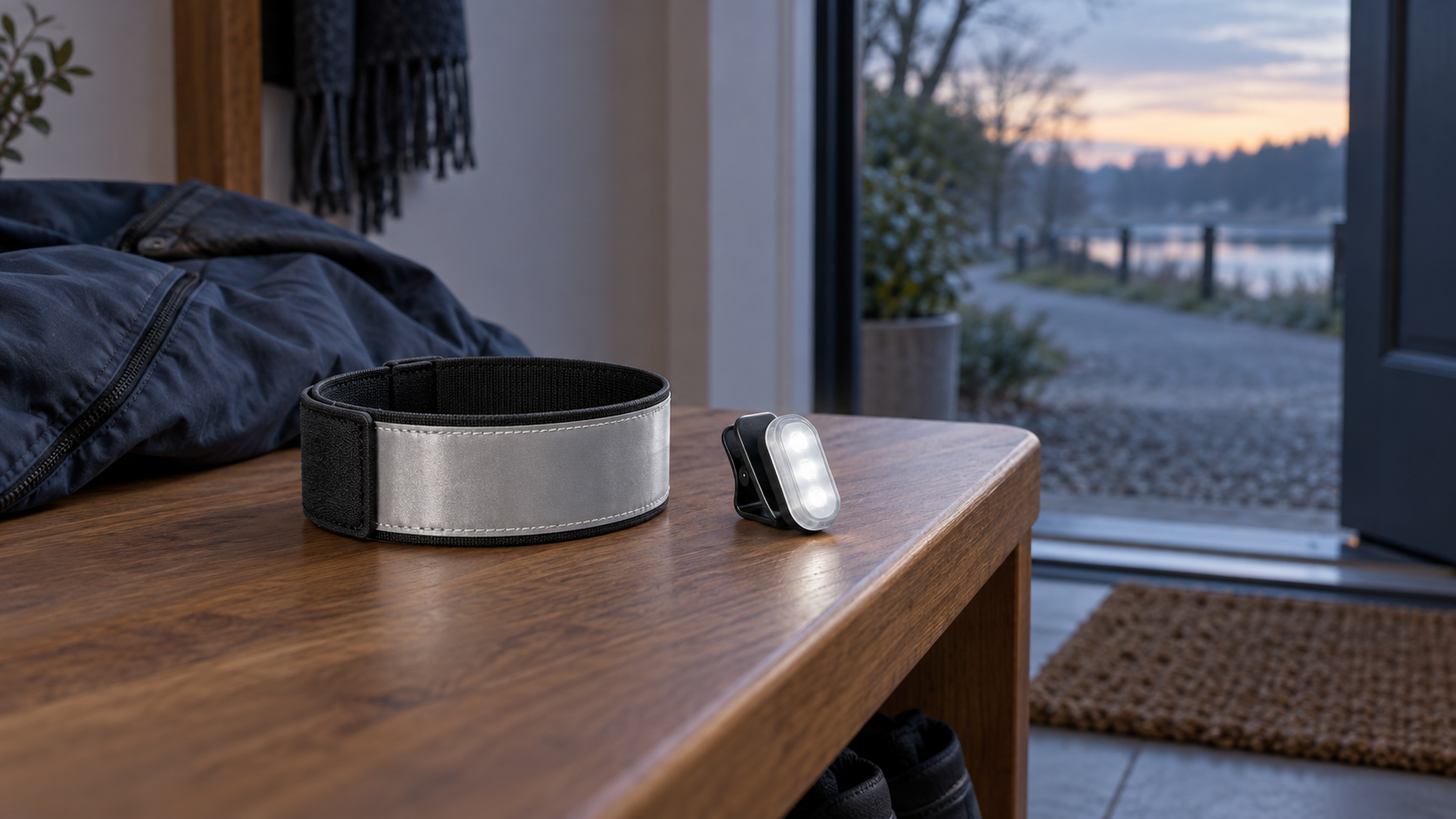
A reflective armband returns light that reaches it. A clip-on light produces its own light. That difference matters more than which accessory looks brighter in a product photo: the useful choice depends on the route, where the item sits, what other lighting is present, and whether you will maintain it.
As an Amazon Associate, GoodWeighFinds earns from qualifying purchases.
Quick decision
| Choose a reflective armband when… | Choose a clip-on light when… |
|---|---|
| You want a passive accessory with no battery or charging routine. | You need an active point of light and will reliably check its power. |
| Approaching light is present where the band will face it. | The clip can stay exposed and aimed usefully instead of being covered. |
| The band fits securely over the clothing you actually wear. | The light's controls, mode, and attachment work with cold or gloved hands if relevant. |
| You understand that reflective material does not create light or illuminate the path. | You understand that a small marker light may not function as a path-seeing flashlight. |
Start with the route, not the accessory
Walk through the decision in daylight first. Note existing streetlights, crossings, driveways, blind bends, shared paths, and stretches with no useful ambient light. Then ask what job is missing: returning approaching light, adding an active marker, or lighting the walking surface. A reflective band and a small clip light do different jobs, and neither makes a route safe by itself.
If the route feels unsuitable in low light, changing the time or route, using a properly chosen primary light, or following local pedestrian guidance may be more useful than adding a small accessory.
How the visibility mechanisms differ
Reflective material depends on outside light reaching it from a useful direction. Product-page flash photography can make a band appear dramatically bright without showing how it behaves at different angles, after wear, or when a sleeve covers it. Check the amount and placement of reflective material rather than relying on one staged image.
A clip-on light is active, but its usefulness depends on charge or batteries, mode, orientation, and whether clothing or a bag blocks it. A bright-looking close-up does not establish useful distance, all-angle visibility, or collision prevention. Treat runtime and water-resistance language as maker claims to verify, not guarantees.
Compare fit, placement, and upkeep
- Measured fit: Compare an armband's stated range with the jacket or outer layer you will wear, not only a bare arm.
- Secure placement: Check whether the band slips or the clip rotates, detaches, or points inward during ordinary movement.
- Useful exposure: Choose a location that stays visible instead of disappearing beneath a sleeve, strap, or open jacket.
- Power routine: For a light, check battery type or charging connection, controls, mode memory, and how you will confirm power before leaving.
- Weather wording: Read the maker's exact use and care limits. “Water resistant” is not the same as suitable for every rain condition or submersion.
- Care and replacement: Follow cleaning directions and inspect reflective surfaces, elastic, fasteners, clips, lens, and battery compartment for damage.
Try a no-buy placement check
Before shopping, use your regular outer layer and bag to identify two or three places where an accessory could remain uncovered. Move your arms, adjust straps, and check whether fabric folds over those spots. This does not test nighttime visibility, but it can reveal that an armband will not fit over a coat or that a clip location points toward the body.
If you already own suitable reflective clothing or a maintained light that fits the same job, another accessory may only add setup and charging friction.
When to skip either option
- The listing substitutes dramatic photos for dimensions, attachment details, power information, or care instructions.
- The product promises that drivers will see you or that it prevents crashes. An accessory cannot guarantee another road user's attention or behavior.
- The armband creates pressure, slipping, or irritation over the clothing you use.
- The clip light would be your only illumination where you need to see the walking surface, but the maker describes it only as a small visibility or marker light.
- You will not keep a light powered, or the battery and charging routine do not fit your household.
- A different route, time, primary light, or existing piece of gear solves the actual problem more directly.
Keep researching
Start with the routine-support tools pillar to keep the purchase tied to a practical job rather than a body-result promise. If passive reflectivity fits the job, use the reflective armband guide to compare width, adjustment, placement, materials, and care. If active light fits better, use the clip-on light guide for attachment, controls, power, mode, and weather-claim criteria. The separate clip-on light worth-it guide can help decide whether to buy at all.
Bottom line
Choose a reflective armband when passive, exposed reflectivity fits the clothing and route and you want no power upkeep. Choose a clip-on light when an active marker is the missing job and you can keep it exposed, oriented, and powered. Neither option guarantees visibility or replaces a route-level safety decision.