As an Amazon Associate, GoodWeighFinds earns from qualifying purchases.
Comparison guide
Walking Pad vs Outdoor Walking: Which Fits Your Routine?
A walking pad trades purchase cost and floor space for predictable indoor access. Outdoor walking costs less and offers a change of scenery, but weather, lighting, surfaces, and location can get in the way. Neither option guarantees weight loss; the useful choice is the one that fits your access, comfort, safety needs, and ordinary week.
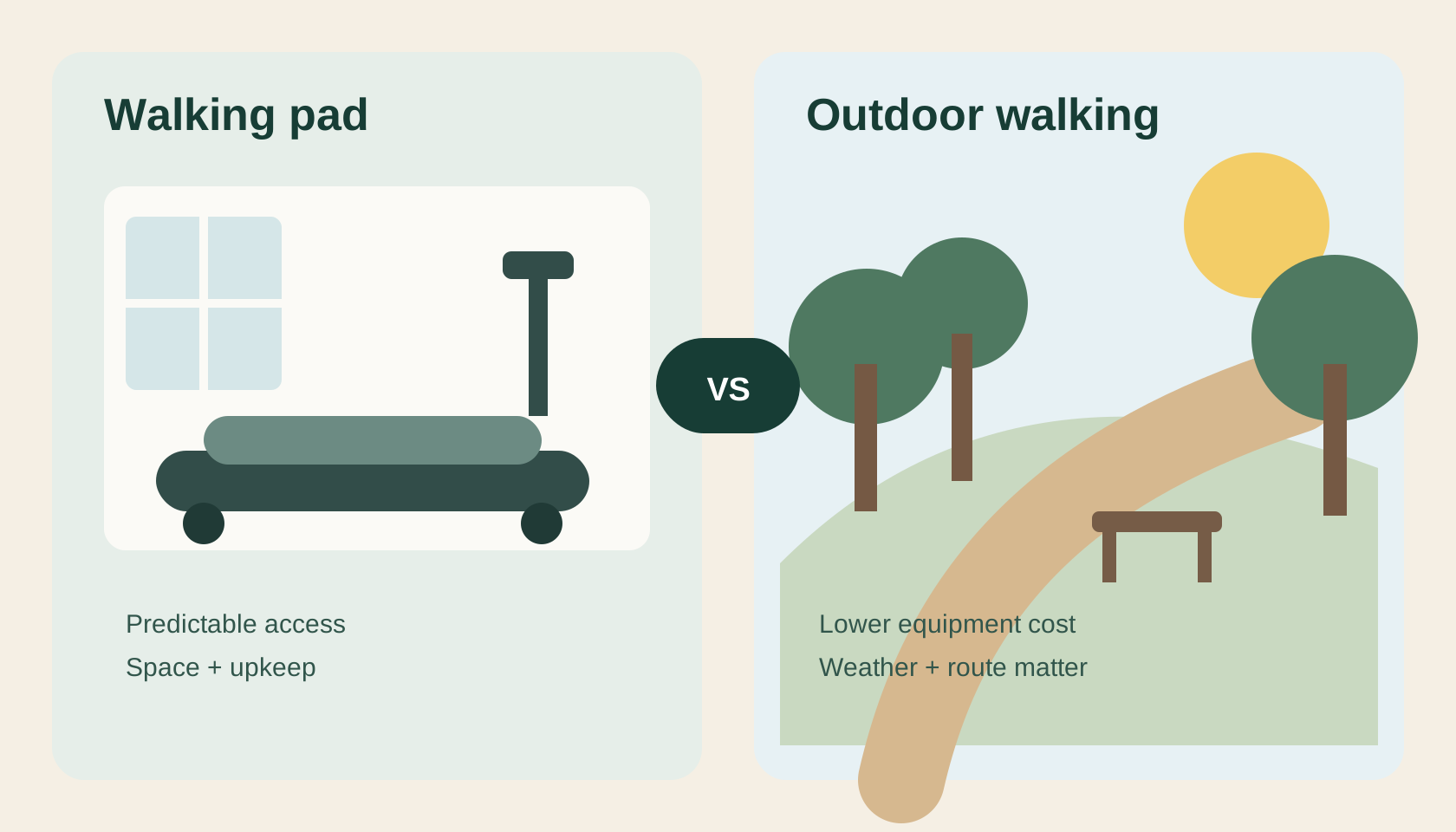
Quick comparison
- Choose a walking pad when weather, caregiving, schedule, or neighborhood access repeatedly blocks walking and you have a safe place to operate and store a machine.
- Choose outdoor walking when you have an accessible route, suitable conditions, and prefer fresh air or changing scenery without equipment cost or maintenance.
- Use both when outdoor walking is your default and an indoor option genuinely fills weather or schedule gaps.
- Choose neither for now when pain, dizziness, balance concerns, unsafe surroundings, compulsive exercise pressure, or cost make both options a poor fit.
What a walking pad does well
A walking pad makes the setting predictable. It can remove rain, heat, cold, darkness, traffic, and travel time from the decision. That may fit adults working from home, caring for someone, avoiding poor local routes, or fitting short movement breaks into a tightly scheduled day.
The tradeoff is that convenience comes from a machine. You need enough operating clearance, an outlet, controls you can use comfortably, a stable floor, and a realistic storage plan. The pad also brings noise, vibration, belt care, possible repairs, and bulky return shipping. If those issues are already the hard part, indoor access may not be simpler in practice.
What outdoor walking does well
Outdoor walking usually needs no large purchase, outlet, storage area, or mechanical upkeep. A suitable route can offer more room to vary pace, distance, and scenery. It may also be easier to connect the walk to an existing errand, transit stop, dog-walking schedule, or social routine.
The tradeoff is less control. Weather, air quality, daylight, uneven surfaces, crossings, traffic, restroom access, crowds, and personal safety can change from day to day. “Free” also does not mean universally accessible: shoes, weather layers, transportation to a safer route, or mobility access may still matter.
Who each option fits
A walking pad may fit someone whose main barrier is leaving home and who can keep the machine ready without moving heavy furniture each time. It is a stronger fit when the product would still be useful without calorie estimates, streaks, or weight-loss promises.
Outdoor walking may fit someone with a comfortable, accessible route who values daylight, fresh air, destination-based walks, or time away from screens. It is also the lower-commitment way to learn whether walking suits the routine before buying equipment.
Neither option is automatically better. Accessibility needs, symptoms, mobility aids, sensory preferences, caregiving responsibilities, and local conditions can outweigh generic advice. A product listing cannot make that personal assessment.
Cost and commitment tradeoffs
A walking pad has an upfront price and may add the cost of a floor mat, electricity, lubrication, replacement parts, or difficult return freight. Check the warranty and who pays for a return before ordering. Do not assume a higher price, dramatic horsepower label, or “commercial” wording proves durability.
Outdoor walking avoids the machine cost, but practical expenses can include comfortable footwear, weather layers, reflective gear, transit, or entry to an indoor public route when conditions are poor. Start with what you already own when it is appropriate; a new outfit is not a requirement for a useful walk.
Setup and maintenance
For a walking pad, measure the full operating area, including room to step on and off. Confirm the deck dimensions, stated user limit, start and stop controls, speed range, cord route, machine weight, stored dimensions, and whether a handrail is available if that matters to you. Follow the manufacturer’s belt alignment, lubrication, cleaning, and inspection instructions. The walking pad buying checklist covers these product checks in more detail.
For outdoor walking, choose a route that matches current comfort and mobility. Consider surface condition, crossings, lighting, shade, weather, air-quality alerts, phone coverage, water access, and a turnaround plan. Tell someone your route when appropriate, and use the reflective gear guide if low-light visibility is part of the decision.
Safety and claim limits
Be skeptical of walking-pad listings that promise rapid weight loss, guaranteed fat burning, exact calorie results, or effortless transformation. Machines and watches can estimate activity, but those numbers do not guarantee a body outcome. Outdoor-walking challenges can create the same pressure when streaks or step totals become punishment rather than optional prompts.
Do not rely on a product page for individualized exercise guidance. Talk with a qualified healthcare professional before starting if chest symptoms, dizziness, balance concerns, joint pain, recent injury, pregnancy-related concerns, or a health condition affects exercise tolerance. Seek urgent medical help for severe or sudden symptoms instead of continuing.
When to skip each option
Skip or delay a walking pad if you cannot keep a clear operating area, safely move or store it, verify essential controls and limits, comply with building rules, or manage a costly return. Also skip listings built around extreme body-result claims.
Skip a particular outdoor route when lighting, weather, air quality, traffic, surface conditions, harassment risk, or access needs make it unsuitable. That does not mean outdoor walking as a category has failed; a different time, route, indoor public space, or non-walking movement option may fit better.
Skip tracking pressure with either option if distance, speed, calories, or streaks lead to guilt, unsafe restriction, compensatory exercise, or a feeling that movement only counts when a device records it.
A low-cost way to decide
Test the routine before the equipment. For one or two ordinary weeks, note when an outdoor walk was workable and when weather, darkness, caregiving, or schedule blocked it. Try a safe indoor alternative such as a hallway or accessible public indoor route when available. If indoor access repeatedly solves a specific barrier—and you can meet the space and safety checks—a walking pad has a clearer job.
Bottom line
Choose a walking pad for predictable indoor access when the machine fits your room, budget, safety needs, and maintenance tolerance. Choose outdoor walking for lower cost, space, and changing scenery when a suitable route is realistically available. Use the broader routine-support tools guide for lower-hype next steps, or read whether a walking pad is worth it before committing to equipment.